
Brodoa intestiniformis
Brodoa intestiniformis
Description
Symptoms
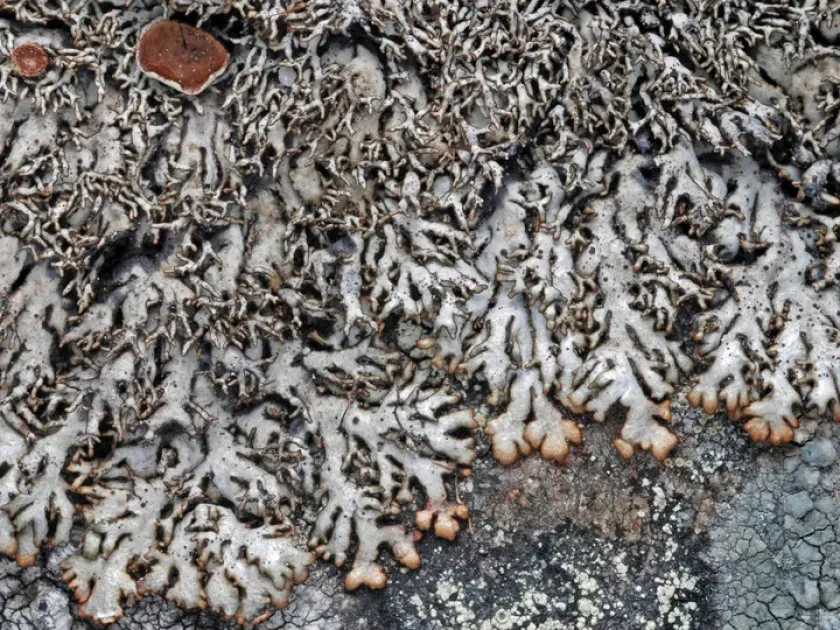
The thallus of Brodoa intestiniformis is characterized by narrow, inflated, and cylindrical-like lobes.
These lobes often form dense, rosette-like or carpet-like patches on bark or rocky substrates.
The color typically ranges from greyish-brown to dark chestnut, aiding in thermal regulation in cold climates.
Apothecia, which are the reproductive structures of the fungal component, are often visible as small brown discs.
The overall appearance is distinctly wrinkled and convoluted, resembling the folded structure of intestines.
Pathogen
It is crucial to state that Brodoa intestiniformis is not a plant pathogen or a disease-causing agent for crops.
This organism belongs to the lichenized fungi group, specifically within the Parmeliaceae family.
It exists in a symbiotic relationship between a fungus and an alga (or cyanobacterium), living an epiphytic life.
It does not penetrate host tissues or derive nutrients from the tree, meaning it lacks any parasitic capacity.
Agronomically, its presence should not be confused with fungal or bacterial diseases that destroy plant tissues.
Conditions for development
This lichen species is primarily found in boreal, arctic, and high-altitude alpine environments.
It thrives in areas with low air pollution, as it is highly sensitive to sulfur dioxide and other industrial toxins.
High humidity and cool temperatures are favorable conditions for its metabolic activity and gradual growth.
It colonizes surfaces that receive adequate sunlight but remain sufficiently cool to prevent excessive moisture loss.
Growth is exceptionally slow, meaning visible colonies often indicate stable, undisturbed environments over many years.
Why it matters
There is no evidence of harm caused by this organism to agricultural crops or tree health.
It does not interfere with sap flow, photosynthesis, or the reproductive cycle of its host tree.
While some assume it suffocates bark, in reality, it resides only on the surface of dead bark layers.
The only potential concern is that the lichen patch might serve as a refuge for overwintering pests, such as scale insects.
Overall, Brodoa intestiniformis is considered an ecological indicator of air quality rather than a threat to production.
Protection
No chemical control programs are required or recommended for this organism in agricultural settings.
If for aesthetic reasons cleaning the bark is desired, mechanical removal is the safest method for the tree.
Proper orchard management, including pruning, ensures that the bark remains healthy and less favorable for lichen colonization.
Improving the tree's overall vigor through fertilization and irrigation promotes active bark renewal, naturally limiting lichen attachment.
Regular maintenance practices, such as clearing debris from the trunk, are sufficient to manage any concerns related to epiphytic growth.
Discussion
No discussions yet — be the first.