
Breviappendix
Breviappendix
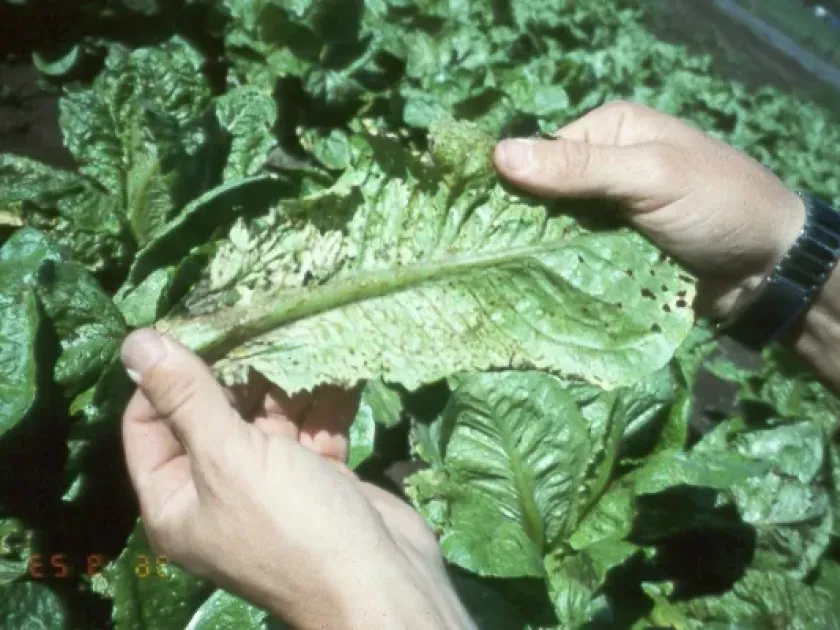
Description
Symptoms
The primary symptom of this pathogen infection is the appearance of specific necrotic spots on leaves and stems. Initially, the affected areas appear pale yellow, later darkening to brown as the lesion matures.
Microscopic growths or appendages, from which the pathogen derives its name, often form in the center of these spots. These structures represent reproductive organs visible under close inspection or magnification.
As the disease progresses, infected tissues begin to deform and wither prematurely. This process affects both the leaf blade and petioles, leading to the disruption of essential photosynthetic functions.
Severe infection leads to premature leaf drop, which significantly weakens the plant. The overall appearance of the crop becomes stunted, shoot growth slows down, and there is a marked loss of vegetative mass.
A distinctive characteristic is the shape of the necrosis, which is often angular or circular and delimited by leaf veins. This creates a specific mosaic-like pattern on the surface of the plant tissue.
Pathogen
The disease is caused by fungi belonging to the genus Breviappendix, which are classified within the group of imperfect fungi (deuteromycetes). These microorganisms have a complex life cycle involving conidial spore formation.
The pathogen possesses high adaptability to various climatic conditions. Its mycelium is capable of penetrating deep into the host tissues, degrading cell walls through the secretion of specific enzymes.
A biological feature of this pathogen is the formation of short appendages on conidia, which facilitates their attachment to the leaf surface under high humidity. This increases the efficiency of infection transmission.
The fungus persists in the soil and on plant debris as spores or dormant mycelium. This makes it highly resilient to adverse environmental conditions during the winter period.
Reproduction occurs asexually through the formation of a large number of conidia, which are dispersed by wind, rain splashes, or insects over significant distances.
Conditions for development
Disease development is favored by high humidity levels exceeding 80 percent. Frequent rainfall and the presence of dew on plants create optimal conditions for spore germination.
A temperature range from 18 to 24 degrees Celsius is most conducive to the rapid spread of the pathogen. During hot and dry periods, the development of the fungus temporarily slows down.
Dense crop stands and poor ventilation between plants promote moisture accumulation. This triggers rapid infection spread throughout the field upon the emergence of initial focal points.
Failure to follow crop rotation is a critical factor, as the pathogen accumulates in the soil when susceptible crops are grown consecutively. This creates a significant threat of epiphytotics.
Weakened plants, suffering from mineral nutrient deficiencies or environmental stress, are the most susceptible to infection by this pathogen.
Why it matters
The main danger lies in the significant reduction of both quality and quantity of agricultural crops. Damage to the photosynthetic apparatus leads to decreased nutrient accumulation in fruits and grains.
In the case of cereal crop infection, shriveled grain occurs, which severely reduces its commercial and seed quality. This leads to direct economic losses for agricultural producers.
The disease can cause partial or total loss of young seedlings, necessitating field replanting. Total yield losses during severe epiphytotic outbreaks can reach 30 to 50 percent.
Damaged tissues become entry points for secondary infections, including bacterial rots. This complicates the overall situation and significantly reduces the shelf life of the produce.
Chronic infection drains the plant's metabolic resources, causing the crop to lose winter hardiness or overall resilience to other abiotic stressors.
Protection
The primary control measure is strict adherence to crop rotation, ensuring susceptible crops are not grown on the same field for at least 3 to 4 years. This interrupts the fungal life cycle.
Thorough soil cultivation and the removal of plant debris help significantly reduce the inoculum pressure. Deep plowing facilitates the destruction of spores that overwinter in the soil surface layers.
The application of preventive and curative fungicides is necessary when there is a risk of mass disease spread. Systemic preparations are recommended to protect the internal tissues of the plant.
Spatial isolation of crops from infected fields limits the wind-borne spread of spores. It is also crucial to use only healthy, certified seeds for planting.
- Optimization of mineral nutrition, particularly the application of potassium fertilizers.
- Timely weeding to improve air circulation within the canopy.
- Field monitoring for early detection of infection spots.
Discussion
No discussions yet — be the first.