
Oak wilt
Bretziella fagacearum
Description
Symptoms
The primary symptom of oak wilt is the sudden onset of leaf discoloration and wilting. Leaves typically turn bronze, brown, or yellow starting from the outer edge or the top of the canopy and progressing inwards.
Wilting occurs rapidly, often causing leaves to drop prematurely while they are still partially green. In many cases, the entire tree can succumb to the infection within a single growing season.
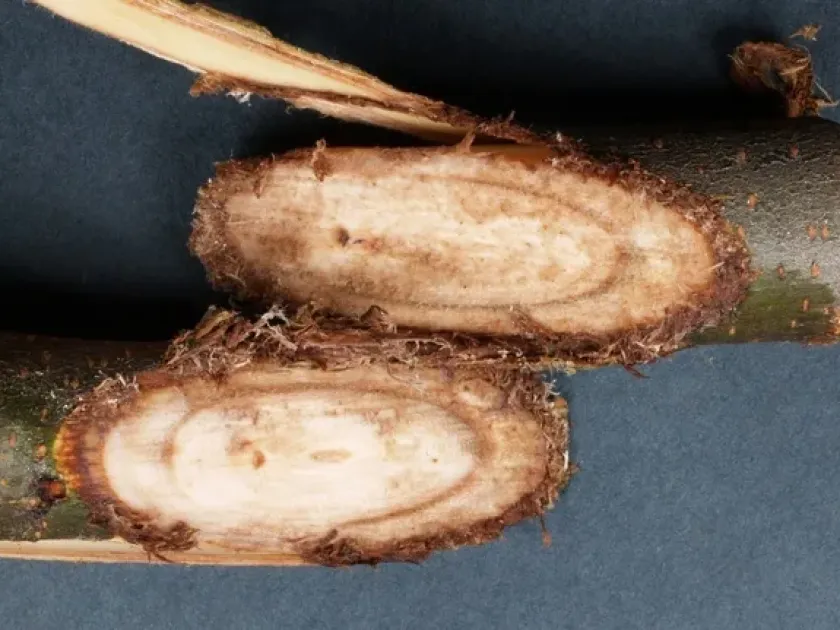
Dissection of the branches often reveals diagnostic brown or black vascular streaking in the sapwood, which indicates the tree's defensive response and the physical obstruction caused by the fungal mycelia.
In later stages of the disease, pressure pads (fungal mats) can be found under the bark of dying trees. These mats are often accompanied by vertical cracks in the bark as the fungus expands and exerts pressure.
- Bronze or brown leaf browning
- Sudden crown wilting
- Vascular streaking in wood
- Fungal mats under the bark
- Rapid group mortality
Pathogen
The causative agent of oak wilt is the ascomycete fungus Bretziella fagacearum. This lethal pathogen infects the tree's xylem, the water-conducting tissue, leading to a systemic vascular disease that disrupts nutrient and water transport.
Once inside the tree, the fungus colonizes the xylem vessels, producing mycelia and various enzymes that block the flow of sap. This mechanical and physiological blockage results in the rapid wilting and eventual death of the host tree.
The fungus is notorious for its ability to form specialized fungal mats beneath the bark of infected trees. These mats produce a fruity scent that attracts nitidulid beetles, which serve as primary vectors for spreading the spores to healthy trees.
Because the pathogen can persist in dead wood for long periods, it poses a continuous threat to forest health. Its high virulence makes it one of the most significant biosecurity concerns for hardwood forests in affected regions.
Understanding the life cycle of Bretziella fagacearum is crucial for forestry management. The pathogen's ability to survive in both living trees and fallen logs complicates eradication efforts and necessitates strict quarantine protocols.
Conditions for development
Transmission occurs primarily through two mechanisms: insect vectors and root grafting. Sap-feeding beetles (nitidulids) pick up spores from fungal mats and carry them to fresh wounds on healthy oaks.
Root grafting is the most common method of localized spread. As oak roots often fuse when growing in close proximity, the fungus travels through these vascular connections, creating expanding circles of infected trees known as infection centers.
Environmental conditions that favor the production of fungal mats, such as cool, moist spring weather, significantly increase the risk of disease transmission. High humidity is essential for the longevity of the fungal structures.
Mechanical injuries, whether from pruning, storm damage, or construction activities, create ideal entry points for spore-bearing insects. Preventing these wounds is a fundamental aspect of oak protection.
The temperature also influences the metabolic rate of the fungus and the activity patterns of the insect vectors. Warmer weather can accelerate the progression of symptoms once the tree is infected.
Why it matters
Oak wilt is a catastrophic disease for forest ecosystems, causing massive losses of oak populations. The rapid death of trees leads to significant biodiversity loss and degradation of forest habitats.
Beyond the ecological impact, there are severe economic consequences. The mortality of valuable oak stands reduces timber value and imposes high costs for tree removal and sanitation efforts in urban and forested areas.
The disease alters forest structure permanently, as oaks are often keystone species. Their loss forces a succession shift, often towards less desirable tree species, which can diminish the overall health and resilience of the ecosystem.
The persistent nature of the fungus in root systems means that infection centers can continue to grow for years unless aggressive intervention, such as root trenching, is implemented to stop the spread.
The aesthetic and recreational value of landscapes is also compromised, as the loss of mature oak trees drastically changes the appearance and usability of public parks, woodlands, and residential properties.
Protection
Effective management begins with quarantine and the regulation of movement for oak firewood and logs. Preventing the transport of potentially infected material is the best defense against long-distance spread.
When an infection center is identified, it is critical to sever root connections between infected and healthy trees using deep-trenching equipment. This physical barrier stops the fungus from moving through root grafts.
Avoid pruning oak trees during the high-risk season when nitidulid beetles are most active. If pruning must occur, apply wound dressing or paint immediately to minimize the attraction of beetles to fresh sap.
Sanitation involves the prompt removal and destruction of infected trees. Burning or chipping the infected wood at the site helps ensure that the fungus does not persist or move to new areas via insect vectors.
Encouraging tree diversity in urban and forest settings is a long-term preventive strategy. By planting non-host species, landowners can slow the progression of the disease and maintain a healthier, more resilient canopy.
Discussion
No discussions yet — be the first.