
Brenneria goodwinii
Brenneria goodwinii
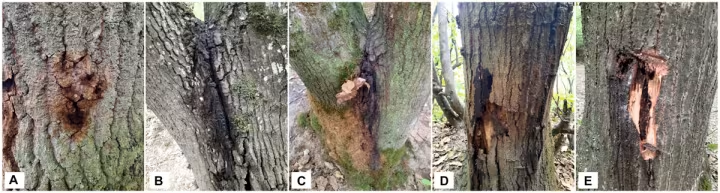
Description
Symptoms
The most distinctive diagnostic feature is the presence of dark, sticky, weeping fluid oozing from cracks in the bark, often called "black streaks."
Crown dieback is a classic symptom, usually starting as thinning foliage, followed by yellowing and premature leaf drop.
Internal examination of the bark reveals dark, necrotic lesions in the inner bark layer, which often emit a pungent, fermenting odor.
Vertical bark cracking occurs as the pathogen spreads laterally, damaging the cambium and preventing normal growth.
During later stages of the disease, the bark may detach from the trunk in large sections, exposing the underlying decaying wood.
Pathogen
Brenneria goodwinii is a Gram-negative bacterium belonging to the Pectobacteriaceae family and is recognized as the key pathogen in Acute Oak Decline (AOD).
This pathogen specifically colonizes the phloem and cambium tissues of oak trees, causing significant vascular disruption.
The bacterium functions by producing extracellular enzymes that degrade plant cell walls, leading to tissue necrosis and systemic failure.
It often acts in complex interaction with other microorganisms and insect vectors, particularly the oak jewel beetle (Agrilus biguttatus).
Once established within the tree, the pathogen can survive for extended periods, continuously expanding its necrotic range within the trunk.
Conditions for development
Prolonged periods of heat and drought are the primary environmental triggers that predispose oaks to Brenneria goodwinii infection.
The disease spread is highly correlated with the presence of insect vectors that facilitate the entry of bacteria into the host tissue.
Soil compaction and waterlogging can weaken the root system, thereby lowering the tree's natural resistance to bacterial attacks.
Optimal growth conditions for the bacteria include moderate to high temperatures, which accelerate the fermentation process inside the wood.
Physical wounds on the bark, caused by machinery or environmental stress, provide direct entry points for the pathogen.
Why it matters
Brenneria goodwinii is responsible for widespread oak mortality, leading to significant changes in forest composition.
The structural integrity of infected trees is compromised rapidly, creating safety hazards in urban parks and populated forest areas.
The disease causes substantial economic losses to the timber industry by degrading the wood quality of valuable oak species.
Biodiversity is negatively impacted as the loss of mature oaks disrupts habitats for various wildlife and insects.
The irreversible nature of the advanced stages of the disease requires large-scale intervention and removal of affected trees.
Protection
Management focuses primarily on sanitation, which involves the removal and proper disposal of heavily infected trees to reduce inoculum pressure.
Reducing the density of known insect vectors like Agrilus biguttatus is a key component of integrated pest management.
Maintaining tree vigor through proper soil management and avoiding damage to the root zone are essential preventive measures.
Sterilizing equipment between trees during pruning or maintenance is vital to prevent human-assisted pathogen spread.
- Regular forest health monitoring.
- Avoiding unnecessary mechanical wounding of the bark.
- Promoting diverse species planting to increase stand resilience.
Discussion
No discussions yet — be the first.