
Bradyrhizobium japonicum
Bradyrhizobium japonicum
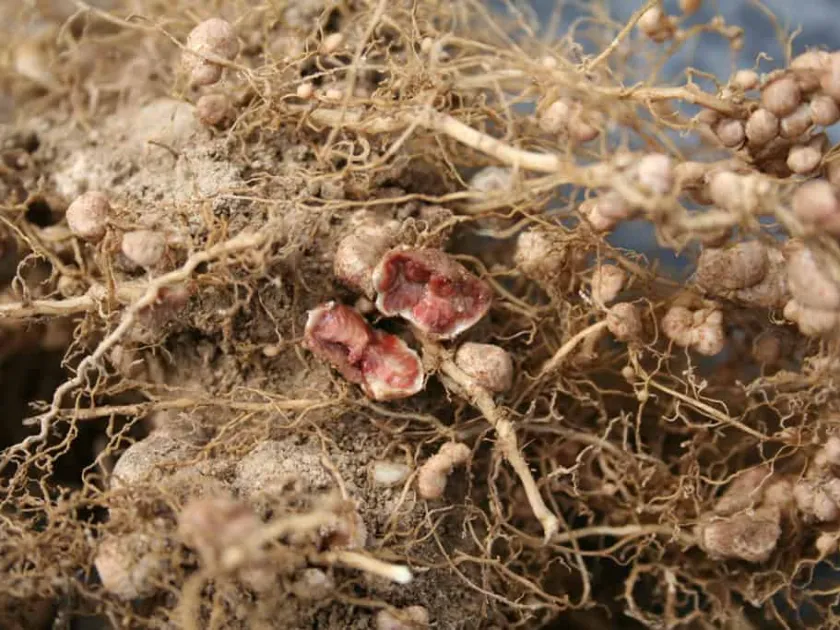
Description
Pathogen
Bradyrhizobium japonicum is a soil-dwelling, nitrogen-fixing bacterium that is beneficial to agriculture rather than a plant pathogen.
It is classified as a symbiont that forms highly specialized organs called root nodules on the roots of soybean plants (Glycine max).
Within these nodules, the bacteria convert atmospheric nitrogen into ammonia, which is then utilized by the host plant for growth.
The symbiotic interaction is highly specific, requiring a chemical dialogue between the plant roots and the bacterial cells in the soil.
This biological process is essential for sustainable soybean production and reduces the need for synthetic nitrogen fertilizers.
Conditions for development
Successful nodulation and nitrogen fixation depend heavily on specific soil conditions and the presence of compatible bacterial strains.
Soil temperatures between 20°C and 28°C are considered optimal for the infection process and subsequent metabolic activity of the nodules.
The soil pH must be managed carefully; acidic soils can severely inhibit bacterial survival and the nodulation process.
Sufficient soil moisture is mandatory for the bacteria to colonize the root hairs effectively after seed germination.
The presence of excess inorganic nitrogen in the soil can suppress nodule formation, as the plant will prioritize direct uptake over symbiosis.
Why it matters
The organism does not cause plant disease; however, problems arise when inefficient or non-compatible strains dominate the soil.
If the symbiosis fails, soybeans exhibit signs of nitrogen deficiency, such as yellowing leaves and stunted growth, which can be misdiagnosed as disease.
While the bacteria themselves are not harmful, their absence in fields where soybeans have not been grown before creates a significant yield gap.
Competition from native, ineffective soil bacteria can prevent the colonization of the roots by high-performance, commercially applied inoculants.
Therefore, while not a "harmful agent," the failure to establish a healthy symbiosis poses a significant economic threat to soybean producers.
Protection
The primary control measure for establishing a productive symbiosis is the use of high-quality inoculants applied to seeds before planting.
Farmers should conduct soil testing to ensure pH levels are adequate, as lime application may be necessary to support bacterial populations.
Careful selection of compatible pesticides is essential to avoid harming the bacterial inoculant during the seed treatment process.
Regular monitoring of root systems for the presence of active (pink interior) nodules helps determine if the inoculation was successful.
Proper crop rotation practices help maintain a favorable balance of soil microorganisms, promoting the long-term health of the field's microbiome.
Discussion
No discussions yet — be the first.