
Brachiaria white stripe
Brachiaria white leaf phytoplasma
Description
Symptoms
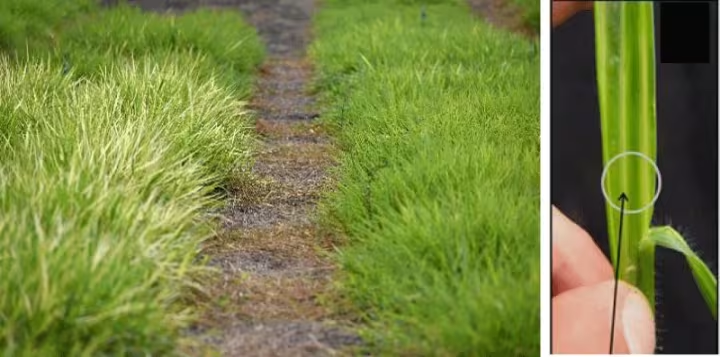
The hallmark sign of Brachiaria white stripe is the appearance of narrow, continuous white or pale yellow stripes along the leaf blades. These discolorations typically run parallel to the leaf veins, clearly marking the path of viral spread.
As the infection progresses, these stripes can coalesce into larger chlorotic areas. The loss of chlorophyll in these regions significantly reduces the photosynthetic capacity of the plant, leading to visible stunted growth.
Heavily infected plants often exhibit reduced vigor and diminished tillering capacity. This results in thinner canopy density, which makes the pasture more vulnerable to weed encroachment and erosion.
Reproductive development is also negatively impacted. The disease can cause the malformation of inflorescences (panicles) and a significant reduction in seed viability, which is a major concern for seed production farms.
- Pale, white longitudinal leaf streaks.
- General chlorosis of the foliage.
- Stunted plant height.
- Reduced biomass production.
Pathogen
The causative agent of this disease is the Brachiaria white-stripe virus (BWSV), a viral pathogen specifically adapted to infecting members of the Brachiaria genus. This virus is a systemic pathogen, meaning it spreads throughout the entire vascular system of the host plant.
The virus primarily utilizes the plant's phloem tissue to replicate and move within the host. By disrupting the transport of photosynthates, the pathogen severely compromises the energy balance and metabolic health of the grass.
In field conditions, the transmission is primarily mediated by sap-sucking insects, most notably leafhoppers. These vectors acquire the virus from infected plants and introduce it into healthy tissues during feeding, completing the disease cycle.
The virus is capable of persisting in the rhizomes and roots of perennial grasses during the dormant season, serving as a hidden reservoir of infection that triggers new outbreaks as soon as favorable growth conditions return.
Genetic diversity within the BWSV population poses a challenge to plant breeders. Understanding the molecular structure of the virus is critical for developing molecular diagnostic tools and resistant grass varieties.
Conditions for development
Disease prevalence is heavily influenced by the environment, particularly temperature and humidity. Warm, humid conditions favor both the rapid growth of the host plants and the population dynamics of insect vectors.
Dense, poorly managed pastures with limited airflow can create microclimates that facilitate the spread of the virus. Stagnant air helps insects move between plants with minimal physical effort.
Nutrient deficiency, specifically a lack of potassium or micronutrients, can weaken the plant's natural defense mechanisms. Malnourished plants are significantly more susceptible to viral infections and display more severe symptoms.
Mechanical stress, often caused by heavy grazing or improper mowing techniques, can create wounds on leaves, which act as entry points for the virus if vectors are present in the field.
The presence of wild grasses in surrounding areas acts as an alternative host pool for the virus, ensuring that the pathogen remains present in the landscape throughout the year, even when main crops are not actively growing.
Why it matters
The primary economic impact is the reduction in forage biomass yield. For livestock producers, this translates to lower carrying capacity of pastures and increased reliance on expensive supplemental feeds.
Nutritional quality of the forage is also compromised. Infected plants generally show lower protein levels and decreased digestibility, which can directly affect animal weight gain and overall productivity.
On a landscape scale, the disease leads to pasture thinning. When the desired Brachiaria species dies out due to severe infection, it creates gaps that are quickly colonized by invasive or less palatable weed species.
Seed production is another area heavily affected. Farmers specialized in growing forage seeds face severe financial losses when crops test positive for the virus, as the seeds may carry the pathogen or show poor germination rates.
If not managed, the disease can spread across entire regions, causing an epidemic that necessitates the renovation of extensive pasture areas, adding significant costs to farm operations.
Protection
The most effective long-term management strategy is the planting of resistant or tolerant cultivars. Genetic resistance provides a sustainable way to minimize yield losses without constant intervention.
Managing the insect vector population is vital during peak activity periods. Targeted use of insecticides can reduce the spread of the virus by lowering the number of insects capable of carrying the pathogen.
Sanitation practices, such as the prompt removal and destruction of infected clumps (roguing), help keep the viral load in the field low and prevent the virus from spreading to neighboring, healthy plants.
Implementing proper pasture management, including rotation and adequate fertilization, ensures that plants remain vigorous and less stressed, improving their ability to withstand and recover from viral infections.
Regular field scouting and diagnostic testing are essential to catch the disease in the early stages. Early detection allows for localized management, preventing a small outbreak from turning into a widespread epidemic.
Discussion
No discussions yet — be the first.