
Botryosphaeria canker
Botryosphaeria
Description
Symptoms
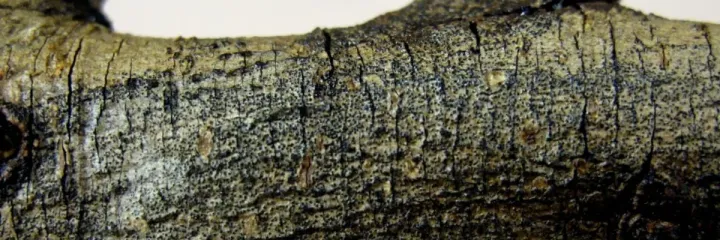
A primary external symptom of Botryosphaeria canker is the appearance of deep, sunken necrotic lesions on tree branches and trunks.
In the affected areas, the bark takes on a dark, often brown or nearly black color, gradually dying and cracking around the periphery of the infected site.
Tiny black bumps, known as pycnidia, can be observed on the surface of the dead bark; these serve as the primary source for spore dispersal.
Infections on branches often lead to sudden wilting and browning of leaves, while fruits on these branches may become mummified and remain hanging on the tree.
On fruits, the disease manifests as soft, brown spots that expand rapidly, turning the flesh into a decaying, foul-smelling mass.
Pathogen
The disease is caused by fungi belonging to the order Botryosphaeriales, specifically species within the genus Botryosphaeria, which are parasitic on woody plants.
The fungus can persist in infected plant debris, dead bark, and mummified fruits for several years, surviving even in adverse environmental conditions.
The pathogen primarily enters plant tissues through various mechanical injuries to the bark, pruning cuts, frost cracks, or sunscald wounds.
The life cycle of the pathogen involves the production of conidia and ascospores, which are actively dispersed by wind and rain splashes during the growing season.
The pathogen exhibits high adaptability, allowing it to infect both stressed and healthy-looking plants when favorable environmental conditions are present.
Conditions for development
The fungus develops most actively during periods of high humidity and moderate temperatures, which facilitate spore germination on plant surfaces.
Trees experiencing stress from drought, nutrient deficiencies, or exposure to extreme winter temperatures are the most susceptible to pathogen invasion.
Poor horticultural practices, such as overcrowding and lack of canopy ventilation, create ideal conditions for moisture accumulation and pathogen spread.
Improper pruning, especially without subsequent disinfection of tools and treatment of wounds, is a critical factor contributing to mass infection in orchards.
Summer seasons with frequent rainfall significantly increase the risk of secondary fruit infections, leading to outbreaks within fruit-bearing crops.
Why it matters
Botryosphaeria canker poses a serious threat to horticulture as it compromises the tree's vascular system, disrupting nutrient and water transport.
Severe infection of the main trunk or scaffold branches inevitably leads to the progressive dieback of the entire aerial part of the tree and its eventual death.
Fruit infection leads to significant yield losses both during the ripening process and in post-harvest storage, where the rot spreads extremely rapidly.
Economic losses arise not only from the loss of marketable produce but also from the high costs of sanitary pruning and long-term tree maintenance.
Widespread disease outbreaks in intensive orchards may necessitate the removal and destruction of entire planting blocks due to the difficulty of recovery.
Protection
A key management strategy is regular sanitary pruning, which involves the total removal and mandatory burning of all infected branches away from the orchard.
It is essential to properly treat all cuts and wounds on trees with specialized wound dressings or antiseptic pastes to prevent fungal spore entry.
Preventive spraying with copper-based fungicides during dormancy and the growing season helps to significantly lower the overall disease pressure.
Proper irrigation and balanced fertilization are crucial for strengthening the plant's natural immune system, making it more resistant to fungal infections.
Adhering to strict hygiene protocols when working with tools, such as disinfecting pruning shears and saws between trees, is vital to stop the spread of the fungus.
Discussion
No discussions yet — be the first.