
Royal bolete
Boletus regius
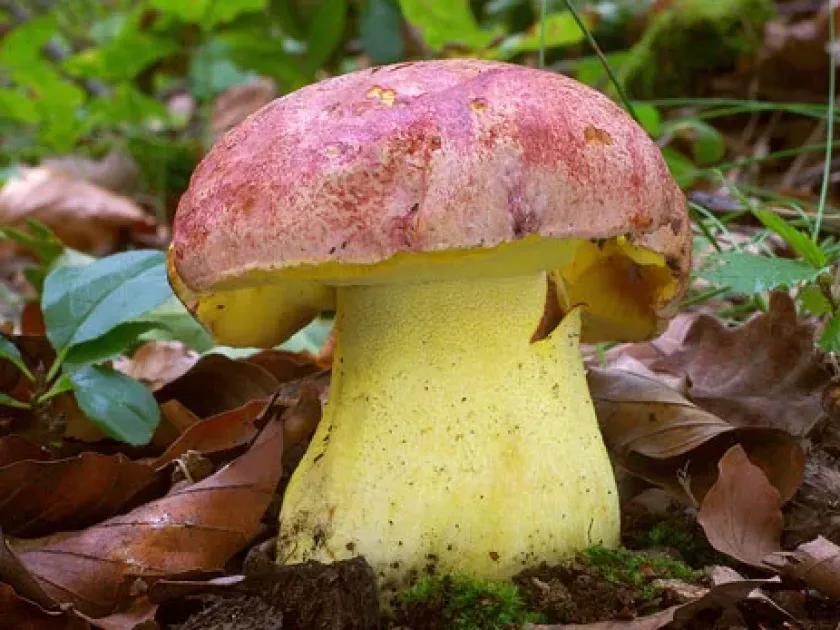
Description
Pathogen
It is essential to clarify that Boletus regius (Royal bolete) is not a plant disease or a crop pathogen. It is a prized edible mushroom species belonging to the Boletaceae family.
This fungus does not infect agricultural crops; rather, it is a mycorrhizal species that exists in a symbiotic relationship with trees.
Any confusion regarding its status as a disease is biologically unfounded, as Boletus regius acts as a natural partner to forest ecosystems.
The mycelium network of the fungus facilitates nutrient absorption and water uptake for its host plants, contributing to forest health.
In scientific terms, this mushroom is a beneficial organism that contributes to ecological stability rather than acting as a plant pathogen.
Conditions for development
The Royal bolete thrives primarily in deciduous forests, showing a strong preference for oak and beech environments with rich organic soil.
Ideal development conditions include high soil humidity and moderate temperatures during the late summer and autumn seasons.
This mushroom is highly sensitive to soil contamination and the overuse of agricultural chemicals, serving as a bioindicator of forest health.
Optimal growth is observed in stable, undisturbed environments where the soil microbiome remains intact and diverse.
The reproduction process is driven by spores, which rely on natural dispersal mechanisms within the forest habitat.
Why it matters
There is absolutely no harm associated with the Royal bolete in agricultural or horticultural settings.
Since it is not a parasite, it does not inflict damage on plant tissues, stems, roots, or fruit of cultivated plants.
The presence of such mycorrhizal fungi is typically indicative of high soil quality and a balanced, healthy environment.
It is not categorized as a pest or disease by any plant protection agency or agricultural department globally.
There are no negative economic consequences for farmers associated with this mushroom species in the field.
Protection
No control measures are necessary, as the Royal bolete is not a target for agricultural management or pest control programs.
Conservation efforts should be directed toward protecting the natural forest habitats where this mushroom grows to ensure its survival.
Field specialists should distinguish between beneficial symbiotic fungi and real phytopathogenic threats that require intervention.
The use of fungicides should be restricted in buffer zones near forest areas to protect the naturally occurring beneficial fungal biodiversity.
Practicing sustainable land management helps maintain the ecological balance where such beneficial species play their part.
Discussion
No discussions yet — be the first.