
Brown birch bolete
Boletus betulicola
Description
Symptoms
Visible signs of the fungus's presence include the emergence of fruiting bodies within the root zone of birch populations.
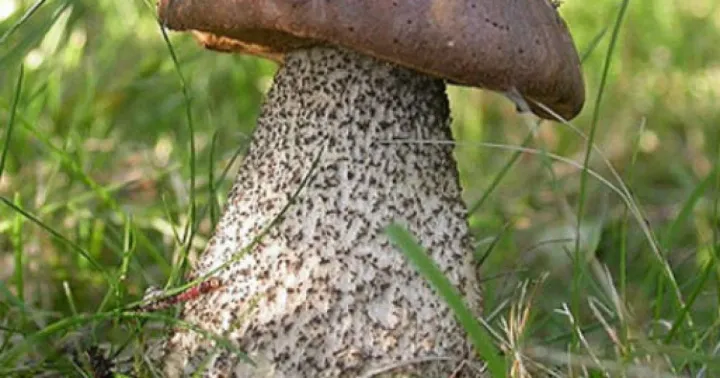
The mushroom cap is hemispherical, transitioning to convex, with a color spectrum ranging from grayish-brown to dark brown.
The flesh of the mushroom typically does not change color when cut, which serves as a key morphological characteristic for identification.
The stem features a characteristic scaly surface that darkens as the fungus matures, resulting in a grayish or brownish texture.
Fruiting bodies appear sporadically during the growing season whenever environmental conditions remain stable and favorable.
Pathogen
The brown birch bolete, scientifically known as Leccinum scabrum (often historically associated with Boletus nomenclature), is not a plant disease.
From a biological standpoint, this organism is a gilled or pored cap fungus belonging to the Boletaceae family, classified as a mycorrhizal species.
It does not act as a phytopathogen or a causal agent for infectious diseases in agricultural crops or forest tree stands.
The interaction between the fungus and its host tree, specifically the birch, is defined as a mutualistic symbiosis rather than parasitism.
The fungal mycelium wraps around the plant's roots to form ectomycorrhiza, which assists the tree in better nutrient and moisture uptake.
Conditions for development
Successful mycelium development and fruiting body formation require the presence of a symbiotic partner, typically Betula species.
Optimal soil moisture levels for active growth range from 60 to 80 percent, as the fungus prefers moderately damp environments.
A temperature range between +15 and +22 degrees Celsius is considered most favorable for the active phase of fruiting.
The fungus prefers light, well-aerated soils rich in organic matter, typically with neutral to slightly acidic pH levels.
During prolonged drought, the development of fruiting bodies stops, though the mycelium remains viable within the leaf litter layer.
Why it matters
As a non-parasitic organism, the brown birch bolete does not inflict damage upon agricultural crops or forest tree species.
On the contrary, the presence of this fungus is an indicator of a healthy forest ecosystem and active nutrient cycling within the soil.
The lack of deleterious effects categorizes this species as a beneficial component of the forest biocenosis, supporting timber growth.
In standard agronomic practice, this species is not considered a target for phytosanitary control or eradication efforts.
Any perceived negative impact is strictly aesthetic, relating to landscaping preferences rather than any biological damage to vegetation.
Protection
Protection measures against the brown birch bolete are not necessary, as the fungus is not a pathogen and requires no eradication.
To restrict the emergence of fruiting bodies in landscaped areas, one may limit excessive soil moisture through improved drainage.
Removing excess leaf litter and organic debris can reduce the probability of fungal structures developing in specific zones.
The use of chemical fungicides is counterproductive, as they may harm beneficial soil microflora and tree root systems.
The most rational method is the simple physical removal of fruiting bodies if their presence conflicts with territory maintenance standards.
Discussion
No discussions yet — be the first.