
Boletellus obscurococcineus
Boletellus obscurococcineus
Description
Symptoms
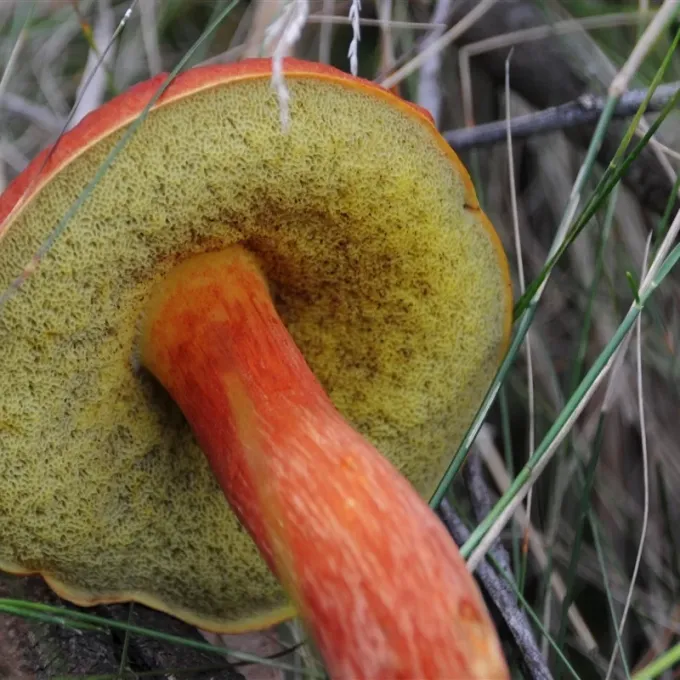
The primary sign of its presence is the appearance of fleshy fruit bodies in the forest floor, often near trees. The cap has a distinct dark red or purplish-red velvety surface.
The underside (hymenophore) is composed of tubes, usually yellow to yellow-green. The stalk is firm, sometimes red-toned, and does not exhibit any symptoms of plant decay or bacterial colonization.
Unlike actual plant diseases, Boletellus obscurococcineus does not cause leaf spotting, shoot deformities, or stunted growth. Plants in the vicinity of this fungus remain vigorous and healthy.
Fruit bodies appear during moist seasons, particularly in summer and autumn. They do not form mycelial networks that penetrate living plant tissues to extract water or nutrients.
Observing these mushrooms confirms a healthy, biologically active soil environment rather than an infestation or a threat to your garden or plantation.
Pathogen
Boletellus obscurococcineus is not a plant pathogen or a cause of any disease in agricultural or forestry crops. It is a basidiomycete fungus belonging to the Boletaceae family, typically leading a saprotrophic or mycorrhizal lifestyle.
Biologically, this organism functions as a soil-dwelling fungus, often forming symbiotic relationships with tree roots. Its life cycle is completely integrated into the forest soil and leaf litter decomposition processes.
In phytopathology, this species is not classified as a harmful agent. It does not induce wilting, rot, necrosis, or any pathology in living vascular plants, whether cultivated or wild.
Morphologically, it is identified by its dark red cap and tubular hymenophore. Unlike parasitic fungi, it does not produce enzymes that digest living host tissues for sustenance, making it safe for plant life.
Therefore, any association of this species with plant diseases is a misunderstanding. It is a beneficial component of woodland biodiversity that supports natural soil regeneration.
Conditions for development
The development of the fungus requires a specific set of environmental conditions, primarily high humidity and a thick layer of organic matter. It prefers shaded areas where moisture is conserved.
The fungus is largely dependent on the presence of symbiotic trees. Its mycelium thrives in the rhizosphere of compatible woody species, which provide essential carbon sources in exchange for minerals.
Temperature stability is vital for the formation of fruiting bodies. It thrives in moderate climates and is sensitive to extreme heat, drought, or complete freezing of the substrate.
The soil should be healthy and relatively undisturbed. High levels of synthetic fertilizers and soil compaction can inhibit the growth of the fungal mycelium, making it less likely to produce mushrooms.
Spores are dispersed naturally by wind, water, and soil fauna. These conditions allow the fungus to colonize and persist in established forest ecosystems for many years.
Why it matters
The fungus poses no threat to agriculture or forestry. It is not an invasive species, nor does it compete with crops for resources, as its nutritional strategy is localized and symbiotic.
Its ecological impact is overwhelmingly positive, as it contributes to the cycle of organic matter. By decomposing leaf litter, it helps cycle nutrients back into the soil, benefiting the surrounding flora.
As a mycorrhizal partner, it enhances tree resilience by improving nutrient absorption, especially phosphorus and trace minerals, from the forest soil.
Any perceived harm caused by this fungus is usually the result of human error, such as the unnecessary use of fungicides on a harmless organism, which can inadvertently damage the soil's delicate microbial balance.
Thus, Boletellus obscurococcineus maintains a neutral or beneficial status in any management plan, requiring no intervention or removal to protect plant health.
Protection
There are no control measures for this species because it is not a pathogen. Attempting to eradicate a beneficial mycorrhizal fungus is counterproductive and harmful to the ecosystem.
If the aesthetic presence of the mushroom is unwanted, it can be physically removed by hand. This will not harm the mycelium in the ground and is a sufficient action for any cosmetic concerns.
No preventative measures are needed. Instead, maintain soil health through organic practices, as this supports the natural diversity of beneficial fungi in your area.
If you suspect plant diseases in your garden, look for signs of true pathogens such as fungi from the genera Fusarium, Phytophthora, or various rusts, rather than focusing on Boletellus.
The best approach is to embrace the presence of this mushroom as a sign of environmental health and natural equilibrium in your soil structure.
Discussion
No discussions yet — be the first.