
Chrysanthemum phoma blight
Boeremia crinicola
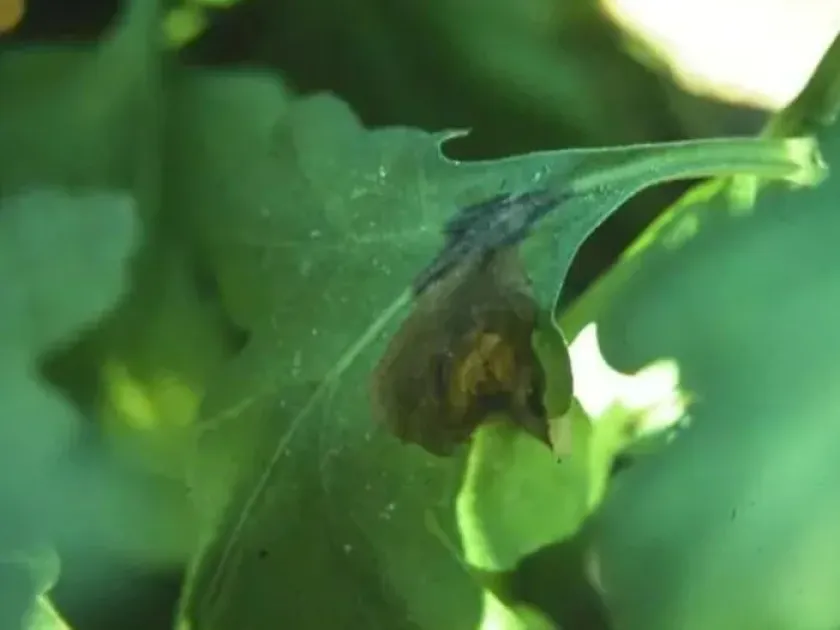
Description
Symptoms
The first signs of phoma blight appear as wilting of the lower leaves of the chrysanthemum. The leaves lose turgor, turn yellow, and eventually die off, starting from the leaf margins.
Upon inspection of the root collar, dark, brown, or almost black spots are found, which can eventually girdle the entire stem, causing a collar rot.
Cracking of the bark is often observed on the affected areas of the stem. If the outer layer of tissue is removed, dark necrosis can be seen penetrating deep into the plant's woody tissue.
The root system of the diseased plant darkens and gradually rots. Unlike healthy white roots, affected roots become brown, brittle, and emit a characteristic odor of decomposition.
Under high humidity conditions, a barely visible grey coating, consisting of fungal spores, may appear on the affected tissues, confirming the progression of the infection.
Pathogen
The causative agent of the disease is the pathogenic fungus Boeremia crinicola (previously classified as Phoma chrysanthemicola). This microorganism belongs to the class of deuteromycetes and can persist for a long time in plant debris and soil substrate.
The fungus primarily attacks the root system and the root collar of chrysanthemum plants. Its mycelium actively grows within plant tissues, gradually blocking the flow of water and nutrients from the roots to the aerial parts of the plant.
The life cycle of the pathogen involves the formation of pycnidia, where spores (pycnidiospores) mature. These spores serve as the primary source of infection for new plantings in both greenhouse and open-field conditions.
The pathogen is highly resistant to adverse environmental factors. It easily survives low temperatures in the soil and can persist in dry plant debris for several years.
The infection spreads through infected planting material (cuttings), as well as through non-sterile soil, contaminated tools, or irrigation water containing fungal spores.
Conditions for development
The most favorable conditions for the intense development of phoma blight are high humidity in both air and substrate. Water stagnation in the root zone significantly accelerates the spread of the pathogen.
The temperature range for the development of the fungus is quite broad, but it most actively affects chrysanthemums at moderately warm temperatures ranging from +18 to +24 degrees Celsius.
Insufficient ventilation in greenhouses, leading to condensation on plants, facilitates the rapid transition of the infection from one plant to neighbors in the row.
High planting density, which hinders normal air circulation, is a critical factor provoking outbreaks of phoma blight even with minimal inoculum present in the soil.
Stress factors, such as soil compaction, high substrate salinity, or root damage by pests, make chrysanthemums significantly more vulnerable to fungal infection.
Why it matters
Phoma blight is an extremely dangerous disease, capable of destroying up to 80-100% of chrysanthemum plantings in greenhouse operations if timely protective measures are not taken.
The disease disrupts the normal metabolism of the plant, leading to a complete cessation of growth and development, and subsequently to the death of the entire plant.
The main damage lies in the impossibility of selling the infected crop, as the ornamental quality of the plants is lost due to wilting and necrosis before flowering even begins.
The infection is highly contagious and spreads rapidly throughout the cultivation area, turning the greenhouse into a site of permanent pathogen accumulation that is difficult to eradicate without complete sterilization.
Economic losses include both direct plant mortality and costs for additional fungicide treatments, removal of infected substrates, and disinfection of equipment.
Protection
The foundation of phoma blight control is the use of exclusively healthy, certified planting material and mandatory soil disinfection before planting.
It is important to maintain a proper watering regime, avoiding waterlogging of the substrate, and ensuring regular ventilation of greenhouses to keep air humidity at optimal levels.
Upon detection of the first signs of the disease, affected plants must be immediately removed from the field along with the surrounding soil to prevent spore dispersal.
- Regular disinfection of tools after working with plants.
- Application of biological products based on Trichoderma to suppress fungal growth in the soil.
- Usage of systemic fungicides when necessary (according to regulations).
- Maintaining optimal planting density to improve aeration.
After the cultivation cycle, it is necessary to perform a full greenhouse disinfection and replace or thoroughly sterilize the substrate to destroy the overwintered fungal pycnidia.
Discussion
No discussions yet — be the first.