
Blumeriella kerriae
Blumeriella kerriae
Description
Symptoms
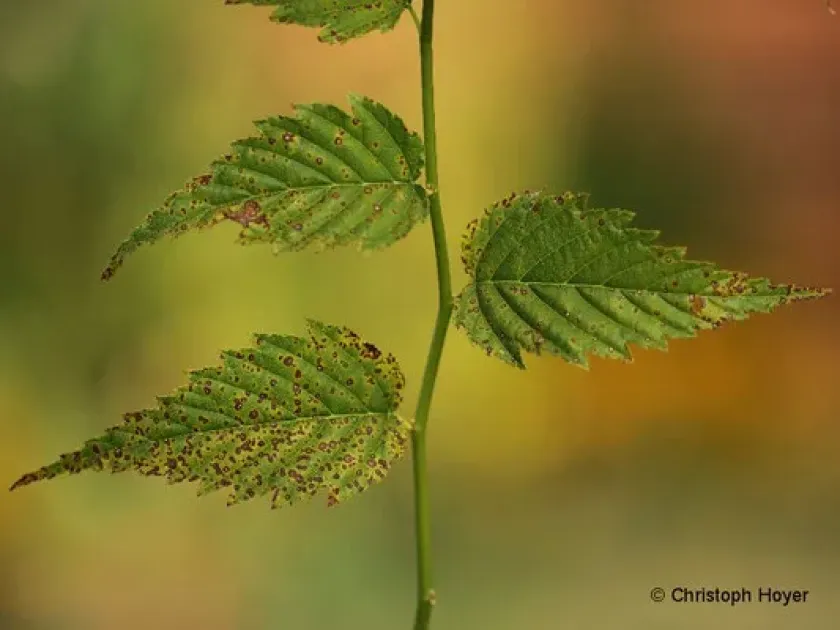
Early symptoms appear as small, circular or irregular spots on leaves, which are typically light brown or reddish-brown in color, often surrounded by a faint yellow halo.
As the infection progresses, these spots expand, darken, and may merge, eventually leading to large necrotic areas that compromise the structural integrity of the foliage.
Small, white, or cream-colored pustules, representing the conidial masses of the fungus, can be observed on the underside of the leaves under high humidity conditions.
Severe infections frequently cause premature leaf drop, which may leave branches bare long before the natural onset of autumn, stressing the plant significantly.
In addition to leaves, the fungus may infect petioles and succulent shoots, causing dark, sunken lesions that can potentially girdle and kill these growth sections.
Pathogen
The disease is caused by the fungus Blumeriella kerriae, an ascomycete pathogen that targets specific hosts within the Rosaceae family, primarily focusing on foliage and young shoots.
The pathogen functions as an obligate parasite in the initial stages, invading plant tissues through stomata and establishing a network of hyphae that extracts nutrients from the host.
The fungal life cycle involves both sexual and asexual stages, with conidia being the primary units of dispersal during the growing season, spread by splashing rain and air currents.
Overwintering occurs on fallen, decaying leaves as mycelium or as mature fruiting bodies, which serve as the primary inoculum source for the subsequent spring infection.
The biology of Blumeriella kerriae highlights its dependence on the physiological state of the host, as it thrives on weakened plants with suboptimal environmental conditions.
Conditions for development
The development of the disease is highly correlated with moisture availability; frequent rainfall and high relative humidity are essential for the germination of fungal spores.
The optimum temperature for Blumeriella kerriae proliferation ranges from 18 to 24 degrees Celsius, a climate typical of spring and early summer growth phases.
Poor aeration within the plant canopy, caused by lack of pruning or dense planting, significantly increases the risk of the fungus establishing a strong hold.
Warm, wet spring weather provides the perfect window for primary infection, making regular monitoring of weather forecasts a key part of disease management.
Environmental stress, such as drought or waterlogging, can weaken the plant's natural defense mechanisms, making it more susceptible to this fungal pathogen.
Why it matters
The primary damage results from the loss of photosynthetic leaf area, which reduces the plant's ability to produce energy and store nutrients for the following year.
Yield reduction is a common consequence for fruiting plants, as energy is diverted toward survival rather than development, often resulting in smaller or poorly formed fruit.
Repeated annual infections weaken the overall vigor of the plant, making it significantly less cold-hardy and more prone to mortality during harsh winter months.
Young nursery stock is particularly vulnerable, as even moderate infections can stunt growth and ruin the ornamental value of the plants.
Premature defoliation disrupts the nutrient cycling process and weakens the root system over time, potentially leading to the long-term decline of the specimen.
Protection
The most effective strategy starts with sanitation: carefully raking and removing all leaf litter at the end of the season to eliminate the fungus's primary wintering site.
Fungicide applications, particularly during the early leaf-out stage, are critical for managing the disease and preventing it from becoming an epidemic.
Promoting good airflow by pruning and thinning branches ensures that foliage dries rapidly after rain, creating an unfavorable environment for fungal growth.
Maintaining plant health through balanced fertilization and appropriate irrigation practices helps boost natural resistance against Blumeriella kerriae.
- Monitor plants for the first signs of leaf spots early in the season
- Sanitize pruning equipment between plants to avoid spreading spores
- Choose resistant cultivars if planting in high-risk areas
Discussion
No discussions yet — be the first.