
Biscogniauxia mediterranea
Biscogniauxia mediterranea
Description
Symptoms
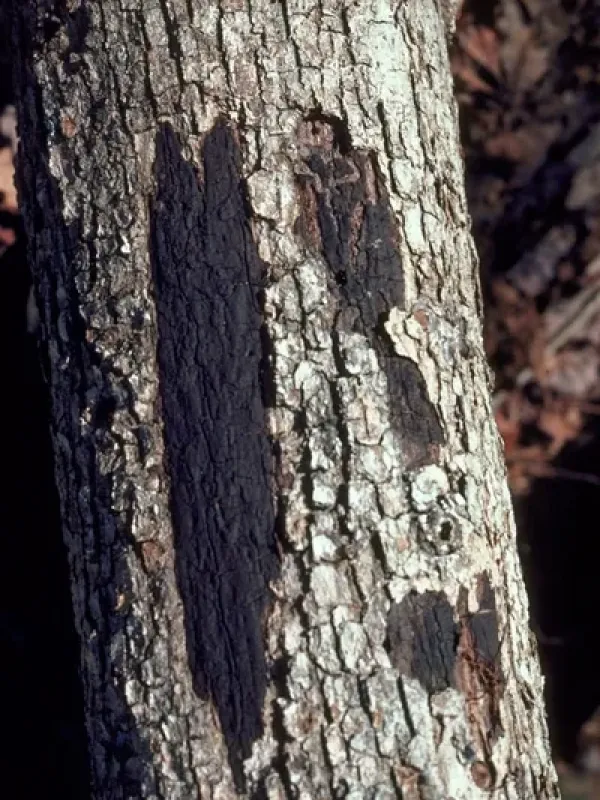
The primary symptom is bark necrosis, which eventually results in the bark peeling away to reveal the dead, dark wood underneath. Distinctive silver-to-black stromata form on the surface, representing the fungal fruiting bodies.
Affected trees show clear signs of canopy decline, including yellowing leaves and premature wilting of branches. Symptoms usually start in the upper crown and gradually progress downward toward the main stem.
Upon closer examination, one can observe significant necrotic zones in the cambium layer. The wood often exhibits dark staining, indicating that the fungus has successfully invaded the internal structures of the tree.
Large longitudinal cracks may appear on the trunk as the bark sheds. These cracks provide exit points for the fungus to release spores into the surrounding environment, increasing the risk of infecting nearby trees.
- Dieback of twigs and upper branches.
- Dark, crusty stromata on the trunk surface.
- Yellowing and early shedding of leaves.
- Extensive bark peeling and trunk necrosis.
Pathogen
The causative agent of the disease is the ascomycete fungus Biscogniauxia mediterranea, which belongs to the Xylariales order. It acts as a facultative parasite, taking advantage of stressed host plants to thrive.
The fungus often exists in a latent state within the tree tissues, remaining invisible until environmental or physical stress weakens the host's defense mechanisms. Once activated, the mycelium begins to colonize the xylem aggressively.
Spores are dispersed by wind and enter the tree through bark injuries, insect galleries, or other mechanical wounds. Once inside, the fungus grows extensively, clogging the vascular system and preventing water transport.
Its biological resilience to heat and drought makes it a dominant pathogen in Mediterranean climates. The fungus has evolved to reproduce efficiently even under extreme weather conditions, ensuring high infection rates.
Biscogniauxia mediterranea possesses enzymes capable of breaking down complex plant structural materials, which helps it to spread rapidly once the tree's immune system is compromised. Its ability to persist in dead wood makes it difficult to eradicate.
Conditions for development
Extended periods of drought are the most significant factor triggering the disease. Trees growing in shallow or dry soils are particularly vulnerable, as they lack the resources to maintain normal physiological function.
Insect activity, particularly by wood-boring beetles, facilitates the entry of fungal spores. Any damage caused by insects or machinery creates a perfect environment for the pathogen to establish a foothold.
High planting density leads to competition for water and nutrients, further weakening individual trees. In dense forest stands, the spread of spores is much faster due to the close proximity of branches and trunks.
Moderate spring moisture followed by a hot, dry summer provides the optimal weather cycle for the fungus to colonize trees. Climatic shifts resulting in longer heatwaves significantly expand the risk area for this pathogen.
Poor forest management, specifically leaving decaying wood in situ, leads to a massive accumulation of spores. This increases the infection pressure on the remaining healthy trees significantly.
Why it matters
The disease causes catastrophic damage to oak populations, leading to widespread mortality. This results in the loss of valuable timber and the degradation of natural habitats that depend on healthy oak forests.
Timber quality is severely affected, rendering the wood unsuitable for high-value carpentry or construction. This creates massive economic losses for the forestry industry and timber trade.
Ecological harm includes the collapse of forest ecosystems, as many species rely on healthy oaks for sustenance and shelter. The loss of oak trees alters the biodiversity balance in the region.
Standing dead trees increase the fire hazard in affected forest areas significantly. These dry, standing skeletons can turn an entire woodland into a high-risk zone during the fire season.
In urban forestry and park landscapes, the loss of mature oaks ruins the aesthetic value of the area. Replenishing these trees is costly and takes several decades, making early intervention critical.
Protection
The most effective strategy is consistent forest health monitoring and the immediate removal of symptomatic trees. Early detection is key to preventing the fungus from spreading throughout the forest stand.
Minimizing mechanical injury during harvesting or maintenance is essential. Any accidental wounds to the bark should be treated with appropriate fungicides or wound dressings to prevent infection.
Improving the health of the trees through better water management and nutritional support helps increase their innate resistance to the pathogen. A strong, healthy tree is much better equipped to contain the infection.
Preventative fungicide applications may be justified in nurseries or valuable ornamental collections during high-risk seasons. Systemic treatments can provide a protective layer for the trees against spore penetration.
Destroying infected wood through burning or deep burial is mandatory to reduce the inoculum level. Leaving diseased wood in the field acts as a continuous source of spores, threatening the entire forest area.
Discussion
No discussions yet — be the first.