
Helminthosporium leaf spot
Bipolaris
Description
Symptoms
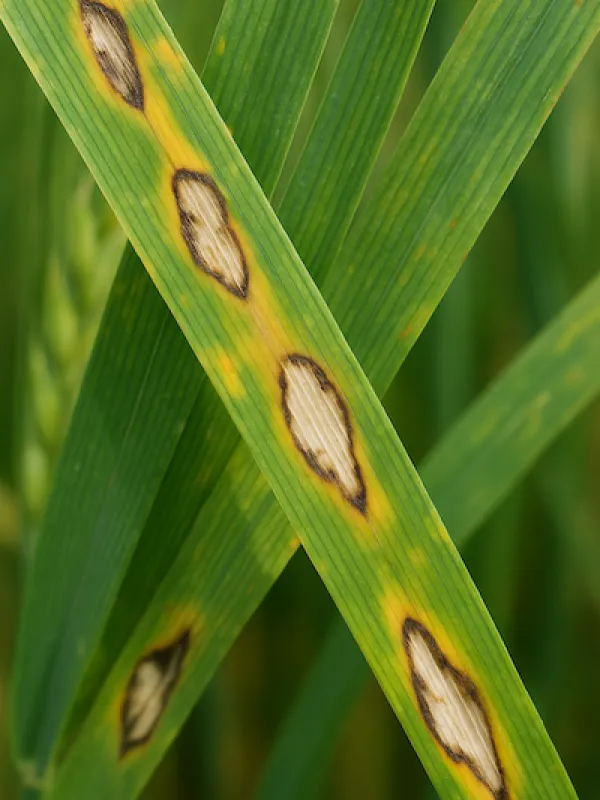
Symptoms typically appear as dark brown, elongated spots on leaves, often surrounded by a chlorotic halo. These lesions gradually expand and can merge, eventually causing significant portions of the leaf tissue to wither.
Under high humidity, a velvety, olive-gray layer of fungal mycelium and spores becomes visible on the surface of the lesions. This secondary infection phase is responsible for rapid disease spread within a field.
Crown and root rot are common manifestations of this disease, particularly in early developmental stages. This leads to stunted seedling growth, poor root development, and eventual damping-off, resulting in sparse plant stands.
The disease also affects the grain itself, leading to what is known as "black point" at the embryo end of the seed. This discoloration not only ruins the grain's visual appeal but also negatively impacts germination rates.
In the field, the symptoms progress from the lower, older leaves upwards as the canopy provides a microclimate favorable for the fungus. If left unchecked, the upper leaves, which are critical for grain filling, become infected.
Pathogen
The disease is caused by fungi of the Bipolaris genus, with Bipolaris sorokiniana being the most prevalent pathogen affecting cereal crops worldwide. This fungus survives primarily in soil debris and is also transmitted through contaminated seeds.
The pathogen is highly versatile, capable of producing conidia that disperse via wind, rain splash, or mechanical means. Once spores land on a host, they germinate and penetrate the epidermal tissues, often aided by specific fungal enzymes.
Its biological cycle is reinforced by the ability to form chlamydospores, which allow the fungus to persist in adverse environmental conditions for extended periods. This persistence makes the pathogen difficult to eradicate from affected fields.
The infection process involves a complex interaction between the fungus and the host plant's defense system. The pathogen secretes toxins, such as helminthosporol, which induce chlorosis and necrosis in the surrounding leaf tissues.
Genetic diversity within Bipolaris populations means that different strains may exhibit varying levels of aggressiveness. Continuous monitoring is required to understand which strains are dominant in specific agricultural regions.
Conditions for development
The development of the disease is highly dependent on warm, humid conditions. Optimal temperatures for fungal activity range between +20°C and +28°C, and consistent moisture is essential for successful spore germination.
Frequent rainfall or persistent morning dew creates an ideal environment for the fungus to thrive. If the leaf surface remains wet for extended periods, the risk of a severe disease outbreak increases dramatically.
Monoculture practices are a primary driver of pathogen buildup. When cereal crops are grown repeatedly in the same field, the concentration of fungal spores in the soil increases, ensuring an early infection each season.
Poor soil fertility, particularly low potassium levels, makes plants more susceptible to infection. A balanced nutrient regimen strengthens the plant cell walls, providing a physical barrier against pathogen penetration.
Dense crop stands reduce air circulation, which prevents leaves from drying quickly after rain or irrigation. This creates a stable, moist microenvironment that accelerates the spread of Bipolaris throughout the field.
Why it matters
The economic impact of Helminthosporium leaf spot is significant, primarily due to yield losses resulting from reduced photosynthetic capacity. Infected plants fail to fill their grains properly, leading to low test weights.
Grain quality is severely degraded, making the harvest less suitable for commercial use. The presence of black point and shriveled grains reduces market value and processing efficiency for flour and malt.
Severe early-season infections can lead to total crop failure in specific spots, forcing farmers to bear the cost of reseeding. This interrupts farm management schedules and reduces overall production volume.
The disease also impairs the plant's natural resistance to other environmental stresses, such as drought or secondary infections by other fungi. This compounding effect makes recovery difficult for affected crops.
Furthermore, the increased cost of fungicide applications and the necessity of specialized seed treatments represent significant financial burdens on modern agricultural operations aiming for high-yield harvests.
Protection
Integrated disease management is essential. Using high-quality, certified, and appropriately treated seeds is the first line of defense to prevent early seedling infection from seed-borne inoculum.
Implementing a rigorous crop rotation schedule, avoiding cereals for at least 3 years on the same plot, effectively reduces the soil inoculum load. Proper soil tillage also helps bury infected stubble, facilitating faster decomposition.
Timely application of systemic fungicides during critical growth stages, such as the stem elongation phase, is highly effective. Rotation of different chemical classes is necessary to manage resistance in the fungal population.
Genetic resistance is the most sustainable approach. Breeding programs continue to develop cultivars with stronger innate immunity to Bipolaris, which remains the foundation of long-term disease control.
Stubble management using biological decomposers or incorporation with nitrogen fertilizer can minimize the fungal survival rate in crop residues. This practice ensures that the next season starts with a significantly lower infection pressure.
Discussion
No discussions yet — be the first.