
Beauveria bassiana
Beauveria bassiana
Description
Symptoms
The initial signs of infection include reduced feeding and sluggish behavior in pest populations, as the internal organs of the insect begin to fail.
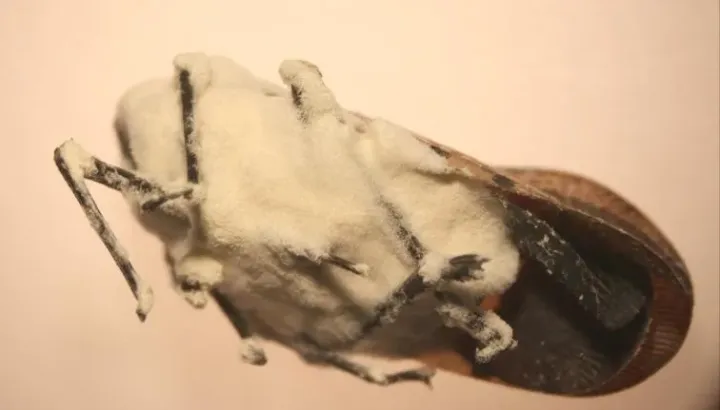
After death, a distinctive white or creamy-colored mold begins to emerge from the insect's body. This is the fungus sporulating and breaking through the cuticle.
Affected insects often become rigid and mummified. This physical state is a hallmark of fungal infection, commonly referred to as "white muscardine disease" in insect pathology.
Under magnification or careful field observation, one can see the dense layer of fungal spores covering the cadavers, which serves as a reservoir for further spread.
If you find clusters of rigid, white-dusted insects on leaves or in the soil, it is a clear indicator that the fungus is actively working in your field.
Pathogen
Beauveria bassiana is a beneficial entomopathogenic fungus that occurs naturally in soils throughout the world. It is not a plant disease but a biological agent that targets a wide variety of insect pests.
The fungus acts by infecting insects upon contact. Conidia (spores) attach to the insect's cuticle and, triggered by appropriate humidity, germinate and penetrate the insect's outer shell.
Once inside, the fungus produces toxins like beauvericin and grows throughout the host's body, consuming internal tissues and eventually causing the insect to die.
This natural biological process makes it an essential tool for organic farming and Integrated Pest Management (IPM), providing a sustainable alternative to synthetic chemical insecticides.
Unlike chemical pesticides, Beauveria bassiana does not leave harmful residues on crops, making it a safe choice for food production and environmental health.
Conditions for development
High relative humidity is the most critical environmental factor for the successful infection and transmission of Beauveria bassiana spores.
Optimal temperatures for fungal growth and insect infection range between 20°C and 28°C. Temperatures outside this range significantly decrease the pathogen's activity.
Ultraviolet (UV) radiation from direct sunlight can rapidly degrade fungal spores, reducing their viability on plant surfaces; therefore, late-day applications are preferred.
Soil moisture levels are essential when targeting soil-dwelling pests. Sufficient moisture allows the fungus to survive and colonize the subterranean habitat of the insects.
Effective pest control depends on matching application timing with the periods when insects are most active and sensitive to infection by the fungal conidia.
Why it matters
Beauveria bassiana is harmless to plants; it does not infect or cause damage to crop tissues. It is strictly specialized for insect hosts.
However, misuse of bio-products can cause economic harm if the application fails to control pests, leading to crop damage due to delayed intervention.
Indiscriminate use may affect non-target beneficial insects, such as pollinators or natural predators, if the timing and placement are not carefully managed.
The fungal agent is not a "quick fix" and may take several days to kill the pests; therefore, relying on it during a massive outbreak without other strategies can be risky.
Without proper monitoring and environmental management, the population of pests may outpace the growth of the fungus, rendering the biological treatment ineffective.
Protection
Successful management relies on preventive applications. It is best to introduce the fungus before pest populations reach economic damage thresholds.
To ensure maximum efficiency of biological control, follow these guidelines:
- Apply during periods of high humidity or use irrigation to create a favorable microclimate.
- Avoid mixing the fungus with chemical fungicides that may inhibit its growth.
- Use spray equipment that ensures thorough coverage, especially under leaves and in hidden crevices.
- Include adjuvants that protect spores from UV light and enhance adhesion to the insect cuticle.
- Monitor pest mortality rates 7–14 days post-application to evaluate the treatment success.
Integrating Beauveria bassiana into a broader pest management program allows for sustainable control while reducing the overall dependency on synthetic chemical inputs.
Maintaining healthy soil biodiversity can also encourage the natural presence of these fungi, creating a long-term suppressive effect on pest populations.
Regular scouting and accurate pest identification are essential to ensure the correct application timing for maximum biological efficacy.
Discussion
No discussions yet — be the first.