
Bankera fuligineoalba
Bankera fuligineoalba
Description
Symptoms
Bankera fuligineoalba is a rare basidiomycete fungus and is not a plant pathogen. It is frequently misidentified as a disease, but it belongs to the family Bankeraceae.
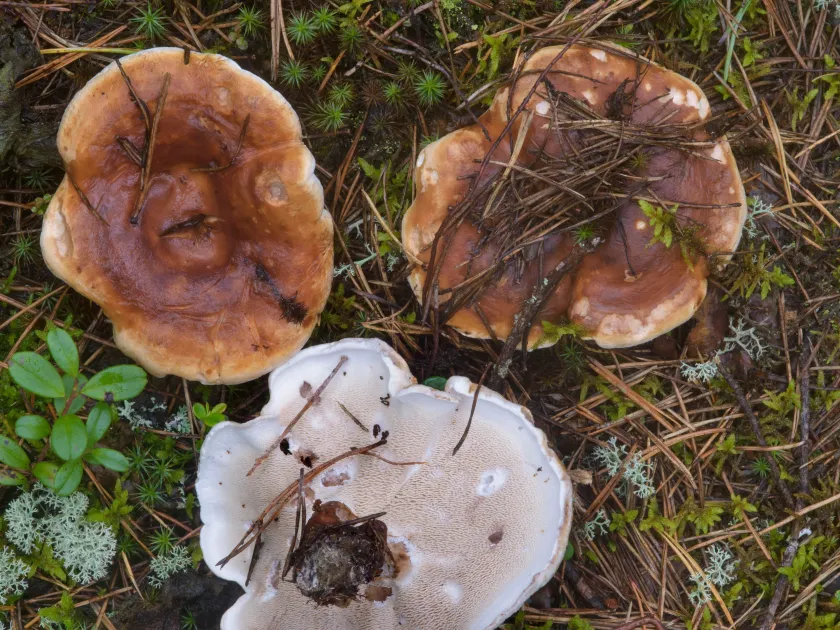
Its fruiting bodies feature a grayish-white to brownish cap with a velvety texture, often displaying tiny spines on the underside of the cap.
These mushrooms typically grow individually or in small, fused clusters on the forest floor, primarily under coniferous trees in mature forests.
The visual characteristics include a distinct color change in mature specimens, ranging from dirty white to brownish-gray, which gives the species its descriptive name.
Detecting the fungus is generally limited to autumn months when conditions are damp enough for the development of visible fruiting bodies above the soil surface.
Pathogen
This fungus is not a pathogen; it is a beneficial mycorrhizal partner for various coniferous tree species, particularly pine and spruce.
The mycelium establishes a symbiotic relationship with tree roots, forming ectomycorrhiza which assists the host plant in absorbing nutrients and moisture from the soil.
It lacks the enzymatic ability to degrade living plant tissues or cellulose, distinguishing it clearly from wood-decaying fungi or root rot pathogens.
The biological role of Bankera fuligineoalba is solely focused on mutualistic nutrient exchange, enhancing the overall vigor of the host trees.
Microscopic analysis of the spores reveals an angular morphology, confirming its identification as a non-parasitic species that thrives in stable forest ecosystems.
Conditions for development
The species requires established, mature coniferous forests to grow, as it relies on specific ecological conditions provided by older trees.
Soil quality is paramount, with the fungus preferring acidic, nutrient-poor, sandy soils common in old-growth pine forests.
Sufficient soil moisture and the presence of a thick layer of moss or needle litter are essential to protect the mycelium from desiccation throughout the growing season.
Stable climatic conditions, specifically the absence of heavy soil disturbance and stable moisture levels, are critical for the formation of fruiting bodies.
Human activities, including intensive soil compaction or heavy nitrogen fertilization, disrupt the delicate mycorrhizal network and can lead to the decline of this species.
Why it matters
Bankera fuligineoalba causes no harm to agricultural crops, garden plants, or forest trees. It is essentially harmless to any economically important vegetation.
Misclassifying this fungus as a plant disease is dangerous, as it might lead to the unnecessary and harmful application of fungicides in forest or garden settings.
There is no evidence of this species invading human-cultivated areas or posing any threat to timber production or ornamental horticulture.
On the contrary, the presence of such mycorrhizal fungi is a sign of a healthy, functioning ecosystem where nutrient cycling is active and efficient.
Therefore, the species holds no negative impact and should be viewed as an integral part of the biodiversity of coniferous forest habitats.
Protection
Control measures are unnecessary and counterproductive, as the fungus is a natural and beneficial component of the forest soil ecosystem.
Protection and conservation of the habitat, including leaving the forest floor undisturbed, are the recommended approaches for supporting these rare fungi.
Preventing chemical contamination of the soil in forest areas is the best way to ensure the long-term survival of this and other mycorrhizal species.
Educating growers and land managers about the distinction between beneficial fungi and actual pathogens is vital to avoid unnecessary intervention.
In conclusion, Bankera fuligineoalba requires no control; it should be allowed to perform its natural role as a symbiont without human interference.
Discussion
No discussions yet — be the first.