
Rice balansia
Balansia oryzae-sativae
Description
Symptoms
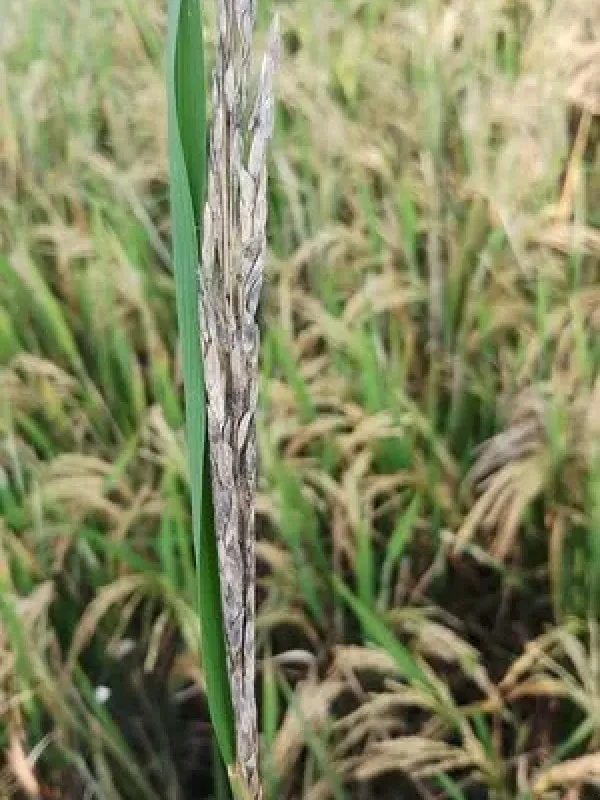
The most visible symptom of rice balansia is the presence of dense, dark fungal stromata on the stems and leaf sheaths of the plant.
Infected plants frequently exhibit abnormal growth, such as the failure of panicles to emerge from the leaf sheath or their deformation.
Stunted growth is commonly observed, where affected plants look significantly smaller and less vigorous compared to healthy specimens.
As the disease progresses, the fungal growth can harden, leading to the brittle appearance of the stalks and reduced overall biomass.
- Dark fungal growth on stalks.
- Panicle deformation and stunted development.
- General plant stunting.
- Reduced vigor and discoloration of foliage.
Pathogen
The causative agent of this disease is the fungus Balansia oryzae-sativae, which belongs to the class of Ascomycetes and specifically parasitizes grass hosts.
The pathogen infects the host plant, embedding itself within the vascular tissues and interfering with the transport of nutrients and water.
The fungus produces stromatic structures that are characteristic of its lifecycle, allowing it to survive and propagate within the host tissues.
Balansia oryzae-sativae is known to colonize various parts of the rice plant, gradually depleting the energy reserves intended for grain development.
Its biological cycle is well-adapted to high-humidity environments, making it a persistent challenge for rice producers in specific climate zones.
Conditions for development
The development of rice balansia is heavily reliant on high ambient humidity and regular rainfall during the growing season.
Warm temperatures, typically ranging from 22°C to 28°C, are considered optimal for the rapid germination and spread of fungal spores.
Dense planting patterns create a humid microclimate within the canopy, which significantly encourages the development of the pathogen.
Water stagnation in fields can further promote the persistence of the fungus by maintaining the high moisture levels it requires.
Crop debris from previous harvests acts as a primary inoculum source, especially when field sanitation practices are neglected.
Why it matters
The primary economic impact of this disease is a substantial loss of yield, as infected panicles often fail to produce viable grain.
Grain quality is severely compromised, resulting in lightweight, shriveled, and commercially unacceptable products.
The disease weakens the host plant, making it more susceptible to other secondary pathogens and environmental stresses.
Consistent damage leads to significant losses in field productivity and adds operational costs for mitigating the disease spread.
In regions where the pathogen is endemic, it poses a constant risk to food security and farm profitability for rice growers.
Protection
Effective management begins with the use of resistant or tolerant rice varieties, which is the most sustainable approach to control.
Rigorous field sanitation, including the removal and destruction of crop residues, is essential to minimize the overwintering of the fungus.
Adjusting planting densities ensures better airflow and light penetration, which reduces the moisture levels favored by the pathogen.
Crop rotation helps interrupt the lifecycle of the fungus by denying it a suitable host for successive growing cycles.
When preventive measures are insufficient, localized fungicide applications may be necessary to manage the outbreak and protect the crop yield.
Discussion
No discussions yet — be the first.