
Bacterial disease
Bacteroides fragilis
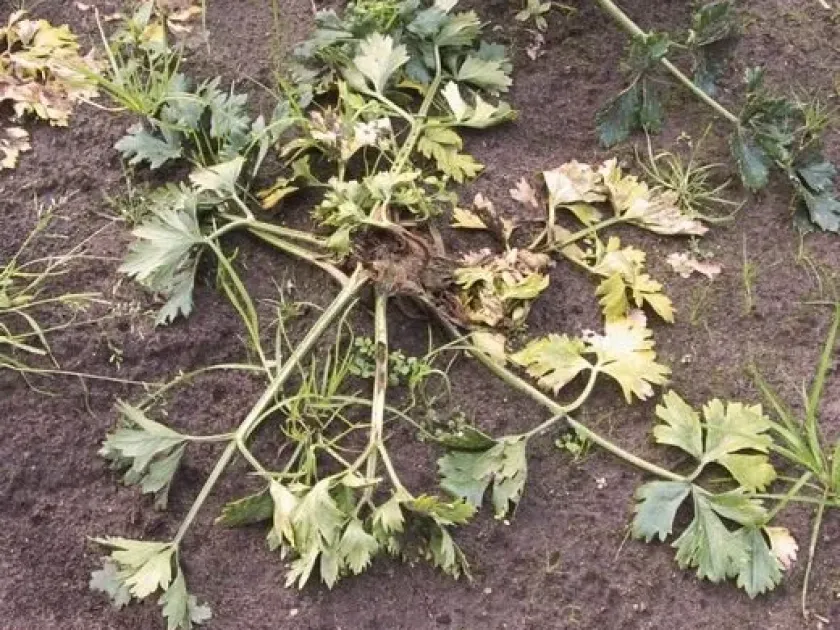
Description
Symptoms
The first signs typically include water-soaked spots that eventually turn brown or black. Affected tissues lose their turgor, become soft, and often emit a foul odor, indicating the advanced stage of enzymatic decay.
In cases of vascular infection, wilting of leaves occurs, which does not recover after watering. This happens because the bacterial colonies obstruct the plant's xylem, preventing the transport of water and essential nutrients to the upper parts of the plant.
Under high humidity, a bacterial ooze appears on the surface of lesions. These sticky droplets contain high concentrations of the pathogen and serve as the primary source of secondary infections for neighboring healthy plants.
On tubers, roots, and fruits, the disease appears as soft rot, which spreads rapidly inward. The inner contents turn into a mushy consistency while the outer skin may remain intact until the final stages of the infection.
Premature yellowing and death of leaf tissue, often starting from the edges or between the veins, are also typical symptoms, frequently confused with nutrient deficiencies or drought stress.
Pathogen
The causal agents of this disease are phytopathogenic bacteria capable of infecting various parts of higher plants. Unlike highly specialized microorganisms, these bacteria often act as opportunistic pathogens, triggering infection when the host plant's immunity is weakened by stress or environmental conditions.
The disease is classified as a bacterial infection, manifesting as soft rots, vascular wilting, or necrotic spots. The bacteria enter the plant tissues through natural openings like stomata or via mechanical wounds caused by pests, hail, or agricultural activities.
Once inside, the pathogen multiplies rapidly, secreting enzymes that break down the middle lamellae of cell walls. This destruction causes a loss of tissue structural integrity, leading to the decay of plant organs into a soft, amorphous mass.
The life cycle of the pathogen is closely tied to plant debris and the soil, where it can persist for long periods. Under favorable conditions, the bacteria colonize affected tissues, creating a characteristic bacterial ooze that facilitates further spread.
Specific strain identification usually requires laboratory analysis, as symptoms may mimic fungal infections, although the management strategies for bacterial diseases differ significantly.
Conditions for development
Excessive humidity is the most critical factor for the development of the disease. Prolonged rainfall, heavy fog, or overhead irrigation creates a water film on the plant surface, providing an ideal environment for bacterial movement and penetration.
The temperature range between +20°C and +30°C is generally optimal for most phytopathogenic bacteria. High temperatures combined with humidity create an "incubation chamber," leading to rapid disease outbreaks.
Mechanical injuries are the main "gates" for infection. Pruning with unsterilized tools during wet weather or insect activity significantly increases the risk of wide-scale infection across the field or greenhouse.
Poor aeration and dense planting hinder air circulation, preventing the canopy from drying out quickly. This persistent moisture around the foliage is a key prerequisite for initial bacterial colonization.
Failure to rotate crops and the accumulation of infected plant debris in the soil increase the overall disease pressure, making even resistant cultivars susceptible to infection under adverse weather conditions.
Why it matters
The primary danger of bacterial disease is its rapid spread. It can destroy a significant portion of the harvest both in the field and in storage, leading to substantial economic losses for farmers.
Affected plants stop developing, cease photosynthesis, and often perish. Even if the plant survives, the quality of the harvested produce is usually compromised, making it unsuitable for sale or long-term storage.
Bacterial infection often facilitates secondary colonization by other pathogens, such as saprophytic fungi, which accelerate the rotting process and compromise nearby healthy produce in storage facilities.
In greenhouses, bacterial diseases can reach epidemic proportions within days. This necessitates radical measures, including the immediate removal of infected plants and total sanitation of the growing environment.
The presence of such pathogens also disrupts the soil microbiome, potentially reducing long-term soil health and necessitating expensive recovery measures in subsequent planting cycles.
Protection
Using healthy, certified seeds and resistant cultivars is the foundation of effective management. Pre-sowing seed treatment and soil disinfection help reduce the initial infection pressure.
Implementing a proper crop rotation system—where susceptible crops are not grown on the same plot for at least 3-4 years—is mandatory to reduce the bacterial population in the soil.
Consistent pest management is crucial, as insects frequently act as vectors for bacterial transmission. Additionally, keeping fields free of weeds that may serve as alternative hosts is vital for prevention.
Upon detection of initial symptoms, affected plants must be removed immediately along with surrounding soil and destroyed. Tools must be disinfected after every cut in the infected area to prevent spread.
- Use biological fungicides based on Bacillus subtilis for prevention.
- Apply copper-based fungicides to limit bacterial growth.
- Switch to drip irrigation to keep foliage dry.
- Maintain optimal plant spacing to promote airflow.
- Ensure thorough removal and disposal of all crop residues after harvest.
Discussion
No discussions yet — be the first.