
Bacteriosis
Bacteroidales
Description
Symptoms
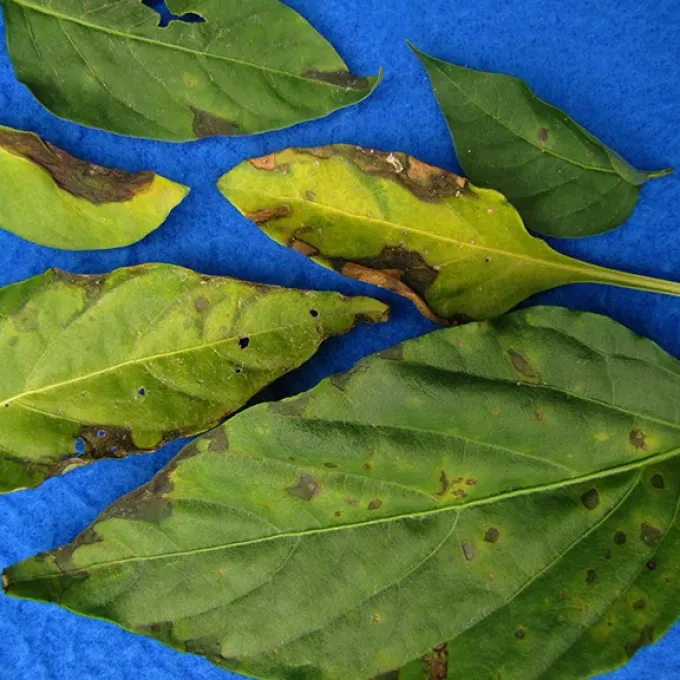
Early symptoms often present as small, water-soaked spots on leaves, which gradually expand and darken into necrotic lesions.
A diagnostic feature of many bacterial infections is the presence of a sticky bacterial ooze or exudate on the surface of affected tissue under high humidity.
Vascular browning and blackening on stems or root cross-sections are clear indicators of systemic bacterial infection within the plant's vascular system.
Soft rots are common, characterized by a rapid breakdown of tissue into a mushy, foul-smelling mass due to the degradation of middle lamellae.
- yellowing or chlorotic halos around lesions;
- stunting of plant growth;
- wilting of leaves even with adequate moisture;
- premature fruit drop or rotting.
Pathogen
Bacteriosis in plants is caused by various groups of phytopathogenic bacteria, which are prokaryotic organisms that lack a distinct nucleus and membrane-bound organelles.
These pathogens reside in intercellular spaces of plant tissues and secrete enzymes, such as pectinases and cellulases, to break down the host cell structure.
Bacteria reproduce rapidly by binary fission, allowing the pathogen population to increase exponentially under favorable conditions and overwhelm the plant's immune system.
They enter the plant through natural openings like stomata and hydathodes or through mechanical wounds caused by insects, hail, or agricultural operations.
Once inside, some species colonize the xylem, blocking the transport of water and nutrients, which eventually leads to the wilting and death of the plant.
Conditions for development
High humidity and prolonged periods of leaf wetness are essential for the dissemination and infection processes of most phytopathogenic bacteria.
Optimal temperatures for bacterial development typically range between 20°C and 30°C, making warm and humid seasons high-risk periods for outbreaks.
Dense planting configurations reduce airflow, causing humidity to linger on foliage and providing a perfect environment for bacterial colonization.
Mechanical stress, including storms, wind-driven sand, or improper pruning, creates entry points that bacteria readily exploit to infect the host.
Soil management, particularly excessive nitrogen fertilization, can result in succulent growth that is more susceptible to bacterial invasion.
Why it matters
Bacteriosis can cause severe economic losses by destroying entire fields of crops within a very short timeframe during the growing season.
The reduction in the photosynthetic area due to leaf spots severely limits the yield potential and quality of the harvested produce.
Bacterial diseases often cause post-harvest losses, as infected fruits and vegetables rapidly degrade in storage, spreading the rot to healthy inventory.
Control is difficult because systemic infections cannot be easily reached by topical chemical applications once the bacteria are inside the plant tissue.
Contaminated fields may remain unsuitable for susceptible crops for several seasons, requiring strict crop rotation practices to manage the pathogen load.
Protection
The primary control strategy is the use of resistant or tolerant cultivars that are bred specifically to withstand bacterial pathogen pressure.
Strict hygiene protocols, including the disinfection of tools and machinery, are crucial to prevent the human-aided spread of bacteria across fields.
Integrated pest management focusing on the control of insect vectors is vital since many bacteria are transmitted through the feeding activities of pests.
Copper-based bactericides serve as effective preventative measures when applied before the onset of infection or during favorable weather conditions.
Removing and destroying infected plant material from the field is a necessary measure to reduce the local inoculum source and prevent further spread.
Discussion
No discussions yet — be the first.