
Bacillus megaterium
Bacillus megaterium
Description
Pathogen
It is important to clarify that Bacillus megaterium is not a plant disease or pathogen. It is a well-known soil-dwelling, saprophytic bacterium recognized in modern agronomy as a Plant Growth-Promoting Rhizobacterium (PGPR) that provides essential benefits to crops.
The organism is a Gram-positive, spore-forming rod characterized by its relatively large cell size. It is widely distributed across various soil types and possesses the ability to survive in harsh environmental conditions due to its capacity to form resistant endospores.
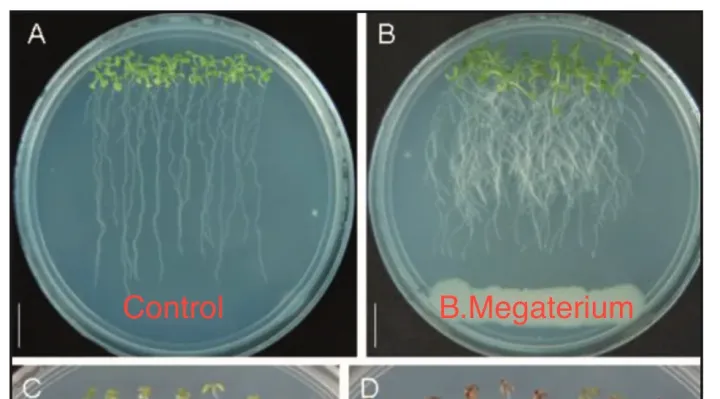
The biological activity of these bacteria is concentrated primarily in the rhizosphere, where they engage in a symbiotic relationship with plant root systems. The bacterium does not invade or destroy plant tissue; instead, it colonizes the root zone to enhance nutrient availability.
In natural environments, these bacteria play a crucial role in the mineralization of organic compounds. Their metabolic pathways facilitate the breakdown of complex organic matter, transforming it into simpler nutrients that are readily absorbable by agricultural crops.
Therefore, classifying this object as a plant disease is incorrect. Its role in agroecosystems is purely constructive, which has been extensively validated by decades of scientific research in soil microbiology and sustainable farming practices.
Conditions for development
The population density of these bacteria in the soil depends directly on the availability of organic matter, which serves as their primary carbon source. High soil moisture and optimal temperatures ranging from +20 to +30 degrees Celsius create the most favorable environment for their reproduction.
These bacteria exhibit remarkable survivability under varying temperature regimes. The formation of endospores allows them to remain viable during periods of temporary drought or cold, ensuring they remain a stable component of the soil microbial community.
Effective colonization of the rhizosphere requires a well-developed root system. Root exudates function as chemical signaling molecules that attract colonies of these microorganisms to the immediate vicinity of the plant, where they provide the most benefit.
Agricultural practices, such as compost application and mulching, significantly boost the population of this species. Conversely, the excessive use of synthetic fungicides can suppress beneficial microflora, reducing the biological diversity of the soil.
Soil pH also influences their activity: most strains prefer neutral to slightly alkaline soils. In highly acidic environments, their metabolic activity may decline, which can be mitigated through proper liming practices to optimize soil conditions.
Why it matters
There is no scientific evidence that Bacillus megaterium causes harm to agricultural crops. On the contrary, research confirms its non-pathogenic nature for plants, animals, and humans, making it a safe and essential component for organic and traditional agriculture.
While the uncontrolled application of excessive microbial inoculants might temporarily shift soil microbial balance, it does not induce plant diseases or cause crop failure. It is entirely safe for the agricultural ecosystem.
The absence of phytotoxicity positions this microorganism as a standard in environmentally friendly bio-fertilizers. Unlike genuine phytopathogens, this bacterium does not produce toxins that break down plant cell walls or cause systemic tissue damage.
The economic value of this object lies in its ability to improve soil fertility and plant vigor. Claims suggesting that this bacterium damages plants are typically the result of confusion with harmful species within the Bacillus genus, such as Bacillus anthracis.
Agronomists utilize these bacteria as a tool for pathogen suppression rather than a threat. They outcompete detrimental microorganisms for living space and nutrients, effectively creating a "shield" for the crop root system against potential infections.
Protection
Since this object is a beneficial microorganism, there is no need for control or protective measures. Agronomic strategies are actually focused on the preservation and stimulation of its natural populations within the soil layer.
To support soil health and optimize the activity of beneficial microbes, the implementation of crop rotation is highly recommended. This practice prevents the depletion of soil biota and ensures the presence of diverse substrates required for bacterial sustenance.
The application of balanced organic fertilizers promotes the growth of beneficial bacterial populations. A robust and healthy soil microbial community, rich in saprophytes, provides natural resistance against common soil-borne pathogens.
The use of biological fungicides based on other bacterial strains should be compatible with the existing microflora. Modern bio-preparations often feature synergistic blends of beneficial bacteria to provide comprehensive improvements to soil structure and plant immunity.
- Avoid excessive chemical input.
- Use cover crops to enrich soil with organic matter.
- Maintain optimal soil moisture levels.
- Monitor the microbial composition of the rhizosphere.
Discussion
No discussions yet — be the first.