
Bacterial plant disease
Bacillus
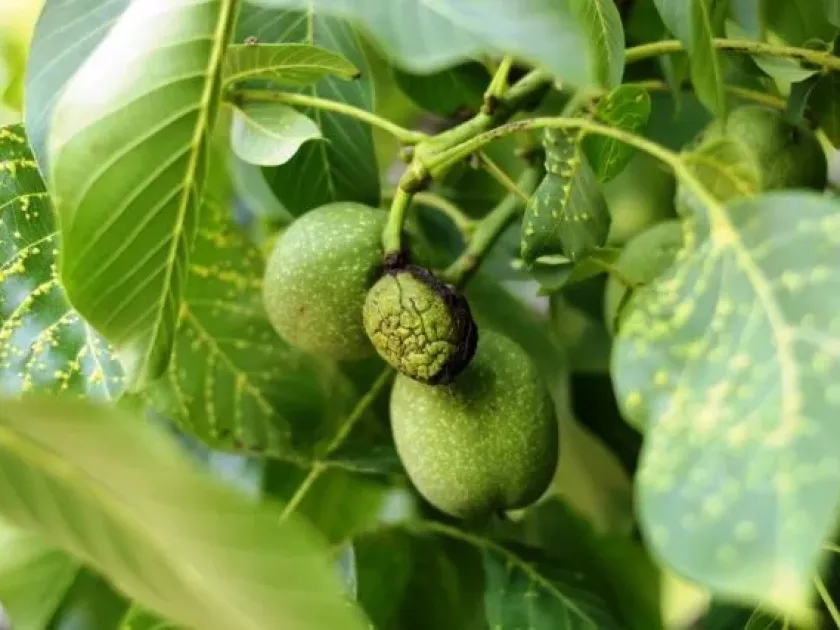
Description
Symptoms
The primary visual sign of a bacterial infection is the appearance of greasy, water-soaked spots on leaves, which darken over time and may develop a yellow halo. Tissue necrosis often follows, accompanied by a foul odor.
Vascular wilting is a classic symptom, where plants collapse even when soil moisture is adequate. When cutting into the stem, one might observe darkened vascular bundles and the secretion of a whitish or yellowish bacterial exudate.
Under high humidity, bacteria may form droplets of slime on the surface of infected organs, serving as a source for secondary infections. Eventually, tissues become soft, watery, and lose all structural integrity.
In root crops and fruits, the disease manifests as soft rot, where the internal content turns into a mushy, malodorous mass, rendering the product completely unfit for storage or consumption.
- Water-soaked, oily appearance of spots on leaves.
- Sudden wilting of shoots during the day.
- Vascular browning visible upon stem cross-sections.
- Bacterial slime exudate on infected tissue.
- Soft, mushy rot in fruits and storage organs.
Pathogen
Bacterial plant diseases are caused by various phytopathogenic bacteria, including members of the Bacillus genus, as well as Erwinia, Xanthomonas, and Pseudomonas. These are unicellular microorganisms that enter plant tissues through natural openings like stomata or via mechanical injuries.
Unlike fungal infections, these pathogens multiply rapidly within intercellular spaces and xylem, secreting enzymes that break down cell walls. Some Bacillus species can form spores, allowing them to persist in the environment for extended periods under harsh conditions.
Bacteria actively colonize the vascular system, impeding the movement of water and essential nutrients. The rate of their proliferation is highly dependent on ambient temperature and moisture levels, leading to rapid disease progression.
Transmission occurs through contaminated seeds, debris, agricultural tools, and insect vectors. The high adaptability of these microorganisms requires continuous monitoring of the phytosanitary status of fields and greenhouses.
The biology of these bacteria involves a complex metabolism that enables them to thrive on a wide range of agricultural crops, continuously adapting to the agricultural ecosystem and creating significant challenges for farmers.
Conditions for development
Optimal conditions for most bacterial diseases include high humidity and moderately warm temperatures. Rainfall and heavy dew are major factors that facilitate the spread of pathogens between plants.
Poor agricultural practices, such as over-irrigation, excessive nitrogen fertilization, and overcrowding, create an ideal microclimate for bacterial growth. Stressed or weakened plants are significantly more susceptible to infection.
Mechanical injuries resulting from pruning, weeding, or insect damage provide entry points for bacteria. Insect vectors are often responsible not only for plant injury but also for directly transporting the pathogens.
Temperatures between 20°C and 30°C are highly favorable for rapid bacterial multiplication, allowing the disease to reach epidemic proportions within just a few days under such conditions.
Fluctuating temperatures and humidity levels compromise the plant's immune system, leaving it vulnerable to bacterial attacks that can destroy entire harvests if environmental conditions favor the pathogen.
Why it matters
The main danger of bacterial plant diseases lies in their potential to spread extremely quickly across fields or storage facilities. Infected batches of produce can be completely ruined within days due to soft rot development.
Bacterial diseases are notoriously difficult to control once they become systemic. Chemical treatments are often ineffective because the bacteria are protected deep within the plant's vascular tissues.
Crop losses during severe outbreaks can be total. Beyond direct harvest reduction, the quality of seeds and planting material is degraded, serving as a vehicle for disease in subsequent growing seasons.
Economic damage includes the cost of containment measures, the necessity of disposing of contaminated produce, and significant post-harvest losses which represent a major financial burden to growers.
Additionally, some phytopathogenic bacteria produce toxins that may make the infected produce hazardous to consume, necessitating immediate destruction of the affected material to ensure public safety.
Protection
Prevention is the cornerstone of management, including the use of resistant varieties and pathogen-free seeds. Crop rotation is essential, with a gap of several years between susceptible host crops.
Good agricultural practices, such as proper irrigation, avoiding overcrowding, and effective pest management, significantly reduce infection risks. Regular sanitation of all gardening and farming tools is mandatory.
Chemical control often involves copper-based fungicides, which provide a protective barrier on plant surfaces. Biological controls using beneficial microbes can also help suppress pathogen populations early on.
Post-harvest sanitation involves the thorough removal and destruction of all infected crop residues, as they serve as the primary reservoir for bacteria in the soil. Deep plowing can help reduce the pathogen load.
In greenhouses, strict environmental control, including proper ventilation and humidity management, is critical to preventing conditions that favor bacterial development, ensuring the health and productivity of the crop.
Discussion
No discussions yet — be the first.