
Aurantiporus fissilis
Aurantiporus fissilis
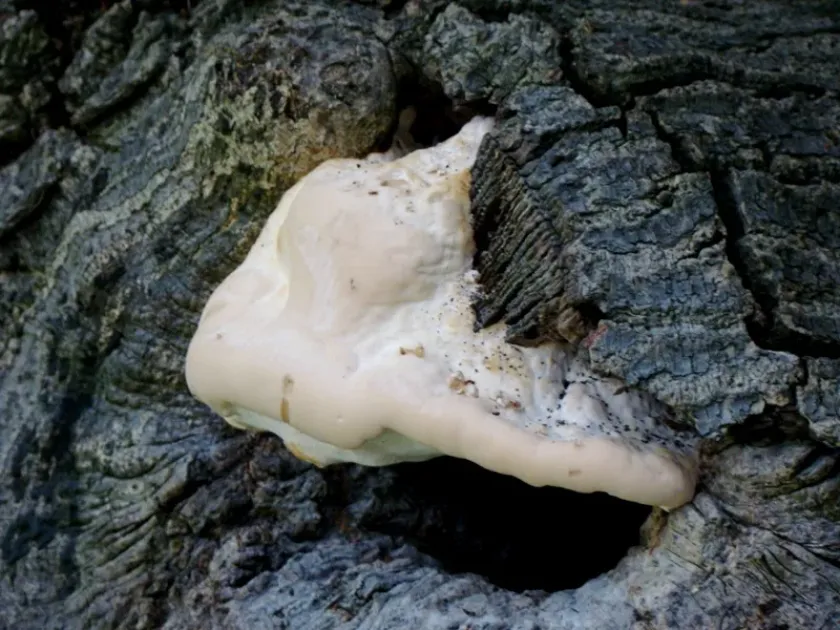
Description
Symptoms
The most visible sign of infection is the emergence of fungal fruit bodies (conks) on the bark surface, usually at wound sites or deep cracks.
The internal wood undergoes a significant transformation, becoming bleached, soft, and fibrous due to the activity of the fungal enzymes.
The structural integrity of the tree is compromised, often leading to bark peeling and brittle branches that snap under minimal stress.
Affected trees show visible signs of decline, including leaf yellowing, reduced vigor, and premature leaf drop during the summer season.
Exudation or moisture seeping from deep cracks in the bark is another common indicator of internal colonization by the fungal pathogen.
Pathogen
The causative agent of the disease is the wood-decaying fungus Aurantiporus fissilis, which belongs to the polypore family.
This pathogen acts as a wood-rotting fungus, capable of breaking down the structural components of the tree, specifically lignin and cellulose.
The mycelium colonizes the internal tissues of the tree, progressing from points of entry into the heartwood and sapwood.
It forms characteristic fleshy, white-to-yellowish fruit bodies that serve as the primary means of reproduction through spore release.
The fungus is highly efficient at establishing itself in injured trees, utilizing the exposed vascular system for rapid development.
Conditions for development
High humidity and consistent moisture levels around the trunk facilitate the germination of spores and the establishment of the fungus.
Mechanical injuries, such as pruning cuts, frost cracks, or pest damage, provide ideal entry points for the pathogen to penetrate the wood.
Poor aeration in the orchard, caused by dense planting, creates a microclimate that supports the long-term survival of fungal spores.
Trees experiencing environmental stress or improper nutritional management are significantly more susceptible to successful colonization.
The presence of necrotic tissue within the tree offers an ideal substrate for the fungus to expand its mycelial network effectively.
Why it matters
The primary danger is the severe reduction in structural strength, which makes the tree hazardous and prone to unexpected failure.
The interruption of water and nutrient transport leads to the gradual death of branches and eventually the entire tree.
Economic losses are inevitable as affected trees often require removal, leading to diminished yields and increased orchard maintenance costs.
The fungus acts as a long-term reservoir for infections, potentially spreading to other healthy trees in the vicinity via airborne spores.
Wood quality is irreversibly degraded, making the wood unsuitable for any structural or ornamental purpose due to extensive rot.
Protection
Sanitation is the most effective management tool, which involves removing and destroying fruit bodies to reduce the spore load.
Proper pruning techniques and the use of sterile tools are essential to prevent the cross-contamination of healthy trees during maintenance.
Applying wound dressings or fungicidal pastes to all pruning cuts and bark injuries helps create a physical barrier against spore entry.
Maintaining optimal tree health through balanced fertilization and irrigation improves the tree's natural defense mechanisms against rot.
If the infection is widespread, the safest practice is the total removal and disposal of the infected specimen to prevent the disease from spreading.
Discussion
No discussions yet — be the first.