
Ascodichaena rugosa
Ascodichaena rugosa
Description
Symptoms
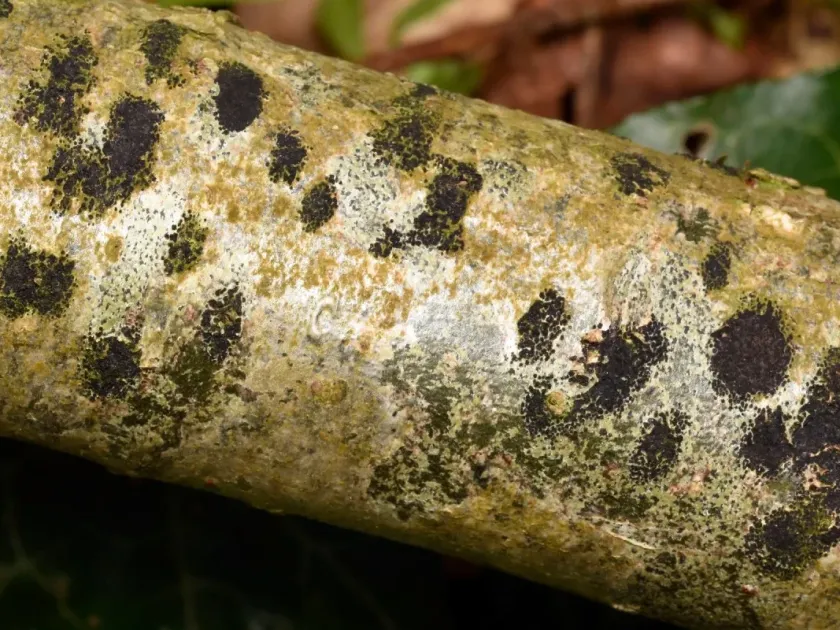
The primary symptom of Ascodichaena rugosa infection is the development of visible, warty, or wrinkled growths on the surface of tree bark.
The affected areas often exhibit a gray to black discoloration, which creates a striking contrast with the smooth bark of healthy trees like beech.
As the fungal colonies mature, the bark appears rough and fissured, with the epidermis often cracking or peeling off in small patches.
Small, dark, circular to irregular-shaped fruiting bodies emerge from the bark, forming dense clusters that cover large sections of the trunk.
While the internal wood is rarely damaged, the outer layer of the bark sustains significant cosmetic and physiological changes due to the fungal presence.
Pathogen
Ascodichaena rugosa is an ascomycete fungus that thrives as an epiphyte on the bark of certain broad-leaved trees, most notably Fagus species.
The fungus produces apothecia, which are small, submerged fruiting structures that release spores during wet and humid conditions.
It occupies the outer corky layers of the bark, obtaining nutrients while forming a network of mycelium that persists over many years.
This pathogen has evolved a specialized lifestyle that allows it to exploit the bark as a stable habitat while avoiding excessive damage to the host.
The dispersal of its spores is primarily mediated by wind and water splashes, ensuring efficient spread throughout forest stands.
Conditions for development
High humidity and prolonged periods of wet weather are the most critical environmental triggers for the activation and spread of this fungus.
Shaded forest areas with poor air circulation provide the perfect microclimate for the fungus to establish and colonize new surfaces on the bark.
Densely planted forests prevent the rapid drying of bark, which significantly favors the growth of Ascodichaena rugosa spores and mycelium.
The fungus is well-adapted to the temperate climate, showing increased activity during moist spring and autumn seasons.
While healthy trees can tolerate the fungus, those in stressed environments or with already compromised bark integrity are more susceptible to severe outbreaks.
Why it matters
Ascodichaena rugosa acts as a chronic stressor for the host, potentially interfering with the bark's normal physiological functions such as gas exchange.
The cosmetic damage caused by the fungus decreases the quality of timber, making the wood less desirable for high-value applications.
By disrupting the natural bark surface, the fungus may facilitate the entry of secondary pests or opportunistic pathogens into the tree's tissue.
Persistent infection on younger trees can contribute to reduced vigor and slower growth rates, affecting the overall productivity of the stand.
Although it is rarely lethal, the disease significantly impairs the aesthetic value of trees in ornamental parks and urban forestry settings.
Protection
The most effective management strategy involves ensuring proper tree spacing to promote air flow, which helps keep the bark dry.
Selective thinning and sanitary removals of heavily infected trees help lower the overall fungal spore load within a forest stand.
Regular monitoring of forest health is essential for identifying early stages of infection and preventing further spread in susceptible areas.
In ornamental settings, manual brushing of the bark can reduce the fungal load, although this is limited to small-scale applications.
Focusing on general tree vigor through proper silvicultural practices remains the best long-term approach to minimizing the impact of this disease.
Discussion
No discussions yet — be the first.