
Ascochyta leaf spot
Ascochyta graminicola
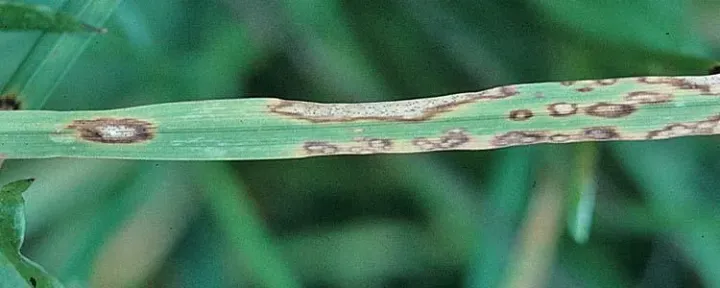
Description
Symptoms
Symptoms initially appear as small chlorotic spots on leaves. As the infection progresses, these spots enlarge into oval or irregular shapes, often displaying a brown or grayish center.
A diagnostic characteristic of Ascochyta leaf spot is the presence of minute black pycnidia, which appear as dots within the center of the necrotic lesions. This feature differentiates it from other common leaf spot diseases.
Infection typically moves from the lower foliage upward. In cases of severe pressure, the entire leaf blade may turn necrotic and die prematurely, significantly reducing photosynthetic capability.
Stems and glumes can also be affected by the pathogen. Dark spots on the heads can lead to reduced grain development and the appearance of grayish fungal growth under high humidity.
- Chlorotic spots developing into necrotic lesions.
- Presence of black pycnidia within spots.
- Premature yellowing and drying of lower leaves.
- Weakened stems leading to plant lodging.
- Poor grain filling and shriveled seeds.
Pathogen
The causal agent of this disease is the fungus Ascochyta graminicola, a member of the Coelomycetes group. It produces pycnidia, which serve as the primary reproductive structures in the infected host tissues.
The pathogen survives the winter in infected plant residues, seeds, and wild grasses. It persists as mycelium and pycnidia, acting as the primary source of infection in the following growing season.
Under favorable conditions, pycnidia release conidia that are disseminated via rain splashes and wind. These spores quickly infect healthy cereal leaves, starting new infection cycles throughout the spring and summer.
The fungus has a wide host range, primarily infecting wheat, barley, rye, and oats. Its ability to survive on wild grasses allows it to remain in the field even when cereals are not present.
The infection process is rapid, with multiple cycles occurring during the growing season. This high reproductive capacity can lead to significant disease outbreaks if conditions remain humid.
Conditions for development
Ascochyta leaf spot is heavily dependent on moisture. High relative humidity, frequent rain, and heavy dews provide the necessary environment for conidial germination and host penetration.
The optimal temperature range for the pathogen's development is between 18 and 25 degrees Celsius. However, it can remain active across a variety of moderate climates.
Dense crop canopies restrict air movement and keep leaves moist for longer periods, which greatly facilitates the infection process. This is particularly problematic in high-yield management systems.
Improper crop rotation, where cereals follow cereals, allows the pathogen to build up in the soil. Residue retention on the surface without deep incorporation increases the risk of early-season infection.
Nutritional deficiencies, especially in potassium and copper, can reduce the plant's natural defense mechanisms. Balanced fertilization is crucial to maintain crop vigor against fungal attacks.
Why it matters
The primary damage is caused by the reduction of the green leaf area, which limits the plant's ability to produce carbohydrates. This directly translates to lower biomass and yield losses.
Grain quality is often severely impacted, resulting in low test weight and shriveled kernels. Such grain may have limited market value and poor germination if used for sowing.
The pathogen produces mycotoxins that interfere with the plant's metabolic processes. This metabolic stress weakens the plant, making it more susceptible to environmental stressors like drought.
Significant economic losses can occur when the disease reaches epidemic levels. Farmers often face costs associated with fungicide applications to protect the yield potential of their crops.
Beyond direct yield loss, the disease increases the risk of contamination in the following year's crop cycle. Without proper management, the inoculum level in the field increases steadily.
Protection
The use of certified, disease-free seed is the most effective initial defense strategy. Fungicidal seed treatments provide early-season protection against seed-borne inoculum.
Crop rotation remains a fundamental practice to break the pathogen's cycle. Avoiding cereal-on-cereal sequences significantly lowers the risk of primary infection.
Deep plowing and proper residue management help bury infected plant debris, accelerating decomposition and reducing the survival of the fungus in the soil.
Foliar fungicide application is necessary during the growing season when environmental conditions favor disease spread. Products containing triazoles or strobilurins are effective if applied at the onset of symptoms.
Breeding for host resistance is the most sustainable approach to long-term control. Selecting cereal varieties with proven tolerance to fungal leaf spots can decrease dependency on chemical inputs.
Discussion
No discussions yet — be the first.