
Ascochyta blight of cotton
Ascochyta gossypiicola
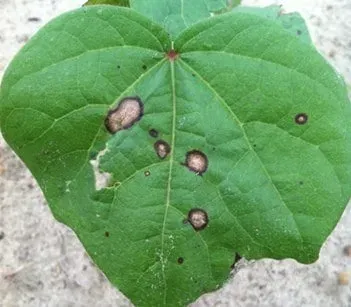
Description
Symptoms
Ascochyta blight symptoms appear on all above-ground plant parts, including cotyledons, leaves, stems, and bolls. Early signs are often visible on seedlings as small brown spots that gradually enlarge over time.
On the leaves of mature plants, the disease manifests as round or irregular spots that are grey or light brown in color. A dark margin frequently surrounds these spots, clearly defining the boundary of the necrotic tissue.
On stems, the infection causes elongated, sunken lesions with a dark brown hue. In these affected areas, the bark may crack, leading to a loss of plant turgor and premature wilting of the stems.
Under high humidity conditions, tiny black dots known as pycnidia develop on the surface of the lesions. These structures contain spores, which are then dispersed by wind and rain splashes to healthy plant tissues.
Boll infection results in dark, sunken spots on the exterior. Inside such bolls, the fiber often rots, losing its commercial quality and structural strength, which severely impacts the final harvest yield.
Pathogen
The causative agent of this disease is the anamorphic fungus Ascochyta gossypiicola. It belongs to the class Coelomycetes and is characterized by a pycnidial stage in its complex life cycle.
The fungus is capable of remaining viable for extended periods within crop residues left in the soil. Furthermore, the infection can be transmitted via the surface of seeds if proper seed treatment protocols are ignored.
The fungal mycelium penetrates plant tissues through mechanical wounds or natural openings like stomata. Once inside, the pathogen thrives in the intercellular spaces, degrading host tissue through enzymatic activity.
Propagation occurs through the formation of conidia inside pycnidia. Upon maturation, these spores are released, facilitating secondary cycles of infection throughout the entire cotton growing season.
While the pathogen shows high specificity for the Gossypium genus, it can occasionally infect other members of the Malvaceae family under suitable environmental conditions, acting as an alternative reservoir.
Conditions for development
High humidity and moderate temperatures are the primary drivers for Ascochyta blight development. The optimal temperature range for rapid mycelial growth lies between +20 and +25 degrees Celsius.
Frequent rainfall, morning fog, and furrow irrigation practices create a conducive environment for spore dissemination. Water droplets serve as the main vector, transporting inoculum from lower plant tiers upward.
Poor agricultural practices, such as excessive plant density, create stagnant air pockets within the field. In these microclimates, moisture persists on foliage for long periods, promoting massive disease outbreaks.
Imbalanced nitrogen fertilization, which encourages excessive succulent vegetative growth, lowers the natural resistance of the cotton plants, making them more susceptible to fungal invasion.
Infestations by insect pests that damage the epidermis, such as aphids or spider mites, significantly ease the entry of fungal spores into the plant tissue, accelerating the epidemic spread of the disease.
Why it matters
The primary threat of Ascochyta blight is the mass death of seedlings, which results in poor crop stands. Severe early-stage infections often necessitate replanting, causing substantial economic losses.
In mature plants, the disease triggers premature defoliation. This disrupts the photosynthetic process, limits the accumulation of carbohydrates, and drastically reduces the overall productivity of the crop.
Boll infection is the most damaging phase of the disease as it directly impacts the harvested product. Affected fibers become brittle, discolored, and lose their spinning quality, lowering the market value.
Total cotton yields can decrease by 15 to 30 percent in fields heavily infested with Ascochyta. The raw cotton quality suffers significantly due to contamination and reduced fiber grade.
The infection also compromises seed health. Seeds harvested from infected plants exhibit lower germination energy and act as a primary source for reintroducing the pathogen in the subsequent growing season.
Protection
The foundation of disease management is the use of high-quality, pathogen-free seeds. Seed treatment with appropriate fungicides before sowing is a mandatory step to eliminate external inoculum.
Implementing a crop rotation scheme, where cotton is not returned to the same field for at least 3 to 4 years, is crucial for breaking the infection cycle and reducing soil inoculum levels.
Thorough incorporation of crop residues into the soil after harvest promotes the rapid decomposition of organic matter, which limits the survival of the fungus. Deep autumn plowing is a recommended practice.
During the growing season, preventive fungicide applications, particularly those containing copper or systemic compounds, are recommended upon the first signs of disease on the field.
- Optimizing plant spacing to improve canopy aeration
- Effective pest control to minimize leaf damage
- Potassium fertilization to bolster natural plant immunity
- Timely defoliation to reduce microclimate humidity at the base of the plant
Discussion
No discussions yet — be the first.