
Armillaria novae-zelandiae
Armillaria novae-zelandiae
Description
Symptoms
Early symptoms include a gradual decline in foliage health, often characterized by chlorosis, thinning of the canopy, and reduced annual growth of shoots.
A definitive diagnostic sign is the presence of white, fan-shaped mycelial mats located between the bark and the wood at the root collar or base of the trunk.
Black, cord-like rhizomorphs may be found under the bark or spreading through the soil surrounding the affected tree's root system.
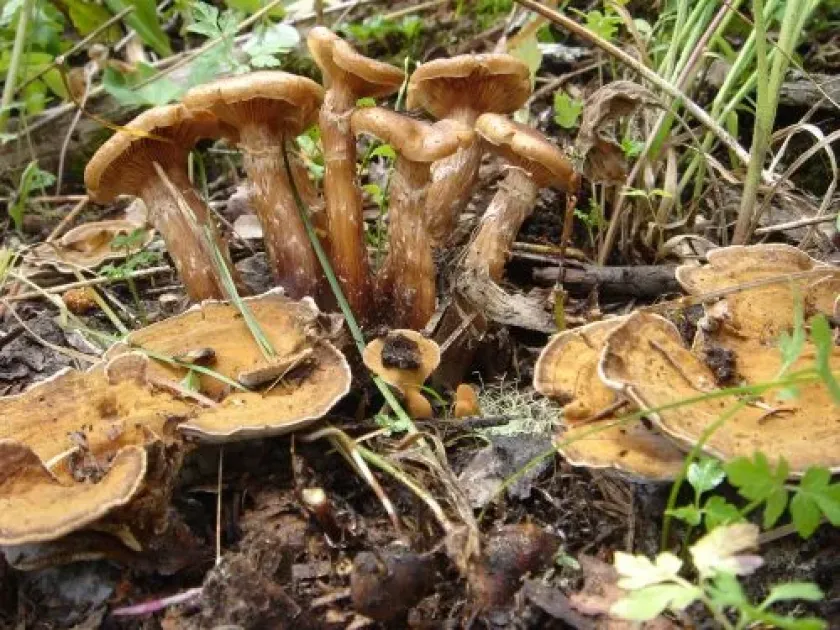
In the late stages of infection, clusters of yellowish-brown mushrooms (fruiting bodies) appear at the base of the dying tree or on nearby decaying stumps.
The wood tissue becomes soft and spongy, often showing a yellow-white discoloration due to the breakdown of cellulose and lignin by the fungal enzymes.
Pathogen
Armillaria novae-zelandiae is a species of basidiomycete fungus in the Physalacriaceae family. It is a well-known plant pathogen responsible for root and butt rot in various woody tree species.
The fungus is characterized by the production of rhizomorphs—thick, root-like structures of fungal mycelium that allow it to travel through the soil and infect new hosts.
It acts as a facultative parasite, meaning it can survive on dead organic matter like stumps and logs but quickly turns parasitic when it encounters living roots.
This species is a significant part of the mycobiota in its endemic regions, playing a dual role as a decomposer and a major tree killer.
The lifecycle includes both asexual stages through mycelial spread and sexual stages through spore dispersal from fruiting bodies.
Conditions for development
The development of this pathogen is highly favored by high soil moisture and moderate temperatures, which facilitate the rapid growth of rhizomorphs.
Trees stressed by drought, poor soil conditions, or previous mechanical injury are significantly more susceptible to infection by Armillaria spores or rhizomorphs.
The presence of woody debris, such as old stumps and logs, acts as a primary inoculum source, providing the fungus with the energy needed to infect healthy roots.
High planting density allows the fungus to spread easily from one tree to another through root-to-root contact, leading to expanding patches of diseased trees.
Lack of sanitary practices, such as leaving diseased trees in situ, perpetuates the cycle and increases the intensity of the disease in the area.
Why it matters
The primary damage caused by the fungus is the destruction of the cambium and vascular tissues in the roots, which halts water and nutrient transport.
Infected trees lose their structural integrity, leading to a high risk of windthrow, which can be dangerous in public forests and managed landscapes.
The disease leads to significant economic loss by causing widespread mortality in timber stands and ornamental gardens alike.
Once established in the soil, the pathogen is extremely persistent and difficult to eradicate, potentially preventing the replanting of susceptible species for many years.
The loss of wood quality due to fungal decay renders the affected timber useless for industrial or construction purposes.
Protection
The most effective management strategy involves the removal of stumps and roots from infected areas to eliminate the primary food base for the fungus.
Maintaining tree vigor through proper irrigation and soil management can help plants better resist the onset of the disease.
Trenching around infection centers can physically prevent the spread of rhizomorphs to neighboring healthy trees in sensitive landscape areas.
Biological control, utilizing beneficial fungi that compete with Armillaria, is an area of ongoing research for sustainable pathogen management.
- Regular inspection for signs of fungal mats and mushrooms.
- Sanitary removal of infected trees and root debris.
- Avoidance of root or bark injury during maintenance.
- Selection of resistant tree varieties for reforestation.
Discussion
No discussions yet — be the first.