
Witches' broom of serviceberry
Apiosporina collinsii
Description
Symptoms
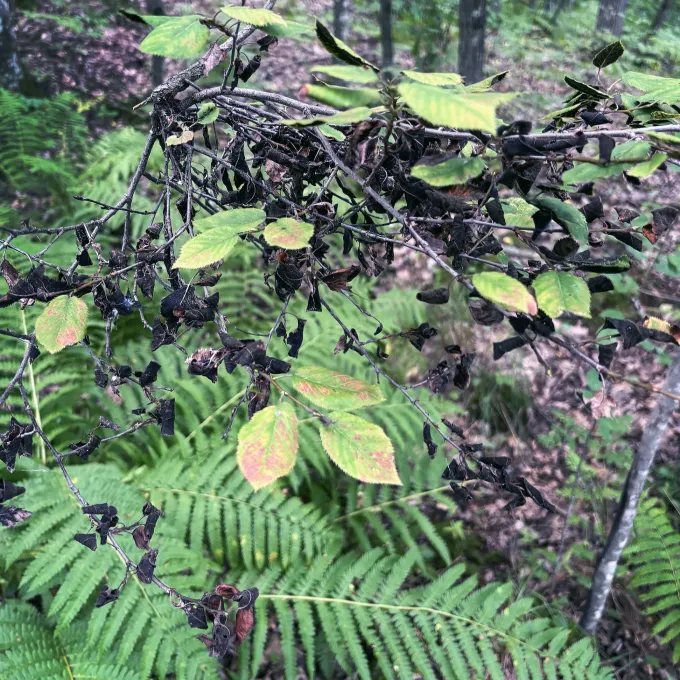
The primary symptom of infection by the fungus Apiosporina collinsii is the formation of witches' brooms—dense, stunted clusters of distorted shoots growing on the branches of the serviceberry plant.
During the early growing season, leaves on the affected areas appear curled and deformed, and they are typically covered in a velvety, dark olive or brown fungal layer.
Over time, the lower surface of these distorted leaves and the bark of the affected twigs become covered with spore-bearing structures, which appear as dark, crusty growths.
During the winter, these witches' brooms are easily identified as matted, dense clusters of twigs that stand out distinctly from the normal, skeletal structure of the serviceberry bush.
The infected branches eventually die back, but the fungal mycelium persists within the woody tissue, ensuring the disease remains active in subsequent years.
Pathogen
The disease is caused by the obligate parasite Apiosporina collinsii, a specific ascomycete fungus that targets species within the Amelanchier genus.
The fungus maintains a long-term infection by invading the cambium and xylem of the host plant, effectively hijacking the plant's growth mechanisms to create the characteristic distortions.
By producing hormones or stimulating the plant to produce them, the fungus forces dormant buds to sprout prematurely and repeatedly, resulting in the iconic "broom" growth.
Reproduction is primarily achieved through ascospores, which are released into the air and spread by wind or water splashes to healthy buds on the same or neighboring trees.
The pathogen is highly specialized, meaning its life cycle is perfectly synchronized with the phenology of the serviceberry, making it a persistent threat in suitable environments.
Conditions for development
The development of the disease is most favorable under conditions of high humidity and moderate temperatures, particularly during prolonged rainy spring weather.
Dense canopies or poor air circulation within the shrubbery create a moist microclimate that facilitates spore germination and colonization of new shoots.
The presence of infected wild serviceberry plants in the surrounding landscape serves as a major reservoir of inoculum, putting nearby cultivated gardens at high risk.
Plants that are stressed due to nutritional deficiencies, improper watering, or poor soil quality are generally more susceptible to initial infection by the fungus.
The most critical window for infection is during the bud-break phase in the spring, when tender, expanding tissues are most vulnerable to fungal penetration.
Why it matters
The main harm caused by the disease is the systematic depletion of the plant's energy reserves as resources are diverted to sustain the unproductive witches' brooms.
Flowering and fruit production are drastically reduced or entirely eliminated on affected branches, leading to a significant loss of yield for the gardener.
The aesthetic value of the shrub is compromised as the disease creates unsightly, unhealthy-looking masses that detract from the natural beauty of the serviceberry.
If left unmanaged, the disease can lead to the gradual decline and eventual death of the entire bush as secondary pathogens exploit the weakened woody structure.
Economic impact is seen not only in lost produce but also in the long-term cost of replacing mature shrubs that have become too heavily infected to salvage.
Protection
Pruning out the infected witches' brooms is the most effective management strategy; cuts should be made 10–15 centimeters into healthy wood to ensure total removal.
Best practices for sanitation:
- All pruned materials must be burned or disposed of off-site to prevent further spore dispersal.
- Pruning tools must be thoroughly disinfected with alcohol or a copper solution after use on infected plants.
Preventive spraying with copper-based fungicides before the buds swell in early spring can help protect healthy tissue from primary infections.
Maintaining adequate spacing and thinning the canopy annually improves air circulation, which significantly decreases the likelihood of fungal establishment.
Regular monitoring of serviceberry bushes, especially in early spring and late winter, allows for the early detection and removal of brooms before they become widespread.
Discussion
No discussions yet — be the first.