
Aphanocapsa
Aphanocapsa
Description
Symptoms
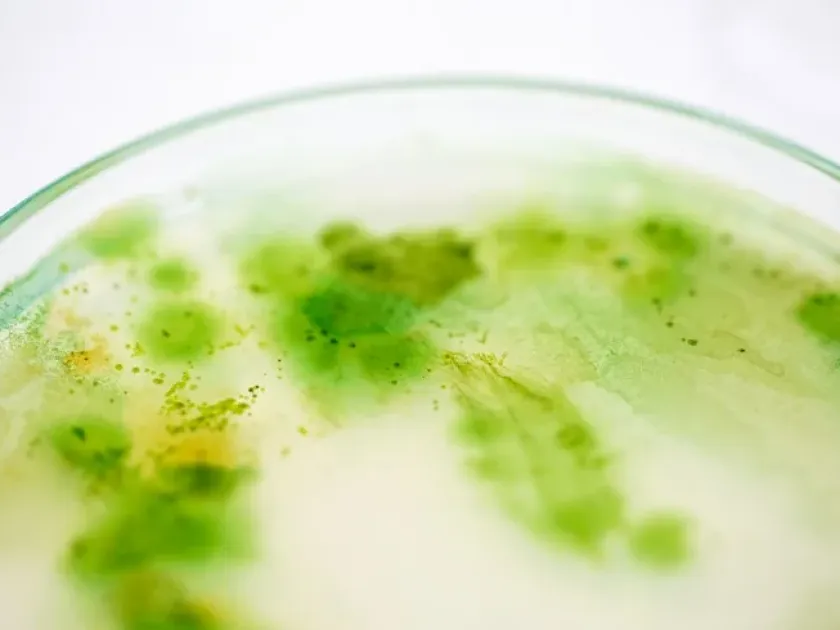
The primary symptom is the appearance of a blue-green, olive, or dark green slimy film covering the surface of pots or nursery beds.
As the colony matures, it may dry into a brittle, crusty layer that seals the soil surface, hindering oxygen diffusion to the roots.
Plants affected by these biofilms often show symptoms of stress, including chlorosis and stunted growth, caused by the physical barrier preventing proper root respiration.
Leaves that touch the contaminated surface may develop dark, greasy-looking spots due to the accumulation of moisture and cyanobacterial slime.
Rapid spreading after overhead irrigation is a key visual indicator, as the slime is easily dispersed by water droplets across the growing area.
Pathogen
Aphanocapsa is a genus of unicellular cyanobacteria that can form visible slime-like colonies on the surface of soil, substrates, and plant tissues under high moisture conditions.
These organisms are photosynthetic prokaryotes that thrive in environments with sufficient light and stagnant water, which are common in many greenhouse systems.
Biologically, they secrete a mucilaginous matrix that glues the cells together, forming dense mats or biofilms on surfaces.
In agriculture, they act as opportunistic colonizers that exploit poorly drained soil or over-saturated hydroponic media.
While not primary parasitic plant pathogens in the traditional sense, their presence indicates a severe imbalance in the microclimate of the cultivation area.
Conditions for development
High relative humidity and constant water saturation are the most critical factors for the proliferation of Aphanocapsa populations.
Exposure to light, especially in greenhouse environments, drives the photosynthesis required for these organisms to reproduce rapidly.
Poor ventilation leads to air stagnation, creating high-humidity micro-zones where the algae can survive and colonize new areas.
High nutrient levels in the growing medium, particularly phosphates and nitrates, provide an ideal food source for these cyanobacteria.
Improper drainage and the use of recirculating irrigation water containing organic matter promote the establishment of these microbial mats.
Why it matters
The main harm comes from the physical obstruction of gas exchange, which impairs both soil respiration and the transpiration of plant parts touching the ground.
By trapping moisture against the stem, these colonies can facilitate the development of secondary fungal pathogens and bacterial soft rots.
In seedlings, the physical crust on the soil surface can trap moisture at the root collar, leading to increased rates of damping-off disease.
Aesthetic degradation of ornamental plants reduces their market value, making them unsuitable for commercial sale.
Large-scale infestation in hydroponic systems can lead to clogged emitters and pipes, disrupting the efficiency of the entire nutrient delivery system.
Protection
Improving greenhouse ventilation is essential to lower the relative humidity and allow the surface of the growing medium to dry out regularly.
Optimization of irrigation practices, such as switching from overhead watering to drip irrigation, can minimize surface wetting.
Removing the top layer of contaminated substrate or applying a thin layer of sterile mulch helps to disrupt the cycle of cyanobacterial development.
If necessary, algicidal treatments can be used, provided they are safe for the specific crop and the overall ecosystem of the greenhouse.
- Sanitize irrigation systems regularly to remove biofilms;
- Implement proper drainage in all growing containers;
- Monitor nutrient concentrations to prevent over-fertilization.
Discussion
No discussions yet — be the first.