
Antrodia sinuosa
Antrodia sinuosa
Description
Symptoms
The first noticeable symptom of Antrodia sinuosa is the discoloration of the wood, which takes on a characteristic dark brown hue as the rot progresses.
As the moisture evaporates from the colonized wood, it shrinks and cracks in a cubical pattern. This crumbling of the wood tissue is a classic sign of advanced brown rot decay.
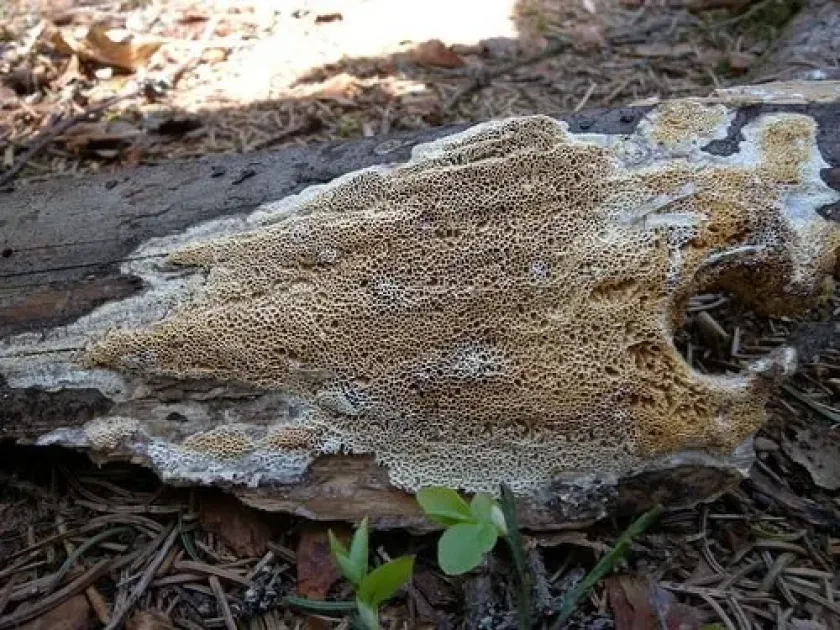
Fruiting bodies (sporocarps) are typically resupinate, meaning they grow flat against the wood surface. They are often wavy or irregular in shape, white to cream in color, and feature a porous underside.
If the wood is probed with a tool, it will show a significant reduction in hardness and structural integrity, often breaking into small, dusty cubes when manipulated.
The presence of white mycelial strings or sheets between structural components is a strong indicator of an active fungal colony, even before visible damage to the wood surface appears.
Pathogen
Antrodia sinuosa is a basidiomycete fungus known for causing severe brown rot in various coniferous wood species. It is a highly destructive pathogen of both timber and forest remains.
The fungus secretes enzymes that efficiently degrade cellulose and hemicellulose, leaving behind the brown, brittle lignin structure. This chemical process is characteristic of brown rot pathogens.
Its mycelium penetrates deep into the wood structure, forming dense, white, felt-like mats in cracks and crevices. This allows the fungus to thrive and expand its colonization area throughout the timber.
Spore production is the primary method of spread, with basidiospores carried by wind currents. Once they land on a suitable moist coniferous surface, they germinate to initiate a new infection cycle.
As both a parasite and a saprotroph, the fungus can impact living trees under stress, as well as harvested logs and lumber stored in humid conditions.
Conditions for development
Moisture is the most critical factor for the growth of Antrodia sinuosa. The fungus requires a wood moisture content exceeding 20% to thrive and actively decompose the substrate.
The optimal temperature range for mycelial growth is between 15°C and 25°C. While extreme cold can pause growth, it does not necessarily kill the fungus, allowing it to resume activity when conditions improve.
Poor ventilation and enclosed spaces where humidity can accumulate are perfect environments for the fungus to establish itself and spread across wooden beams and storage stacks.
Lack of preservative treatment on raw timber makes it highly susceptible to infection. The fungus quickly colonizes the sapwood of conifers, which provides sufficient nutrients for rapid growth.
Contact with moist soil or damp concrete surfaces provides a steady source of moisture and microbial inoculants, facilitating the transition of the fungus onto wooden structures.
Why it matters
The primary economic impact of this fungus is the rapid structural failure of timber. Once decay reaches advanced stages, the wood loses its load-bearing capacity and must be replaced.
In construction, Antrodia sinuosa can compromise the safety of residential and commercial buildings, leading to expensive repairs and potential hazards if left undetected.
For the forestry and lumber industry, the presence of this rot in stored logs significantly reduces their market value and renders large amounts of raw material unusable for quality products.
The fungus acts as a persistent source of infection in warehouses and lumber yards, where it can spread from spoiled wood to healthy inventory if hygiene protocols are not followed.
Because the interior decay is often hidden from view, major damage can occur before the infestation is recognized, making the fungus particularly dangerous for long-term wooden structures.
Protection
Effective prevention starts with moisture management. Keeping lumber in well-ventilated, dry storage areas is the most reliable way to prevent fungal colonization.
Applying high-quality industrial wood preservatives (fungicides) to timber is essential for protecting against decay. These treatments create a barrier that prevents spore germination.
Using structural separation between wood and potential moisture sources, such as concrete foundations or soil, helps prevent the wicking of water that the fungus needs to survive.
If an infestation is discovered, the affected wood should be removed entirely, including a buffer zone of healthy timber, and the remaining area should be treated with biocides.
Regular inspections of wooden structures, especially in damp areas like basements or foundations, are vital to detect and neutralize the pathogen before it causes significant harm.
Discussion
No discussions yet — be the first.