
Antrodia ramentacea
Antrodia ramentacea
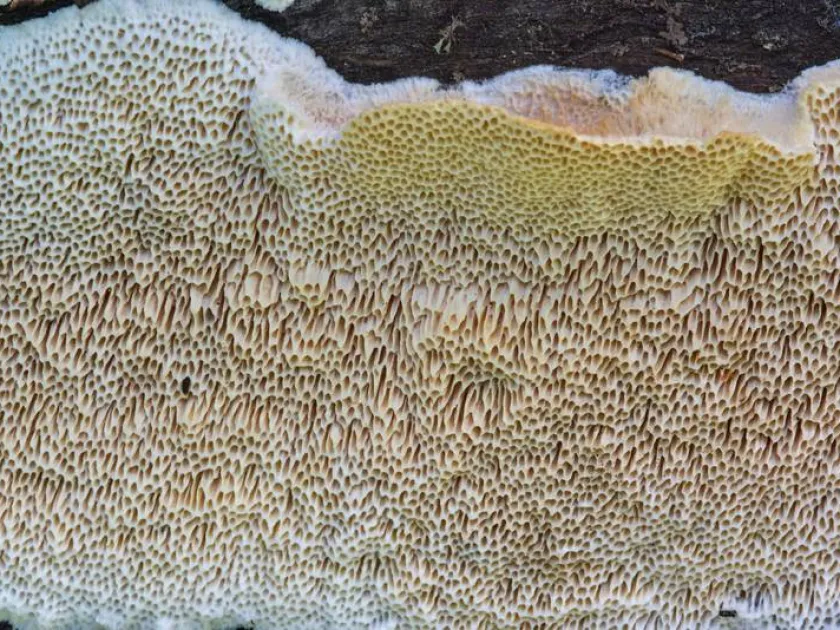
Description
Symptoms
The most prominent sign of infection is the development of cubical brown rot. The affected wood loses its cohesion and breaks into small, crumbly, block-like pieces.
In the early stages of infestation, one may observe a thin white mycelial film on the surface of the bark or the wood. This is often followed by the appearance of thin, porous fruiting bodies.
The internal color of the wood changes to a distinct brownish shade compared to healthy tissue. This discoloration is a clear indicator that the structural integrity of the timber is compromised.
Mechanical tests show a drastic reduction in density and strength of the timber. As the rot progresses, the wood loses its commercial value entirely.
- cubical brown rot formation;
- discoloration of wood tissue;
- presence of white mycelial mats;
- thin, resupinate fruiting bodies;
- increased brittleness of timber fiber.
Pathogen
Antrodia ramentacea is a basidiomycetous fungus responsible for wood decay in coniferous species. It is a known agent of brown rot, which specifically targets the structural components of timber.
The fungus produces thin, resupinate sporocarps that adhere tightly to the wood surface. These fruiting bodies are the primary source of spore production, facilitating the spread of the pathogen.
Biologically, the organism functions as a saprotroph, decomposing cellulose and hemicellulose. While it plays a role in the natural forest ecosystem, it becomes a significant threat to processed forest products.
The mycelium grows rapidly through wood fibers, breaking down the cell wall structure. This process is essential for the fungus to obtain carbon, but it destroys the mechanical strength of the timber.
Research indicates that Antrodia ramentacea is specifically adapted to coniferous hosts. Its enzymatic capacity allows it to thrive on both dead standing trees and stacked logs in storage yards.
Conditions for development
High moisture content in wood is the primary prerequisite for the growth of Antrodia ramentacea. Maintaining timber above the fiber saturation point significantly increases infection risk.
Optimal temperatures for the fungus range from 20 to 25 degrees Celsius, although it is resilient to various environmental fluctuations. Warm, humid weather accelerates the decay rate.
Poor ventilation within lumber stacks is a major factor in the spread of the pathogen. Stagnant air prevents the wood from drying, keeping it susceptible to fungal colonization.
Physical injuries to the bark of living trees or logs provide entry points for fungal spores. These wounds allow the mycelium to penetrate the nutrient-rich inner wood.
Contact between contaminated timber and healthy stock often results in rapid cross-infection. Storing wood directly on moist ground exacerbates the problem significantly.
Why it matters
The primary economic impact is the destruction of timber, rendering it useless for construction purposes. Brown rot destroys the structural capacity of the wood fibers.
Damage to wooden infrastructure, such as utility poles or building foundations, can lead to safety hazards. The loss of mechanical strength makes wood-based supports unreliable.
Large-scale infestation in storage yards leads to massive financial losses. The rapid spread of spores makes it difficult to contain the decay once it begins in a pile.
The fungus accelerates the degradation of organic matter in forests, which can be seen as natural, yet it conflicts with sustainable timber production and forest management goals.
Indirectly, infected logs serve as reservoirs for the pathogen, threatening the health of surrounding healthy stands and younger trees in the vicinity.
Protection
Sanitation is the first line of defense; removing deadwood and infected logs from forest areas reduces the spore load. Proper management of wood debris is essential.
Effective storage practices, such as stacking wood on raised, dry pallets, ensure proper airflow. Reducing the moisture content of the timber below 20% effectively inhibits fungal growth.
Chemical preservation using authorized wood preservatives is recommended for structural timber. Treatment blocks the enzymatic pathways of the fungus, preventing decay.
Regular inspections of wood stocks allow for the prompt identification of infected material. Segregating and destroying infested wood prevents further spread to healthy stock.
Ensuring proper ventilation and shielding stored wood from rain are standard industry practices to manage moisture and prevent Antrodia ramentacea outbreaks.
Discussion
No discussions yet — be the first.