
Antrodia albida
Antrodia albida
Description
Symptoms
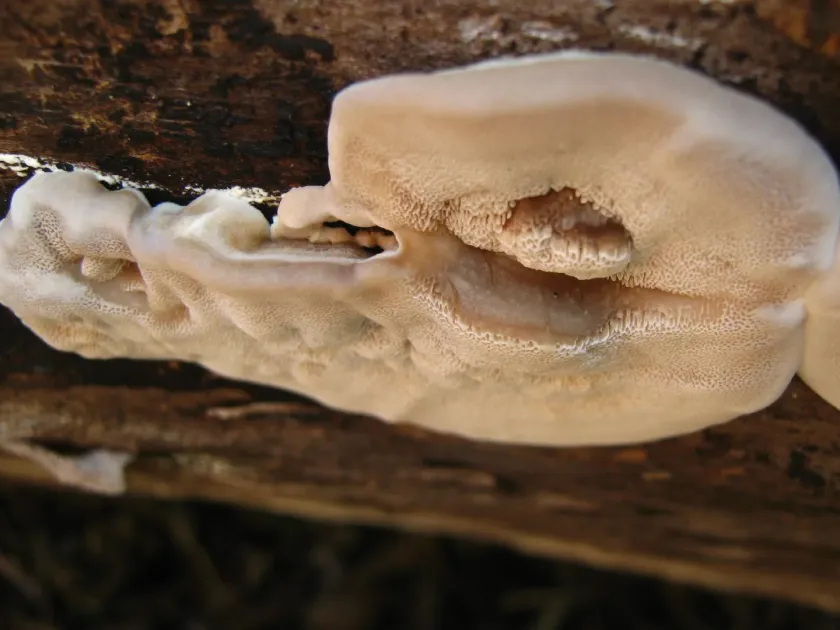
The most visible sign of infection is the emergence of white to yellowish, corky fruiting bodies on the trunk or branches. These bodies often form spreading, irregular patches.
Internally, the wood undergoes significant changes, turning into a brittle, white, or light-colored mass. The structure becomes porous and loses its physical strength, often splintering along the grain.
White mycelial mats are frequently observed beneath the loose bark or within structural cracks in the tree. This indicates an advanced state of fungal colonization.
External symptoms in the canopy include stunted leaf growth, thinning foliage, and dieback of branches. These are indicators that the internal plumbing of the tree is compromised.
Advanced rot is often detected by a dull, hollow sound when tapping the trunk. This indicates that the core of the tree has been hollowed out by the fungus, leaving it structurally vulnerable.
Pathogen
Antrodia albida is a basidiomycete fungus belonging to the Fomitopsidaceae family. It is a common cause of white rot in various hardwood and, less frequently, softwood tree species.
The fungus functions as a wood-decay pathogen, colonizing the xylem and breaking down complex wood structures, specifically targeting cellulose and lignin components.
It reproduces by forming annual or biennial fruiting bodies, typically appearing as white or creamy crusts on the surface of bark or wood. These bodies release basidiospores that facilitate spread.
The mycelium of this fungus is highly resilient, capable of remaining latent within tree trunks for extended periods before showing external signs of infection.
Biological studies show that the fungus favors decaying woody debris, from where it can transition to infecting living trees if they are wounded or environmentally stressed.
Conditions for development
High humidity and moisture are primary drivers for the development of Antrodia albida. It flourishes in environments where the wood surface remains damp for prolonged periods.
Physical injuries caused by pruning, storms, or insect borers provide entry points. Spores landing on exposed, moist wood surfaces germinate quickly to establish a new infection site.
Poor airflow, often caused by overly dense planting or lack of proper pruning, creates a stagnant microclimate that encourages spore deposition and growth.
The fungus is most active during the warmer months of the growing season but can persist at various temperature ranges, making it a year-round threat in some climates.
The presence of unremoved deadwood or previously infected fallen logs serves as a reservoir for spores, drastically increasing the risk of infection for healthy neighboring trees.
Why it matters
The primary damage caused by Antrodia albida is the internal degradation of wood, which significantly reduces the structural integrity of the affected tree.
There is a high safety risk associated with infected trees, as internal decay can lead to sudden structural failure and tree falls, especially during severe weather conditions.
The disease contributes to the premature death of ornamental and forest trees. It forces the tree to redirect energy toward defensive responses, resulting in lower vigor.
In economic terms, for fruit growers and foresters, this pathogen causes losses by destroying the quality of timber and reducing fruit yields on infected specimens.
Once a tree is heavily colonized, recovery is rarely possible. This requires costly interventions, such as tree removal, to prevent the disease from spreading throughout the entire plot.
Protection
Sanitation is the most effective management strategy. Any tree showing significant signs of infection should be removed and destroyed to minimize the local spore load.
Pruning should always be performed with sterilized tools to prevent cross-contamination. Any accidental damage to the tree bark should be treated immediately with a protective sealant.
- Regular inspections to detect signs of decay in mature trees.
- Proper disposal of all wood debris and dead branches from the orchard or garden.
- Maintaining optimal tree health through balanced fertilization and adequate watering.
- Application of copper-based fungicides to large pruning wounds for protection.
- Thinning of canopy branches to ensure better sunlight exposure and improved air circulation.
Preventative measures focused on minimizing tree stress help strengthen the tree's natural defense mechanisms, making it more resistant to fungal pathogen entry.
Discussion
No discussions yet — be the first.