
Sooty mold
Antennulariella fuliginosa
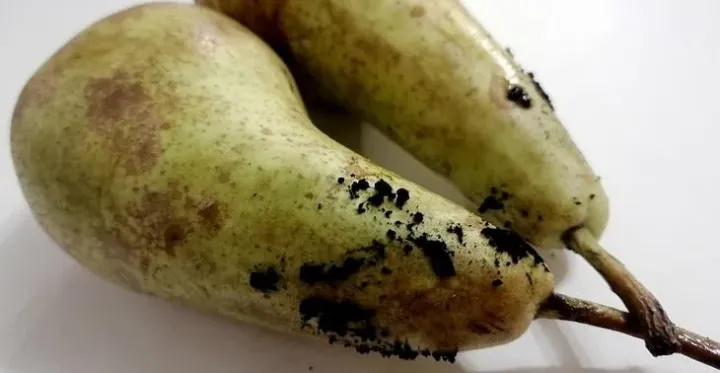
Description
Symptoms
The primary symptom is the appearance of a dark coating that is easily wiped off when first detected. Over time, the film becomes thicker, matte or velvety, and turns into a persistent charcoal-black color.
The infection covers the upper side of leaves, young shoots, and even fruits. It often spreads in patches around areas where sucking insects are concentrated, coinciding with their honeydew secretion.
Leaves covered by the fungal layer lose their aesthetic appeal and look unhealthy. In severe cases, affected leaves may curl, turn yellow, and drop prematurely.
On fruits, the mold manifests as dark spots that ruin their appearance and complicate post-harvest preparation. Even after removal, the surface often retains visible damage.
When inspecting the garden, it is crucial to check the undersides of branches, as these areas often harbor the primary pests responsible for stimulating the mold's growth.
Pathogen
The causative agent of this disease is a complex of fungi, most notably Antennulariella fuliginosa, as well as species from the Capnodium and Fumago genera. These are saprotrophic organisms that do not feed on plant sap directly but use the sugary excretions of insects as a growth medium.
The disease is classified as a superficial infection. The mycelium spreads exclusively on the outer surface of leaves, fruits, and shoots, forming a dense, dark film that resembles soot or coal dust.
The life cycle of these fungi is closely linked to the activity of sap-sucking pests. Fungal spores are ubiquitous, but they only germinate when they encounter the substrate known as honeydew, secreted by aphids, scales, or whiteflies.
Biologically, the fungus does not penetrate plant tissues, which distinguishes it from typical parasitic infections. However, its presence creates significant physical barriers to the plant's normal physiological functions.
Spores are dispersed by wind, rain splashes, or contaminated garden tools. Under favorable conditions, the fungi quickly colonize the surface of plants infested with insects.
Conditions for development
The key condition for mold development is the presence of insect excretions. Without honeydew, growth on plants is virtually impossible, as the fungi cannot absorb nutrients directly from the host tissues.
High humidity and poor air circulation within the canopy create an ideal microclimate for spore germination. Overcrowded plantings are at high risk, as moisture remains trapped on the surface for longer periods.
Warm temperatures during the summer promote rapid reproduction of pests, which in turn leads to massive outbreaks of sooty mold on garden crops and ornamental plants.
A lack of sanitary pruning leads to the accumulation of spores on old shoots. Poor lighting slows down the evaporation of moisture after rain, which keeps the mycelium active.
Weakened plants with impaired metabolism are more susceptible to pest attacks, making them indirectly more vulnerable to colonization by sooty mold.
Why it matters
The main harm lies in the blockage of photosynthesis. The black film prevents sunlight from reaching the leaf tissue, causing the plant to suffer from chronic energy and nutrient deficiencies.
Gas exchange through the stomata is obstructed, which leads to the suppression of the plant's overall vitality. Trees and shrubs become less winter-hardy and more sensitive to other diseases.
Fruits covered with sooty mold lose their flavor and market value. The difficulty of removing the residue makes the produce unsuitable for sale.
The fungus creates an unfavorable environment, further weakening the plant's immune system. Secondary infections often develop on the background of sooty mold, capable of penetrating through the damaged leaf cuticle.
The indirect damage includes the costs associated with managing pest complexes and diseases. Ignoring the issue leads to significant yield losses and reduced ornamental quality of garden plantings.
Protection
The primary strategy is the control of sap-sucking pests. The use of insecticides against aphids, scales, and whiteflies immediately stops honeydew production, effectively starving the fungus.
Mechanical cleaning and washing with mild soap solutions are effective at early stages. Use soft brushes to avoid damaging the epidermis of young shoots.
Regular sanitary pruning improves air circulation within the canopy. This reduces humidity levels and prevents the rapid spread of fungal spores across the orchard.
Copper-based fungicides can be used for surface disinfection. Applications are recommended for preventative purposes or at the very first signs of the mold.
- Regular monitoring of plant health for pest presence.
- Balanced application of phosphorus and potassium fertilizers to boost immunity.
- Weed management to eliminate alternative hosts for pests.
- Use of biological agents for pest population control.
Discussion
No discussions yet — be the first.