
Antennulariella
Antennulariella
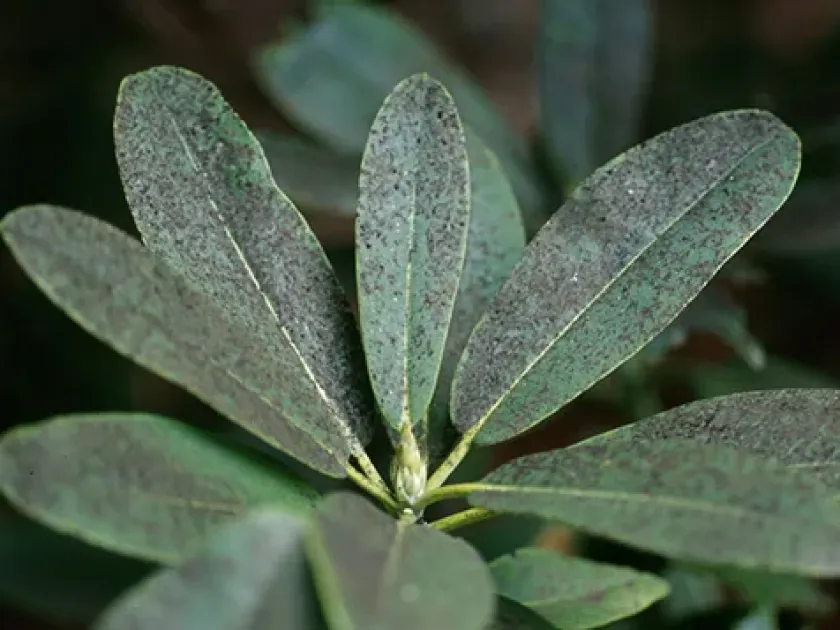
Description
Symptoms
The primary symptom of the infection is the appearance of a dark, almost black coating, resembling soot or dust, on the upper side of leaf blades, young shoots, and even fruits.
In the early stages, the coating appears as small individual spots, but as the colonies expand, they merge into large black patches that cover significant areas of the plant's surface.
Unlike other leaf spot diseases, the Antennulariella coating can be easily wiped off with a finger. However, this does not mean the plant is healthy, as traces of insect activity are often found beneath the coating.
Affected leaves may look dull, and their edges sometimes curl. In severe cases, the black film covers a large portion of the crown, which significantly impairs the aesthetic appearance of the crop and reduces its commercial value.
It is important to distinguish the signs of the disease: if the coating is easily removed and the leaf tissue underneath is not damaged by necrosis, then it is indeed sooty mold rather than a specific tissue-infecting pathogen.
Pathogen
Antennulariella is a genus of fungi belonging to the group commonly known as "sooty mold". This pathogen does not penetrate deep into the plant tissues but develops primarily on the surface of leaves, stems, and fruits.
This fungus is an obligate epiphyte. It does not feed on the plant's sap directly but consumes the sugary excretions known as "honeydew," produced by sap-sucking insects such as aphids, scale insects, whiteflies, and psyllids.
The fungus forms a thin mycelium on the surface of plant organs. The characteristic appearance of these colonies is due to the dense network of dark-colored hyphae, which give the affected areas a distinct coal-black color.
The biology of the pathogen is intrinsically linked to the activity of pest insects. Without the presence of honeydew on the plant, the development of Antennulariella mycelium is virtually impossible, as it serves as the primary source of carbohydrates for the fungus.
The fungal mycelium persists on plant debris and bark during the cold season, and when favorable conditions arise, the spores are actively dispersed by wind, raindrops, and insect vectors.
Conditions for development
The development of Antennulariella is facilitated by conditions where large amounts of honeydew accumulate on the plant. This occurs during outbreaks of sap-sucking insect populations.
High air humidity is a key factor that accelerates spore germination and the expansion of the fungal mycelium. The disease often manifests in the second half of summer when heavy dew and fog are frequent.
Dense planting, poor air circulation within the crown, and lack of proper maintenance create an ideal microclimate for moisture retention, which promotes the spread of the fungus.
A temperature range between +18 and +25 degrees Celsius is considered optimal for the active vegetative reproduction of the pathogen colonies on the leaf surfaces.
The lack of sanitary pruning and the failure to treat trees for pests trigger the annual recurrence of the infection cycle, especially in orchards where aphid populations are left unchecked.
Why it matters
The direct damage caused by Antennulariella is the blockage of the normal photosynthesis process. The black film covering the leaf prevents sunlight from reaching the chlorophyll, leading to plant weakness.
The impairment of gas exchange through stomata, which become clogged by the fungal mycelium, results in the suppression of the plant's overall physiological state and reduced growth intensity.
Affected fruits lose their marketability and are harder to sell, as the mold spoils their visual appeal and requires difficult cleaning after harvest.
Because the fungus is closely associated with pests, the overall weakening of the tree occurs cumulatively: the plant suffers from both sap-sucking by insects and the "sooty" suffocation caused by the fungus.
Ultimately, the decrease in organic matter synthesis leads to reduced cold hardiness, lower yields, and overall degradation of fruit crops during chronic infestations.
Protection
The main measure for controlling Antennulariella is the elimination of the root cause, i.e., the pest insects (aphids, scale, whiteflies). Without the use of insecticides, it is impossible to get rid of the disease completely.
Regular sanitary and formative crown pruning is recommended to improve airflow, which lowers humidity levels and hinders the growth of the fungal mycelium.
To directly combat the fungus, treatments with fungicides are used, particularly copper-based products (Bordeaux mixture, copper sulfate) or other contact agents approved for use on specific crops.
Adherence to agronomic practices, including proper root-zone watering without wetting the crown and timely removal of affected plant debris, significantly reduces the infection pressure in the orchard.
An integrated pest management (IPM) system, combining early spring and summer spraying against insects with preventative measures against fungal diseases, is the most effective approach.
Discussion
No discussions yet — be the first.