
Description
Symptoms
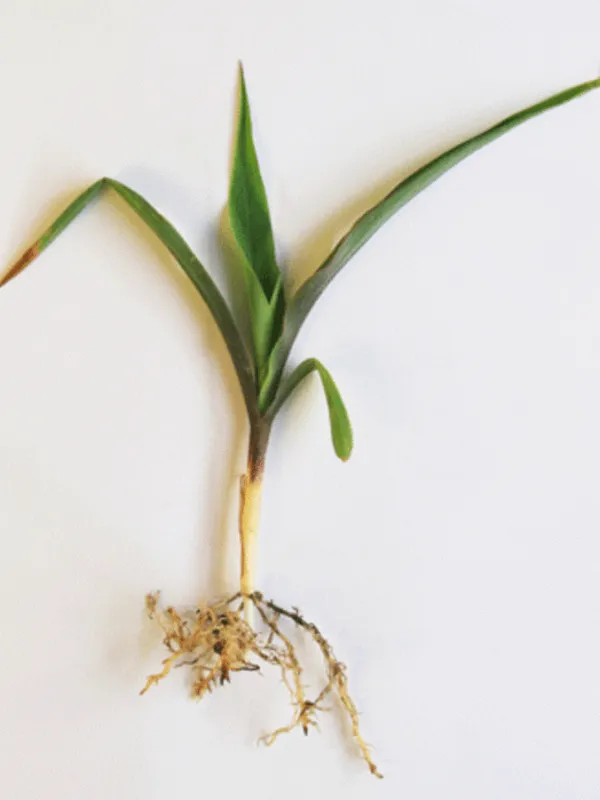
The first sign of ammonia burn is sudden wilting of plants, even when soil moisture is adequate. Light or brown spots appear on the leaves, often located along the margins of the leaf blade.
In the early stages, corn leaf tips may take on a dry, scorched appearance that gradually progresses toward the base of the leaf. Tissues between the veins become discolored, which is often misdiagnosed as a nutrient deficiency.
The root system of affected plants often appears stunted, with a lack of fine root hairs. Roots may change color to a darker shade, and a sharp smell of ammonia can be detected when digging into the soil.
In seedlings, stem curling and general growth retardation are observed, accompanied by yellowing of lower leaves. The damage progresses rapidly, distinguishing it from the gradual development of fungal infections.
Visual inspection of the field reveals patchy damage. Affected plants lag in development compared to their healthy neighbors and, in severe cases, die within a few days of contact with the toxicant.
Pathogen
Ammonia burn is not a biological disease caused by pathogens, but rather a physiological disorder or chemical injury. This condition is triggered by the accumulation of excessive free ammonia (NH3) in the soil solution or the atmosphere of greenhouses.
The primary factor is the conversion of nitrogenous compounds into ammonia under specific environmental conditions. Plants absorb this ammonia, which becomes a highly toxic metabolite in high concentrations, disrupting cellular respiration.
This process is commonly known as ammonia toxicity, as it inhibits the normal nitrogen metabolism within the plant organism. Unlike pathogenic fungi or bacteria, this phenomenon is directly dependent on the chemical properties of the substrate and fertilizer concentration.
Agricultural crops such as corn, vegetables, and ornamental plants are particularly sensitive to this exposure. Damage can affect both the root system and aerial parts upon direct contact with the gas.
The toxic effect of ammonia suppresses photosynthesis and causes rapid death of epidermal cells. Without prompt action, this physiological stress evolves into irreversible tissue necrosis across affected areas.
Conditions for development
Ammonia burn often occurs when excessive amounts of ammonia fertilizers, such as anhydrous ammonia or ammonia water, are applied to poorly moistened soil. High soil temperatures promote the accelerated release of free ammonia gas.
Soil acidity (pH) levels influence the chemical form of nitrogen, facilitating the conversion of ammonium ions into toxic molecular gas. Improper mixing of fertilizer with soil creates localized zones with critical concentrations.
Poor soil aeration due to compaction or waterlogging creates anaerobic conditions where denitrification and ammonification processes are intensified. This leads to the buildup of harmful gases in the root zone.
In greenhouses, burns are often caused by poor ventilation during the application of liquid fertilizers. Ammonia accumulates in the air, entering through the stomata and causing immediate tissue damage.
Agronomic errors, such as shallow placement of fertilizers, significantly increase the risk of damaging crops during the active growth and root formation stages.
Why it matters
Ammonia burn leads to serious yield losses due to stunted growth and plant death. In corn, this results in lower grain yield potential and poor kernel development on the cob.
Plants that have survived ammonia shock become susceptible to secondary infections, as necrotic tissues are an excellent medium for fungal and bacterial colonization.
Economic damage includes the cost of reseeding affected areas and losses from inefficient use of applied fertilizers. In some cases, the damage renders the produce unmarketable.
Prolonged exposure to ammonia disrupts the balance of soil biota, which reduces overall soil fertility in the long term. Recovery of beneficial microbial activity after an incident takes significant time.
Damage to root hairs reduces the plant's ability to absorb water and minerals. Even after external recovery, the crop often struggles to reach optimal vegetation rates for a long time.
Protection
The primary control method is strict adherence to application rates and placement depth for nitrogen fertilizers. Using anhydrous ammonia requires strict inspection of equipment and a minimum depth of 15-20 cm.
To prevent burns, irrigation should be applied immediately after fertilization to ensure the ammonia dissolves in the soil solution. Improving soil structure and aeration helps prevent the accumulation of toxic gases.
It is important to monitor soil pH: liming acidic soils helps reduce the risk of ammonia toxicity. Split applications of fertilizers are recommended to avoid peak nitrogen concentrations in the root zone.
If signs of burn are detected in greenhouses, immediate ventilation is required. In the field, an emergency heavy irrigation might be necessary to leach or dilute excess nitrogen.
Regular agrochemical soil analysis allows for accurate calculation of crop needs, helping to avoid over-fertilization. Proper crop rotation also supports natural soil biological balance.
Pathogens and affected parts
Affects crops · 1
Discussion
No discussions yet — be the first.