
Anabaena sphaerica
Anabaena sphaerica
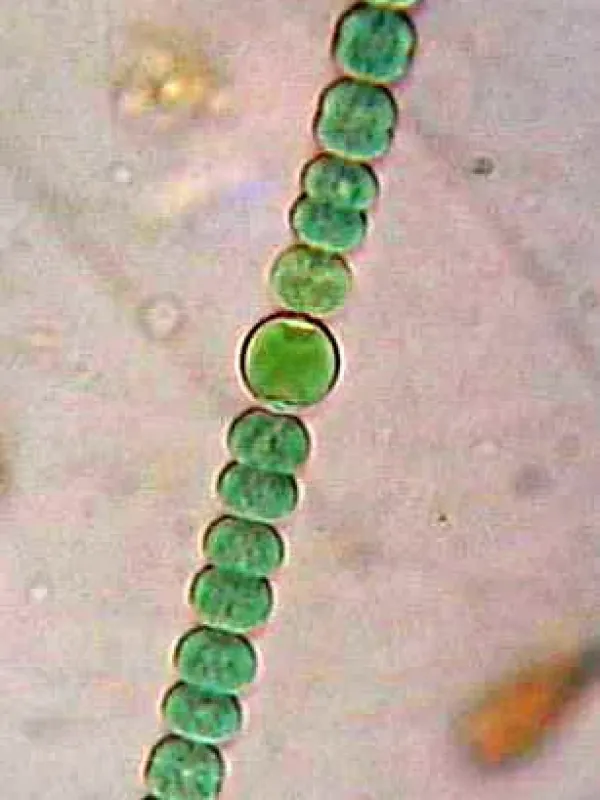
Description
Symptoms
The primary sign of infestation is the visible appearance of intense green or blue-green layers on the water surface, often described as a scum or film.
Massive blooms typically present as gelatinous, slimy clusters that may gather along the edges of paddy fields or around submerged vegetation.
A foul, musty, or grassy odor often emanates from the water when bloom density is high due to the release of volatile organic compounds and metabolite degradation.
Submerged plant stalks may become coated in algal filaments, which hinders photosynthesis and mechanical development of the crop.
Microscopic observation is essential for definitive identification, revealing the typical beaded structure of the filaments and spherical cell morphology.
Pathogen
Anabaena sphaerica is a genus of filamentous cyanobacteria known for its ability to form dense blooms in aquatic environments, including rice paddies and irrigation systems.
It is characterized by spherical cells arranged in distinct trichomes, which contain heterocysts capable of fixing nitrogen from the atmosphere.
The organism is not a pathogenic fungus but a photosynthetic blue-green alga that acts as a competitor or stressor for cultivated aquatic plants.
Reproduction occurs via fragmentation of filaments, allowing the cyanobacteria to rapidly colonize water bodies under optimal environmental triggers.
Because of its resilience and ability to survive harsh conditions through akinetes (resting cells), it can persist in irrigation infrastructure for long periods.
Conditions for development
High temperatures ranging between +20°C and +30°C are the primary driver for the rapid proliferation of Anabaena sphaerica colonies.
Eutrophication, defined by an excess of nitrogen and phosphorus (often from agricultural runoff), provides the necessary nutrients for exponential growth.
Stagnant or slow-moving water in irrigation systems or rice fields facilitates the buildup of large biomass concentrations.
High levels of solar radiation promote intense photosynthetic activity, allowing the cyanobacteria to outcompete other phytoplankton species.
Poor water management that encourages stratification and reduced aeration creates the perfect niche for these cyanobacteria to dominate.
Why it matters
The most significant harm is the production of cyanotoxins, which can inhibit the root development and overall growth of rice seedlings.
The algal layer on the surface restricts light penetration, limiting the photosynthesis of underwater leaves and stems, which slows down plant development.
Rapid die-off of bloom masses causes localized hypoxia, depleting oxygen levels in the water, which damages the root systems of the crop.
The presence of large amounts of algal biomass complicates irrigation, clogging filters, pipes, and other mechanical equipment used in farming.
Economic losses arise from decreased crop yields and the increased cost of water treatment and cleaning associated with controlling the blooms.
Protection
Effective management begins with nutrient management, particularly reducing the leaching of fertilizers into irrigation water to limit nutrient loading.
Promoting a steady flow of water through rice paddies significantly reduces the risk of bloom formation by preventing the stagnation of water.
Chemical control using approved algaecides can be employed when infestations reach critical levels, provided environmental safety regulations are strictly followed.
Mechanical removal and regular cleaning of irrigation canals help prevent the buildup of resting spores and biomass that serve as a source for future blooms.
Biological monitoring allows for the early detection of cyanobacterial activity, enabling timely and targeted interventions before large-scale blooms occur.
Discussion
No discussions yet — be the first.