
Anabaena cylindrica
Anabaena cylindrica
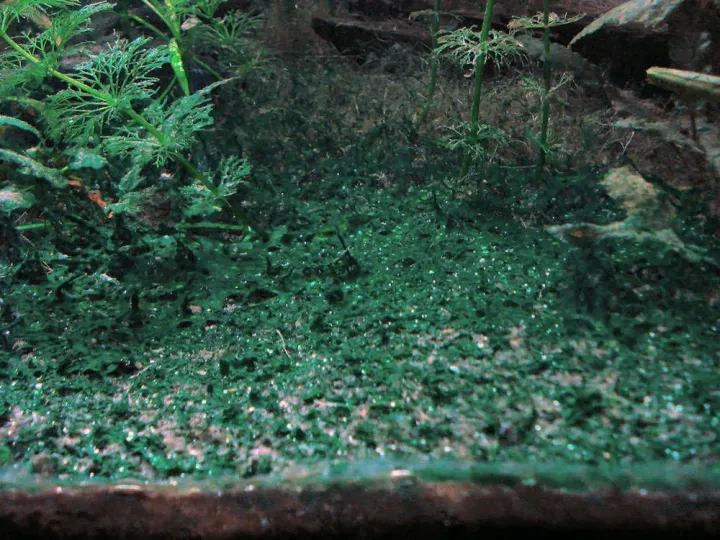
Description
Pathogen
Anabaena cylindrica is a filamentous cyanobacterium belonging to the Nostocaceae family, known for its ability to perform photosynthesis and nitrogen fixation.
The organism consists of chains of cells that include specialized heterocysts, which are the sites where atmospheric nitrogen is converted into ammonia.
In agronomy, it is often studied as an indicator of eutrophication in irrigation water rather than as a direct plant pathogen affecting crops.
It can exist as floating colonies or as a mat on moist soil surfaces, utilizing both planktonic and benthic strategies for survival.
The reproduction occurs via vegetative fragmentation or the formation of akinetes, which are dormant cells resistant to adverse environmental stresses.
Conditions for development
The growth of these cyanobacteria is primarily triggered by high nutrient levels, specifically phosphorus and nitrogen runoff from agricultural fields.
Optimal development is observed in warm, stagnant or slow-moving water bodies with high solar irradiation during the summer months.
Stagnation in irrigation channels provides a stable environment for the accumulation of biomass and the formation of characteristic blue-green films.
The species thrives in a pH range that is slightly alkaline, which is often found in agricultural runoff scenarios.
Thermal stability of the water body prevents deep mixing and allows the cyanobacteria to remain in the photic zone, accelerating their proliferation.
Why it matters
The most significant concern is the production of cyanotoxins, which pose risks to livestock if they consume water heavily contaminated by the organism.
Large-scale blooms lead to nocturnal oxygen depletion, which severely impacts the aquatic ecosystem and the health of microflora in irrigation reservoirs.
Physical clogging of irrigation equipment, such as filters, pumps, and drip lines, leads to increased maintenance costs and operational inefficiencies.
Increased turbidity and organic content in irrigation water can alter the chemical balance, affecting the health and development of sensitive crop roots.
Uncontrolled growth can lead to the formation of surface films on soil, which potentially restricts gas exchange and water penetration in fine-textured soils.
Protection
The primary control strategy involves managing nutrient runoff from fields to ensure that phosphorus levels in local water sources remain within limits.
Mechanical management, including the use of fine mesh filters and periodic cleaning of irrigation canals, is essential for maintaining water flow.
Aeration systems in water reservoirs help prevent the stagnation necessary for mass colony development and reduce the competitive advantage of cyanobacteria.
Biological monitoring and the application of selective biocontrol agents or cyanophages are explored as long-term sustainable management practices.
- Reduction of nutrient loading.
- Regular inspection of irrigation infrastructure.
- Water circulation and aeration.
Discussion
No discussions yet — be the first.