
Amphiporthe raveneliana
Amphiporthe raveneliana
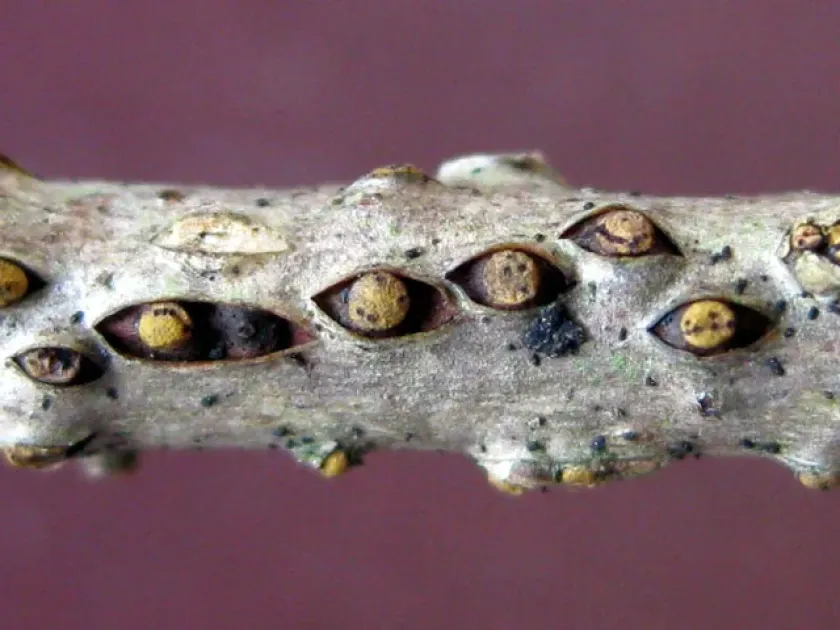
Description
Symptoms
The primary symptom includes the emergence of sunken, necrotic lesions on the bark of young shoots and branches. The color of these affected areas often shifts to dark brown or black.
Visible cracking of the bark and separation from the wood tissue are hallmarks of advanced infection. Small, dark pimple-like structures may appear, signaling the eruption of fungal fruit bodies.
Leaf yellowing and premature desiccation of branches occur due to the systemic impairment of the plant's vascular integrity caused by the necrotrophic activity of the fungus.
Beneath the bark, one can observe localized zones of tissue death. These necrotic lesions expand over time, potentially girdling the branch and leading to the death of distal sections.
During humid periods, sporulation may occur on the surface of these cankers, appearing as slimy or powdery deposits that serve as a source for further infection.
Pathogen
Amphiporthe raveneliana is an ascomycete fungus classified within the order Diaporthales. It acts as a parasitic pathogen, specializing in the infection of bark tissues in susceptible woody plants.
The fungus develops stromata within the host plant's bark, serving as the foundation for the production of both conidia and perithecia. These reproductive structures facilitate the rapid spread of the pathogen within the canopy.
Survival of the fungus is ensured by its ability to persist in dead woody debris and infected branches during unfavorable environmental conditions, making it a recurring threat to the garden.
Transmission occurs through the dispersal of spores by wind, rain splashes, or mechanical transfer via contaminated pruning tools. Upon contact with a suitable wound, the spores germinate and initiate hyphal penetration.
Biological evolution has equipped this pathogen with specialized enzymes capable of breaking down lignified tissues, allowing it to bypass the plant's natural physical defenses effectively.
Conditions for development
Prolonged high humidity and frequent rainfall are the most critical factors favoring the germination and infection processes of Amphiporthe raveneliana spores.
Temperature fluctuations during spring and autumn provide optimal conditions for the fungus to establish itself. The pathogen remains active within a wide range of temperate climates.
Plants subjected to environmental stress, such as drought, nutrient deficiency, or improper planting density, demonstrate significantly higher susceptibility to colonization.
Inadequate airflow within the canopy traps moisture on the bark surface, facilitating the development of the pathogen and allowing for faster secondary infection cycles.
Unprotected mechanical injuries or frost-induced cracks in the bark provide direct access for the fungus, significantly increasing the probability of successful establishment.
Why it matters
The primary danger lies in the destruction of the cambium and phloem, which halts the transport of photosynthates and water, leading to branch dieback and reduced plant vigor.
Chronic infections lead to a gradual loss of canopy density, severely impacting the decorative value of ornamental trees and the production capacity of fruit-bearing species.
The pathogen can cause catastrophic losses in nurseries, as young saplings are particularly vulnerable to stem girdling, which results in the death of the entire plant.
Weakened trees are prone to secondary attacks by wood-boring insects, which further accelerate the decline and increase the risk of tree mortality in affected areas.
Financial costs associated with managing Amphiporthe raveneliana include labor-intensive sanitation, disposal of infected biomass, and the ongoing use of chemical control agents.
Protection
Sanitation is the cornerstone of management: prompt identification and removal of infected branches, followed by immediate destruction of the biomass, are essential to reduce the inoculum load.
Applying copper-based fungicides during the dormant season provides a protective barrier against spore germination and colonization on the bark surface.
Maintaining optimal plant health through balanced fertilization and appropriate irrigation helps bolster the tree's natural defense mechanisms against fungal penetration.
Rigorous disinfection of pruning shears and saws using alcohol or other antimicrobial solutions after working on each plant prevents mechanical transmission between specimens.
- Regular inspection of bark and stem tissues.
- Application of wound-healing sealants to pruned areas.
- Selection of resilient cultivars for new plantings.
Discussion
No discussions yet — be the first.