
Ambrosia fungus
Ambrosiella xylebori
Description
Symptoms
Early symptoms of infection often include the presence of small entry holes on the bark, sometimes accompanied by thin frass tubes (sawdust structures).
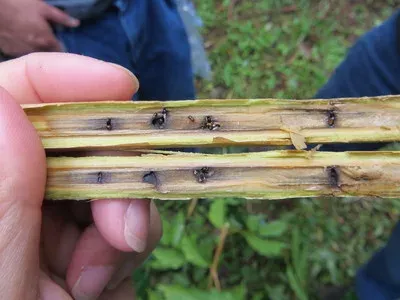
Internal symptoms involve the formation of dark, necrotic staining within the sapwood, which is a direct visual indicator of the fungal colonization.
As the infection progresses, the tree typically shows signs of canopy dieback, yellowing leaves, and rapid wilting of branches due to systemic vascular blockage.
Advanced stages of the disease manifest as brittle wood, loss of structural integrity, and finally, the complete mortality of the infested tree.
Microscopic examination of the affected wood often reveals dense hyphal growth and the presence of fungal spores concentrated near the beetle galleries.
Pathogen
The ambrosia fungus (Ambrosiella xylebori) is a symbiotic microorganism that maintains a vital biological association with various species of ambrosia beetles.
It acts as a primary food source for the larvae of its beetle host, which cultivate the fungus within the galleries they bore into the host tree's woody tissue.
The fungus is classified as a vascular pathogen because it spreads through the tree's xylem, obstructing the flow of water and essential nutrients.
It exists as a complex biological system where the beetle serves as the vector, facilitating the fungus's entry and subsequent colonization of the host plant.
The organism is highly specialized, having evolved to thrive in the specific chemical environment created by the beetle's tunneling activities inside the wood.
Conditions for development
The development of the disease is heavily dependent on environmental factors, with warm and humid conditions favoring both beetle activity and fungal growth.
Stressed trees, particularly those suffering from drought or previous mechanical injuries, provide the most susceptible environment for fungal establishment.
High local populations of ambrosia beetles significantly heighten the risk of rapid spread, leading to extensive damage in susceptible forest stands.
The dispersal of the pathogen is primarily driven by the flight of adult beetles, which carry spores from infected to healthy trees in specialized structures.
Insufficient sanitary practices, such as failing to remove downed logs or infested wood debris, create ideal reservoirs for the fungus to persist.
Why it matters
The primary damage caused by the ambrosia fungus is the disruption of the tree's hydraulic system, which leads to fatal vascular wilt.
Infested wood undergoes degradation, rendering it commercially useless as the fungal growth causes severe discoloration and structural decay.
The rapid spread of this disease can decimate orchard and timber plantations, causing significant economic losses in very short timeframes.
Control is challenging because the pathogen is internalized within the wood, providing it with a natural shield against external chemical treatments.
- Rapid mortality of host tree species.
- Significant degradation of timber quality.
- Increased ecosystem vulnerability to secondary pests.
Protection
Management strategies rely heavily on rigorous sanitation, including the prompt removal and destruction of all infested or dead timber to reduce inoculum.
Monitoring populations using pheromone-based traps is critical for detecting beetle activity and applying timely interventions.
The application of systemic insecticides can help manage beetle populations, thereby limiting the primary vector for fungal transmission.
Maintaining high plant health through proper fertilization and irrigation helps trees develop a better defensive response to pathogen attacks.
Strict quarantine measures on the movement of wood products are essential to prevent the accidental introduction of the fungus into uninfested regions.
Discussion
No discussions yet — be the first.