
Ambrosia fungus
Ambrosiella roeperi
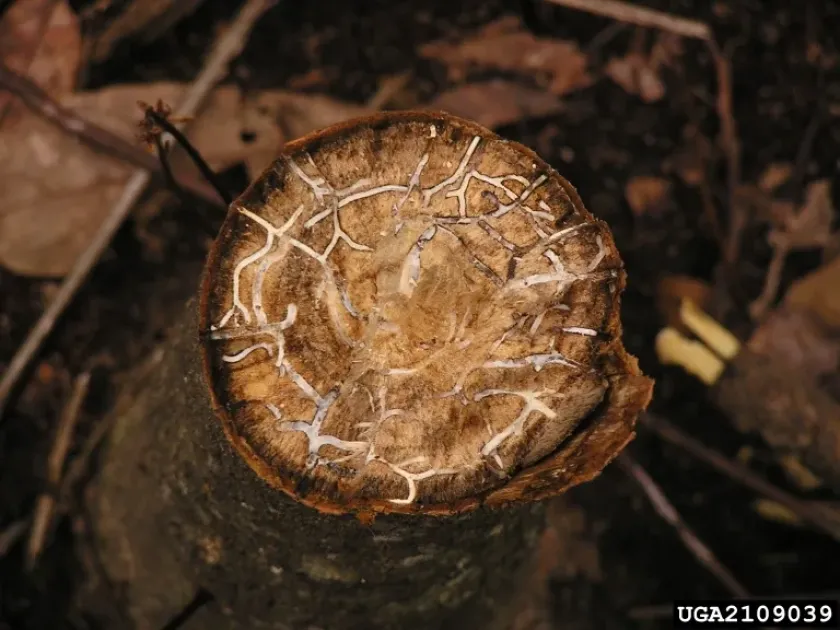
Description
Symptoms
The first visual sign of infestation is the characteristic entry holes on the tree bark, from which "frass" (fine sawdust ejected by insects while tunneling) often protrudes.
Cross-sections of infested branches or trunks reveal specific darkening or necrosis of the wood in the area of the insect galleries. This discoloration is caused by the fungus's metabolites and the tree's defensive reaction to the infection.
A typical symptom is the sudden wilting of foliage or needles, which often starts in individual branches and spreads rapidly across the entire crown. The leaves may yellow, turn brown, and fall prematurely.
In advanced cases, progressive cambium necrosis and death of bark patches occur, leading to the formation of cankers and the ultimate death of the entire tree due to the disruption of water and nutrient transport.
Diagnosis is complicated by the fact that external symptoms often appear only when the fungal colonization has reached significant volumes, and the tree's life-support system is irreversibly damaged.
Pathogen
The ambrosia fungus (Latin Ambrosiella roeperi) is a microscopic phytopathogenic fungus belonging to the group of so-called "ambrosia fungi." Its biological characteristic is a tight symbiotic relationship with wood-boring beetles, particularly the invasive Xylosandrus germanus (black timber bark beetle).
The fungus is an obligate symbiont for its vectors, which transport spores in specialized anatomical structures called mycangia. Upon entering the tree tissues through tunnels bored by the insect, the fungus rapidly colonizes the xylem.
This pathogen is classified as an agent causing vascular diseases in woody species. Its development within the tree leads to the blockage of the water-conducting system, causing rapid physiological decline of the host plant.
The fungus's life cycle is inextricably linked to the feeding habits of the beetle larvae and adults. The adult beetles cultivate this fungus in their galleries inside the trunk, creating "fungal gardens" that serve as the primary nutritional source for the insects.
The biology of Ambrosiella roeperi is studied as a complex system of "fungus-insect-host plant" interactions, where the pathogen plays a key role in ensuring the beetle's reproductive success while simultaneously harming the tree.
Conditions for development
The development of the disease depends directly on the activity of its vectors, the ambrosia beetles. Optimal conditions for their mass reproduction and the subsequent spread of the fungus include high ambient humidity and moderate temperatures.
Stress factors for the tree, such as drought, waterlogging, or mechanical damage, significantly increase the wood's susceptibility to primary fungal colonization.
The spread of the pathogen occurs primarily via invasive insect species, which can be transported over long distances through unprocessed timber or infested decorative nursery stock.
The fungus's narrow specialization requires the presence of specific ambrosia beetle species; therefore, the speed of an epiphytotic depends on the population density of these insect vectors in a given forest area.
Anthropogenic factors, including logging and the transport of infested materials, remain the primary vectors for introducing the infection into new regions.
Why it matters
The ambrosia fungus poses a serious threat to forestry and park landscapes by causing mass dieback of susceptible deciduous and coniferous tree species.
The primary damage lies in the disruption of the normal physiological functioning of the xylem. The fungal mycelium clogs the vessels, leading to acute water deficit, even when soil moisture is sufficient.
The economic impact includes the necessity of felling infected trees, the loss of timber resources, and costs associated with phytosanitary monitoring in forested areas.
The pathogen can damage decorative gardens and nurseries, where the death of even a few trees leads to a loss of aesthetic value and expensive planting stock.
In the long term, the presence of Ambrosiella roeperi alters stand structure, promoting the displacement of sensitive plant species and modifying local ecosystems.
Protection
Effective control of the fungus is difficult because it resides deep within plant tissues, where systemic fungicides are hard to deliver; therefore, emphasis is placed on preventive measures.
The most critical measure is strict phytosanitary control during the import of wood products to prevent the entry of invasive insect vectors.
Regular monitoring of forest health is necessary for the early detection of infection hotspots. Timely removal and destruction of infested trees reduce the beetle population density.
The use of traps with pheromones or attractants allows for effective control of adult beetle populations, limiting the spread of fungal spores.
Maintaining tree health through proper care, timely irrigation, and pest management increases the overall resistance of plantations to the pathogen's impact.
Discussion
No discussions yet — be the first.