
Ambrosiella nakashimae
Ambrosiella nakashimae
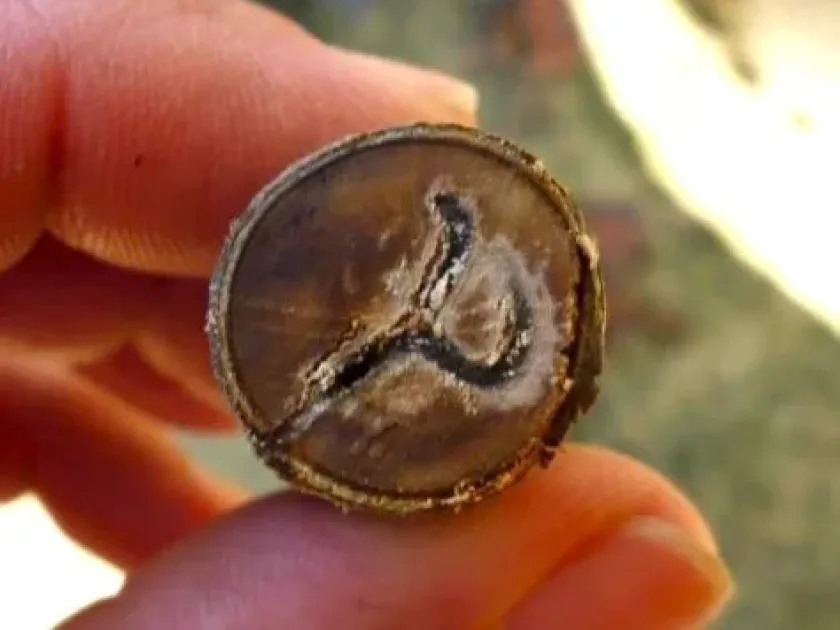
Description
Symptoms
The first sign of infestation is the presence of characteristic entrance holes on the bark, approximately 1-2 millimeters in diameter, left by the beetles. Darkening of the bark is often observed around these points.
Gummosis or resin flow may occur at the entry sites as a defense mechanism of the tree. However, with high beetle populations, this does not stop the spread of the mycelium.
When the bark is removed or the wood is sawn, dark necrotic spots or streaks are visible around the insect galleries, indicating active development of the Ambrosiella nakashimae mycelium.
In the later stages, wilting of individual crown branches is observed, which gradually spreads to the entire tree. Leaves turn yellow, curl, and fall off prematurely.
The inner part of the infected trunk undergoes intensive degradation, leading to a loss of wood strength and subsequent tree death due to windthrow.
Pathogen
The disease is caused by the microscopic ascomycete Ambrosiella nakashimae. This fungus belongs to the group of ambrosia fungi that live in symbiosis with wood-boring beetles, specifically those of the Euwallacea genus.
The fungus is not a typical parasite capable of penetrating intact bark on its own. Infection occurs exclusively through beetle vectors, which introduce fungal spores into the galleries they excavate in the wood.
Inside the tree tissues, the fungus forms a specific mycelium, which serves as the primary food source for the beetle larvae. As the fungus grows, it colonizes the vascular tissues of the plant.
The pathogen releases toxic metabolites that negatively affect the physiological processes of the tree. The biological specialization of the fungus is closely linked to a narrow range of beetle species, determining the geographical distribution of the disease.
Mycological diagnosis of this species requires molecular genetic analysis, as it is morphologically similar to other ambrosia fungi that develop within woody tissues.
Conditions for development
The development of the disease depends directly on the activity of the vectors, the Euwallacea beetles. The fungal population increases sharply during warm periods favorable for the pest's reproduction.
High air humidity and a weakened state of trees, caused by drought or mechanical damage, facilitate faster colonization of the plant by the pathogen.
The fungus spreads over long distances along with infested nursery stock or timber transported without proper quarantine control.
Ideal conditions for the development of the mycelium inside the wood include sufficient moisture and stable temperature maintained by the insects within their galleries.
Stress factors such as soil compaction or nutrient deficiency lower the trees' immune response, making them more susceptible to colonization by this pathogen.
Why it matters
The primary damage lies in the blockage of the tree's vascular system. The fungal mycelium clogs the vessels, leading to the disruption of water and nutrient transport.
Infection with Ambrosiella nakashimae often leads to the death of valuable tree species. Infected trees lose their commercial value due to internal necrosis and the presence of insect galleries.
The fungus is capable of attacking a wide range of broad-leaved trees, creating a significant phytosanitary threat to forest ecosystems, parks, and fruit orchards.
Indirect damage is associated with high costs for sanitary logging and the disposal of infested wood, which acts as a potential source of infection for healthy stands.
In the event of a large-scale outbreak, a reduction in the biodiversity of forests and the degradation of habitats for many flora and fauna species may occur.
Protection
The key method of control is strict quarantine enforcement during the movement of timber. It is essential to prevent the entry of infested material into regions free from this pathogen.
Prevention includes maintaining high levels of forest and orchard management: timely irrigation, fertilization, and protection against mechanical damage increase tree resilience.
An important measure is the prompt detection and removal of infested trees. These must be immediately burned or processed industrially within the detection zone.
The use of traps with pheromones and attractants helps reduce the population of vector beetles, which automatically limits the spread of ambrosia fungus spores.
Chemical control against the fungus itself is difficult due to its hidden habitat inside the wood, so efforts are primarily focused on controlling the carrier insects.
Discussion
No discussions yet — be the first.