
Ambrosiella grosmanniae
Ambrosiella grosmanniae
Description
Symptoms
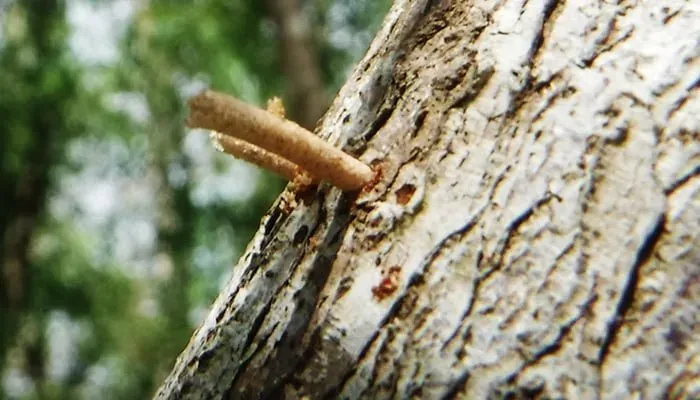
Visible signs of infection often begin with the presence of boring dust (frass) on the bark or at the base of the tree, indicating the entry of beetle vectors.
A cross-section of the affected wood reveals characteristic dark staining or blue-stain, which is a direct consequence of the fungal mycelium colonizing the sapwood tissues.
The canopy of the infested tree begins to show signs of stress, changing color from vibrant green to a faded yellow or reddish-brown as the water transport system fails.
When the bark is removed, the galleries created by the beetles are clearly visible and are often surrounded by dark, necrotic streaks representing the fungal invasion zones.
As the disease progresses, needles begin to shed prematurely, and the overall structural integrity of the wood declines, making the tree increasingly vulnerable to mechanical breakage.
Pathogen
Ambrosiella grosmanniae is a microscopic ascomycete fungus that maintains a symbiotic relationship with specific bark beetle species, notably the small spruce bark beetle (Tomicus minor).
This fungus is classified as an ambrosia fungus, meaning it serves as the primary nutritional source for the larvae of its beetle host, which cultivate the fungus within their galleries.
The fungus is carried by beetles in specialized structures called mycangia. Upon infesting a tree, the beetle inoculates the inner bark and sapwood with the fungal spores.
Once introduced, the fungus grows rapidly through the vascular system of the host tree, utilizing the beetle galleries to penetrate deep into the cambium layer.
The biological success of Ambrosiella grosmanniae is linked to its ability to neutralize the host tree's natural chemical defenses, specifically resin production, allowing the beetle brood to flourish.
Conditions for development
The development of the disease is heavily dependent on the health status of the forest; drought-stressed trees are significantly more susceptible to successful beetle inoculation.
Warmer temperatures, particularly during the spring and summer months, accelerate the growth rate of the fungal mycelium, facilitating rapid colonization of the host.
High humidity within the gallery environment provides optimal conditions for the fungus to thrive and produce spores for subsequent dispersal.
Poor forest management practices, such as leaving large amounts of woody debris or windfalls, provide the necessary breeding ground for the vector beetles to multiply.
Climatic factors that disrupt the natural balance, such as mild winters, increase the survival rate of the beetles and the fungus, leading to larger outbreaks in the following season.
Why it matters
The fungus causes severe disruption of the host's hydraulic system by clogging the xylem, which inevitably leads to the death of the tree due to physiological drought.
The wood quality is severely compromised by deep staining, which significantly reduces the commercial value of the timber for furniture or construction purposes.
Infected trees act as epicenters for bark beetle outbreaks, posing a severe threat to surrounding healthy forest stands if not managed quickly.
The fungus weakens the host's immune system, making it an easy target for secondary pests and opportunistic pathogens that further degrade the tree's health.
The combined impact of the fungus and the beetle larvae can lead to widespread forest mortality in a relatively short period, causing significant ecological and economic loss.
Protection
Effective control requires strict adherence to forest hygiene protocols, including the prompt removal and disposal of infested trees to eliminate beetle breeding sites.
The use of semiochemical lures and pheromone traps is recommended to monitor beetle populations and potentially reduce the number of vectors in high-risk areas.
Maintaining a diverse forest structure can improve natural resilience and make it harder for the pathogen and its insect vectors to establish large-scale colonies.
Biological control strategies, involving the encouragement of natural predators such as woodpeckers or parasitic wasps, can help mitigate the beetle population pressure.
- Regular inspection of forest stands for early signs of beetle infestation.
- Strict prohibition of storing raw, infested wood in healthy forest areas.
- Reforestation with tree species better suited to the changing local climate conditions.
Discussion
No discussions yet — be the first.