
Ambrosiella cleistominuta
Ambrosiella cleistominuta
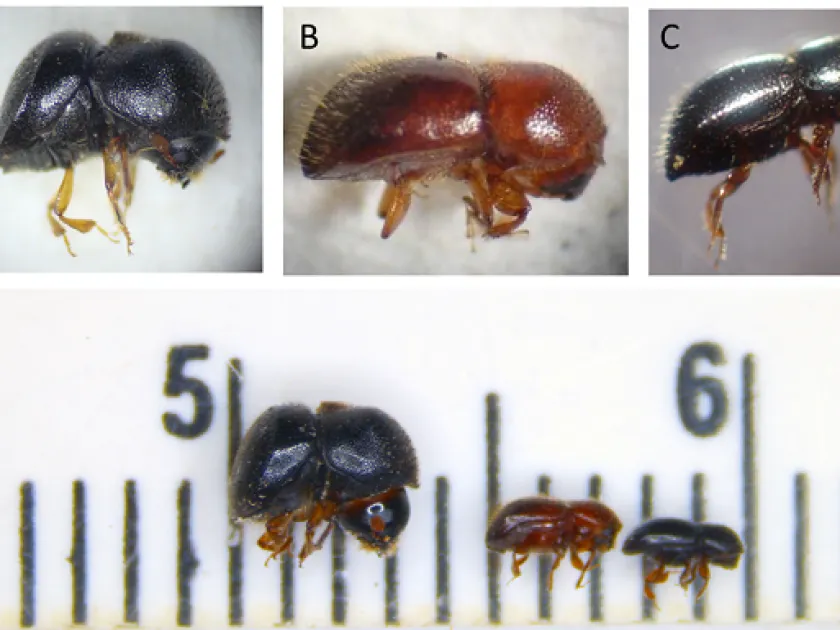
Description
Symptoms
The most visible sign of the infection is the presence of small, round entry holes on the tree bark, often accompanied by fine, wood-colored boring dust (frass) on the surface.
Peeling back the bark or cutting into the wood reveals dark, stained streaks or patches in the sapwood, which are caused by the fungus as it spreads through the tunnels.
In response to the fungal colonization and beetle tunneling, many tree species will exhibit resinosis or gumming, appearing as sticky sap bleeding from the entry points.
Crown symptoms include premature yellowing, browning of leaves, and wilting, which often occur as the tree’s water-conducting vessels become blocked by fungal growth.
Rapid dieback of the tree canopy is common, and if the infestation is severe, the entire tree may succumb to the pathogen and beetle attack within a single season.
Pathogen
Ambrosiella cleistominuta is a microscopic ascomycete fungus that exists in a complex symbiotic relationship with specific wood-boring ambrosia beetles.
These beetles serve as the primary vectors for the fungus, carrying spores within specialized structures on their bodies known as mycangia. Upon infesting a tree, the beetles introduce the fungus into the wood tunnels.
The fungus colonizes the woody tissue, transforming the host's biomass into a nutrient-rich mycelial growth that sustains the beetle's developing larvae.
As a pathogen, Ambrosiella cleistominuta is responsible for interrupting the tree's internal water transport systems, which can lead to severe physiological stress or tree death.
The biological success of this fungus is intrinsically tied to the lifecycle and population dynamics of its beetle host, making it a classic example of insect-fungal co-evolution.
Conditions for development
The spread of Ambrosiella cleistominuta is dependent on the flight activity of the beetle vectors, which is most intense during warm, humid spring and summer months.
Trees under stress due to drought, physical damage, or poor site conditions are significantly more susceptible to being colonized by beetles and subsequently infected by the fungus.
High population densities of the beetle in a local area increase the likelihood of rapid fungal transmission, leading to localized outbreaks in forests or orchards.
Environmental conditions that favor the rapid reproduction of wood-boring insects automatically increase the pressure from the associated fungal pathogens.
Lack of proper sanitation, such as leaving fallen logs or stressed, unpruned branches, provides a breeding ground for beetles to introduce the fungus to healthier trees.
Why it matters
The primary harm is the mechanical and chemical blockage of xylem tissues, which leads to sudden wilt and tree death due to an inability to maintain hydraulic conductivity.
Beyond the tree's health, the timber quality is severely degraded by the deep blue-staining patterns caused by the fungus, rendering the wood economically useless.
Infested trees act as reservoirs for both the beetle and the fungus, creating a persistent threat to adjacent healthy plants in the nursery or woodland.
Due to the hidden nature of the fungus deep within the wood, external treatment with fungicides is rarely effective once the colonization has been established.
Large-scale mortality of susceptible tree species causes significant ecological and financial losses, particularly in orchards where tree longevity is a key economic factor.
Protection
The most effective strategy for control is the prevention of beetle attacks by maintaining optimal tree health through proper fertilization, irrigation, and care.
Rigorous site sanitation is crucial; removing and destroying infested trees before the beetles emerge is essential to breaking the cycle of infection.
Monitoring programs using pheromone traps can help detect the presence of beetles early, allowing for timely protective measures before the fungus spreads.
Applying preventative insecticides to tree trunks during the beetle flight season can significantly reduce the incidence of primary fungal inoculation.
- Routine visual inspection of tree trunks for beetle holes;
- Immediate removal and disposal of infested tree debris;
- Integration of pheromone traps for pest population management;
- Implementation of quarantine measures for wood transport.
Discussion
No discussions yet — be the first.