
Ambrosia fungus
Ambrosiella batrae
Description
Symptoms
A primary symptom of infestation is the presence of "frass" or fine sawdust, which accumulates at the base of the tree or within the crevices of the bark.
Small, circular entrance holes appear on the surface of the trunk or branches, indicating that beetles have successfully penetrated the inner wood layers.
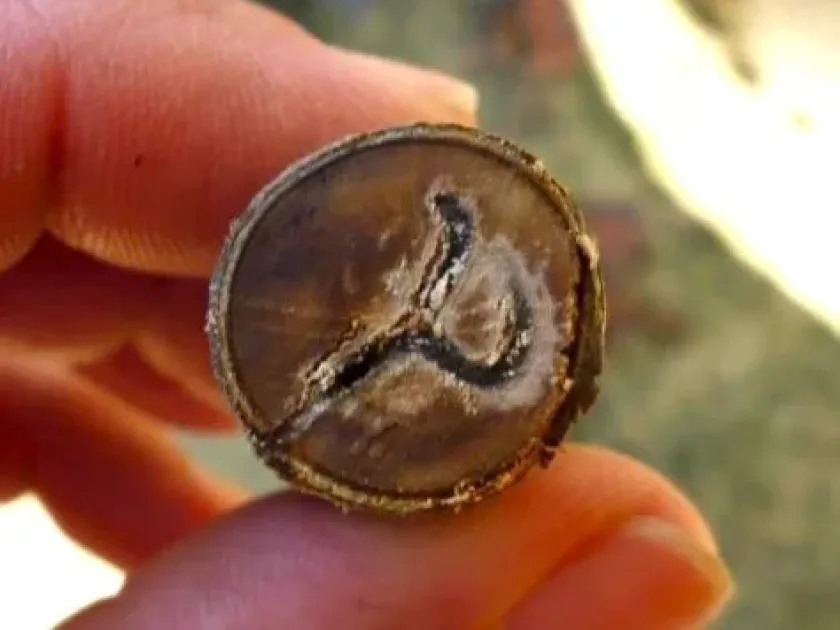
Inside the wood, dark staining or necrosis becomes visible along the tunnels created by the beetles. These discolorations are direct indicators of fungal growth within the plant's vascular system.
Tree canopy health often declines rapidly, showing symptoms such as yellowing leaves, wilted branches, or premature leaf drop due to the restriction of water transport.
In severe cases, the structural integrity of the wood is compromised, leading to limb breakage or complete tree failure, especially during high-wind events.
Pathogen
Ambrosia fungus (Ambrosiella batrae) is a filamentous fungus that lives in a mutualistic relationship with certain species of ambrosia beetles, most notably Euwallacea fornicatus.
The fungus is carried by beetles in specialized organs called mycangia. When the beetle bores into the tree, it inoculates the wood with the fungus, which then colonizes the galleries.
The fungus provides the necessary nutrition for the beetle larvae as they develop within the wood. In return, the beetles provide the fungus with transport to new host trees and a nutrient-rich environment.
This pathogen effectively degrades wood tissue, breaking down complex polymers, which allows the beetle colony to thrive within the host plant's internal structure.
The biological success of this fungus is entirely dependent on the survival and invasive capacity of its beetle host, making it a critical threat to woody plants worldwide.
Conditions for development
The development of the fungus is favored by warm and humid conditions, which synchronize with the flight periods and reproductive activity of the beetle vectors.
Stressed trees, particularly those suffering from drought, poor nutrition, or prior mechanical injuries, provide an easier entry point for beetle colonization.
High-density plantations or forests with low air circulation can lead to rapid spread of the fungus as beetles move easily between susceptible neighboring trees.
Mechanical damage to the bark acts as an attractive site for beetles, allowing them to initiate galleries more quickly and introduce the fungal spores deeper into the wood.
Seasonal environmental factors, such as unusually mild winters, can increase the survival rate of the beetles, thereby ensuring the survival of the fungus through the off-season.
Why it matters
The ambrosia fungus disrupts the xylem, blocking the flow of water and nutrients throughout the tree, which inevitably leads to the death of affected branches or the entire plant.
Wood quality is significantly reduced, rendering the timber unsuitable for commercial use, which results in substantial economic losses in forest industries.
The combined action of the beetle and the fungus causes a swift decline in plant health, often making recovery impossible once the colonization is established.
The invasive nature of this pathogen poses a massive threat to native tree species that lack defensive mechanisms against this specific type of fungal symbiont.
By creating a continuous breeding ground within the wood, the fungus enables the beetle population to increase, leading to potential large-scale outbreaks in vulnerable regions.
Protection
Phytosanitary regulations are essential to prevent the spread of the fungus via infested timber, firewood, or nursery stock between different geographical areas.
Early detection using pheromone traps is a key strategy, as it helps track beetle movement and identify local hotspots that require immediate attention.
Sanitation cutting involves the removal and destruction of infested trees, which is critical to break the life cycle of the beetle and limit the dispersion of fungal spores.
Systemic insecticides may be used to treat high-value or ornamental trees to prevent initial beetle colonization, thereby stopping the fungus from becoming established.
- Regular monitoring of tree bark for entrance holes.
- Prompt disposal of infested woody debris.
- Promoting tree vigor through appropriate fertilization and water management.
- Restricting the movement of raw timber from infested zones.
Discussion
No discussions yet — be the first.