
Amanita vittadinii
Amanita vittadinii
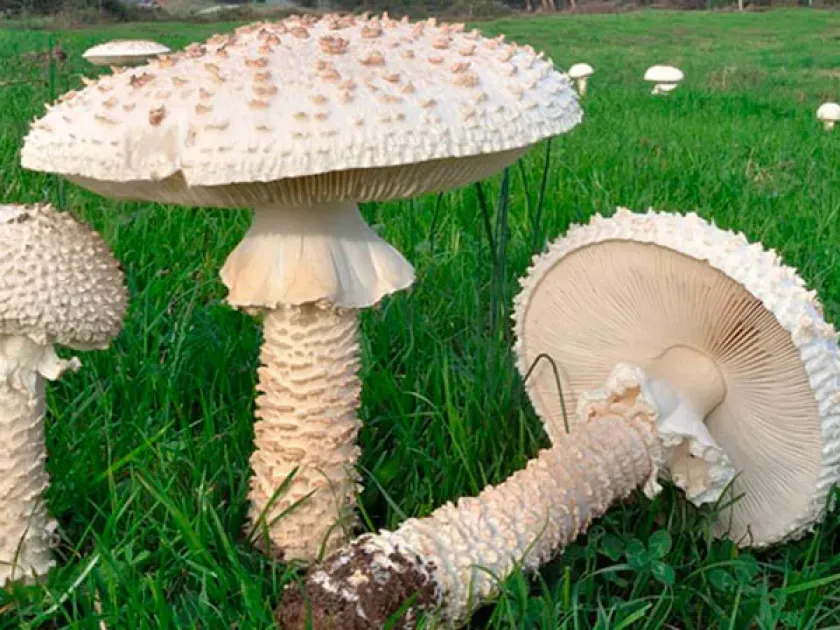
Description
Pathogen
Amanita vittadinii is a saprophytic fungus belonging to the Amanitaceae family, and it is not a plant pathogen or a cause of agricultural diseases.
In agronomy, it is crucial to distinguish between parasitic organisms that damage crops and beneficial or neutral fungi that inhabit the soil.
This fungus survives by decomposing organic matter in the soil, playing an ecological role as a decomposer rather than a plant parasite.
Morphologically, it displays distinctive scales on its cap and stem, which might lead to confusion if identified by non-specialists looking for pathogen symptoms.
However, from a phytopathological perspective, Amanita vittadinii poses no threat to the health or vitality of agricultural crops.
Conditions for development
The fungus typically thrives in open environments such as pastures, meadows, and areas with high concentrations of organic matter in the soil.
Optimal growth conditions include high soil moisture and warm temperatures, often occurring during late summer and autumn months.
It prefers fertile, well-aerated soils where organic debris accumulates, providing the necessary nutrients for its saprophytic life cycle.
Airborne spores are the primary means of propagation, allowing the fungus to spread across suitable agricultural landscapes.
The presence of this fungus is often an indicator of healthy, nutrient-rich soil rather than a sign of pathogenic infestation.
Why it matters
Amanita vittadinii causes no economic or physiological damage to agricultural crops or horticultural plants.
It does not infect plant tissues, nor does it inhibit the development of root systems or leaf foliage of any cultivated varieties.
Because it is not a parasite, it does not lead to yield losses, necrosis, or systemic infections in field crops.
The fungus is effectively harmless to agricultural production and should not be confused with dangerous fungal pathogens like Fusarium or Rhizoctonia.
Any concern regarding its presence is usually rooted in misidentification, which can lead to unnecessary interventions.
Protection
No protective measures or control strategies are necessary for Amanita vittadinii as it is not a plant pathogen.
Agricultural managers should focus their efforts on identifying and controlling actual threats while allowing neutral saprophytes to exist in the ecosystem.
Adhering to standard agronomic practices is sufficient for maintaining crop health without targeting harmless soil fungi.
The use of fungicides to eliminate this species is unjustified and may negatively impact the soil's natural microbial balance.
- Focus monitoring efforts on recognized economic plant pathogens.
- Promote sustainable soil health management to support natural biological cycles.
Discussion
No discussions yet — be the first.