
Royal fly agaric
Amanita regalis
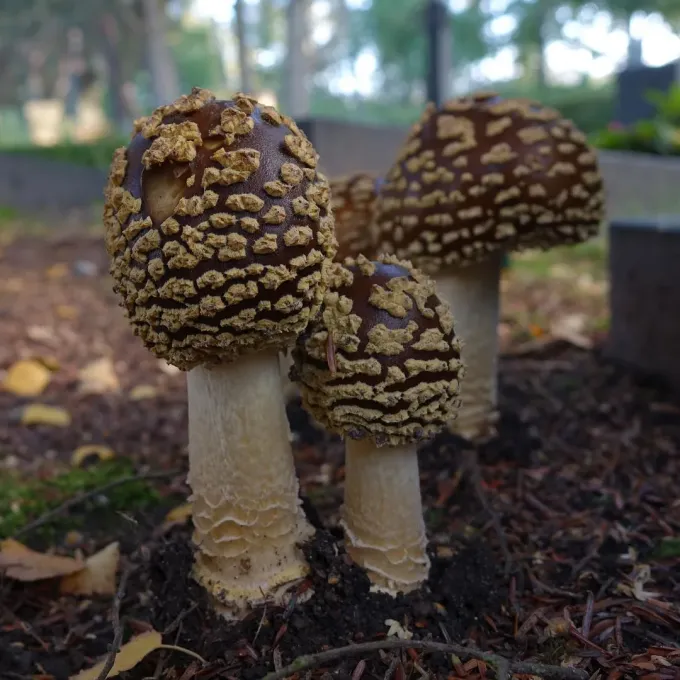
Description
Pathogen
The Royal fly agaric (Amanita regalis) is a basidiomycete fungus and is not classified as a pathogen of agricultural or horticultural plants.
This species functions as an ectomycorrhizal symbiont, establishing a mutually beneficial relationship with the roots of forest trees.
It does not possess the biological characteristics of a parasite and cannot infect or damage the tissues of healthy garden or field crops.
From an agronomic perspective, this mushroom is not a cause of decay, blight, or any other plant-related pathological condition.
Its life cycle is entirely independent of human-grown crops, focusing instead on symbiotic associations with specific forest tree species.
Conditions for development
The Royal fly agaric thrives in boreal and montane coniferous forests, typically found in association with spruce and birch trees.
Fungal development requires moist, well-drained soil rich in organic litter, which provides the necessary nutrients for the mycelium.
Growth is most prominent during the autumn months when temperatures are cool and precipitation levels are relatively high.
The acidity of the soil plays a crucial role in supporting the growth of Amanita species, preferring slightly acidic environments.
The dispersal of spores is facilitated by wind and local wildlife, ensuring the spread of the species within suitable woodland habitats.
Why it matters
This fungus causes no harm to agricultural yields, nor does it inhibit the growth or productivity of cultivated crops.
The primary concern associated with this mushroom is its toxicity to humans and mammals due to the presence of potent neurotoxins.
Ingestion of the mushroom can lead to severe toxic effects, including gastrointestinal distress and complex neurological reactions.
Because it is not a pathogen, there is no risk of crop loss, reduction in quality, or any impact on the marketability of agricultural products.
It is strictly an environmental feature of forests and woodlands, posing no threat to the stability or health of modern agricultural practices.
Protection
No plant protection measures, such as fungicides or pesticides, are required, as the fungus does not cause any plant disease.
If physical removal is necessary due to safety concerns regarding humans or pets, manual collection and disposal of fruiting bodies is sufficient.
Agricultural prevention is irrelevant to this species, as it does not colonize cultivated soil or crop residues.
Maintaining a clean and well-tended field environment will naturally discourage the colonization of most wild macrofungi in agricultural spaces.
There is no economic justification for attempting to control or eliminate this fungus within a farm or garden management program.
Discussion
No discussions yet — be the first.