
Grey spotted amanita
Amanita porphyria
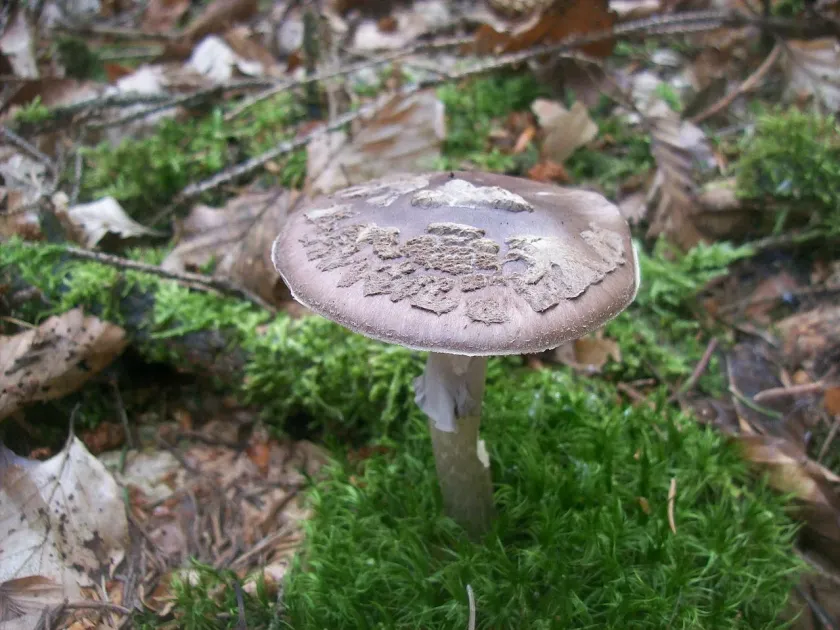
Description
Pathogen
Amanita porphyria, commonly known as the grey spotted amanita, is not a plant disease or an agricultural pathogen.
It is a fungus that forms obligate mycorrhizal associations with various coniferous and some deciduous trees.
The fungus provides essential nutrients and moisture to the tree roots in exchange for carbohydrates produced by photosynthesis.
As a mycorrhizal species, it is beneficial to forest health and does not infect or cause symptoms of decay in plants.
Therefore, it is classified as an ecological partner in the forest rather than a pest or a source of crop disease.
Conditions for development
The development of Amanita porphyria is restricted to forest environments where it can establish symbiotic connections with tree hosts.
It thrives in acidic soils and often grows in pine forests or areas where decomposing forest litter is abundant.
The fungus prefers cool and moist conditions, typically manifesting its fruit bodies between late summer and autumn.
Its mycelium requires the specific root environment of trees to survive and complete its life cycle.
Because of these strict ecological requirements, it poses no threat to crops or garden plants in agricultural settings.
Discussion
No discussions yet — be the first.