
Panther cap
Amanita pantherina
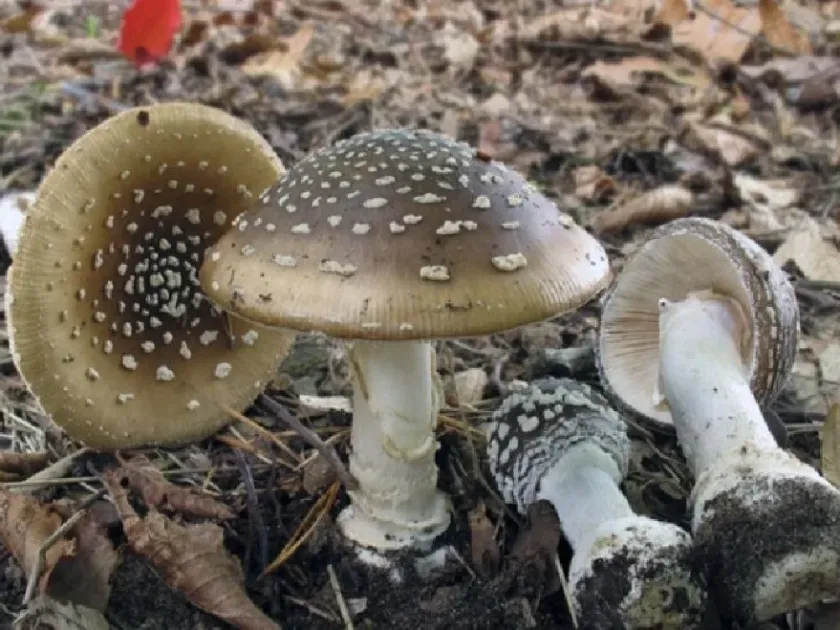
Description
Pathogen
The Panther cap (Amanita pantherina) is a basidiomycete fungus belonging to the Amanitaceae family. It is crucial to note that it is not a plant disease, as it does not infect or cause pathology in agricultural crops.
The fungus operates primarily through a mycorrhizal relationship with various tree species in forest ecosystems. It derives nutrients from symbiotic exchanges and organic matter decomposition rather than by invading plant tissue.
As a saprotrophic and mycorrhizal organism, its biological cycle is tied to forest soil conditions. It lacks the enzymatic apparatus required to penetrate the cell walls of cultivated crops to cause diseases such as rot or blight.
The presence of Amanita pantherina in an agro-ecological environment is incidental. It does not act as a vector for plant pathogens, nor does it interfere with the physiological functions of common field crops.
Consequently, in agricultural diagnostics, this species is classified as a macrofungus of forest habitats and not as a crop disease that requires specific intervention or monitoring.
Conditions for development
The development of Amanita pantherina fruiting bodies depends on specific environmental factors, including cool, moist soil conditions and the presence of deciduous or coniferous trees for mycorrhizal association.
The fungus thrives in undisturbed forest soils with a rich layer of leaf litter. These conditions are rarely found in intensive farming systems, where soil cultivation, liming, and fertilization disturb the fungal mycelial network.
Temperature range is another limiting factor, as the fungus prefers the temperate climate of late summer and early autumn. Unstable soil temperatures in open fields hinder the survival of its mycelium.
High levels of agricultural chemicals, particularly synthetic fungicides, are lethal to the sensitive mycelium of this fungus, preventing its colonization of arable land.
The fungus is inherently an forest-dweller, and it does not adapt well to the artificial, high-disturbance environments typical of modern commercial agriculture.
Why it matters
The Panther cap does not inflict damage on agricultural plants. It does not compete for resources, such as water or nitrogen, with crops and plays a beneficial role in forest health by improving tree nutrient uptake.
The primary concern regarding Amanita pantherina is its extreme toxicity. It is dangerous if ingested by humans or livestock due to the presence of ibotenic acid and muscimol, but this is a toxicological issue rather than an agronomic one.
In forest management, the fungus is generally considered a neutral or even positive component of the ecosystem, supporting the resilience of native tree species through root symbiosis.
It does not cause any yield loss, quality degradation, or growth inhibition in crops. Therefore, there is no economic justification for implementing protective measures against it in field crops.
The species should not be confused with pathogenic fungi that cause serious crop damage, as its biological niche is strictly separate from the requirements of agricultural production.
Protection
No agricultural control measures, such as chemical fungicide application, are required for Amanita pantherina because it does not pose a threat to crop health or productivity.
If physical presence is undesirable near farm buildings or livestock grazing areas, the simplest and most effective method is the manual removal and disposal of fruiting bodies before they release spores.
Standard agricultural practices, such as deep plowing and soil aeration, are sufficient to prevent the colonization of land by this fungus, as the mycelium requires undisturbed substrate to develop.
Promoting a healthy soil microbiome through the use of balanced organic amendments and crop rotation naturally suppresses the establishment of macrofungi in areas where they are not intended to grow.
Prevention is largely based on site management and ensuring that livestock are not pastured in areas where the toxic fungus is abundant, rather than any form of plant protection strategy.
Discussion
No discussions yet — be the first.