
Amanita ovoidea
Amanita ovoidea
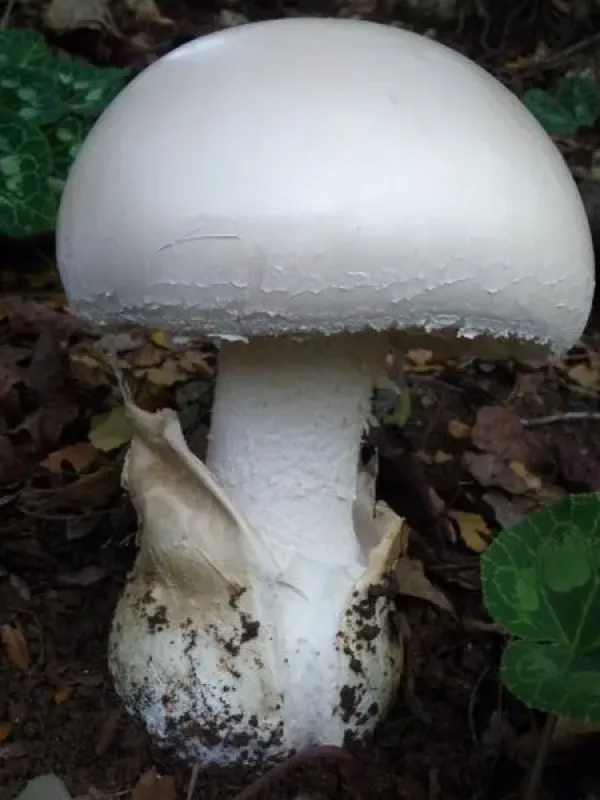
Description
Pathogen
It is crucial to state that Amanita ovoidea is not a plant disease or an agricultural pathogen.
This fungus belongs to the family Amanitaceae and is primarily known for its role in forest ecosystems rather than its interaction with crops.
It does not infect leaves, roots, stems, or fruits of agricultural plants and poses no threat to farming activities.
In mycological terms, it is a symbiotic species that typically associates with tree roots, supporting forest health through mycorrhizal networks.
Misclassifying this organism as a crop disease is a significant error that does not align with established botanical or phytopathological evidence.
Conditions for development
This fungus requires specific environmental conditions found in natural forest landscapes to develop its fruit bodies.
It prefers calcareous soils and is commonly found in association with oak and beech tree roots in warm temperate climates.
Adequate moisture and stable woodland temperatures are essential factors for the lifecycle of Amanita ovoidea.
Unlike parasitic fungi that thrive on stressed crops, this species is independent of agricultural human-managed environments.
Its natural distribution is dictated by forest ecology, and it does not rely on agricultural production cycles for its propagation.
Why it matters
Amanita ovoidea has no detrimental impact on agricultural productivity or plant physiology.
It does not secrete toxins that inhibit germination or growth in cereals, vegetables, or fruit crops.
There is no evidence of this fungus causing any structural damage to the root systems of cultivated species.
Its presence in areas adjacent to fields is entirely neutral and does not influence yield quality or quantity.
The fungus is effectively harmless to the entire agro-industrial sector, as it is strictly a forest-dwelling species.
Protection
No protection measures, chemical treatments, or fungicidal applications are required for Amanita ovoidea.
It is not a pest, and targeting it with pesticides would only serve to disrupt the beneficial soil microbiome in the area.
Professional agronomists should prioritize managing actual plant pathogens that directly reduce crop yields.
No preventative maintenance or quarantine measures are necessary in relation to this species within or around agricultural lands.
Preservation of the natural habitat is the only recommended approach, as there is no necessity to interfere with its existence.
Discussion
No discussions yet — be the first.