
Fly agaric
Amanita muscaria
Description
Symptoms
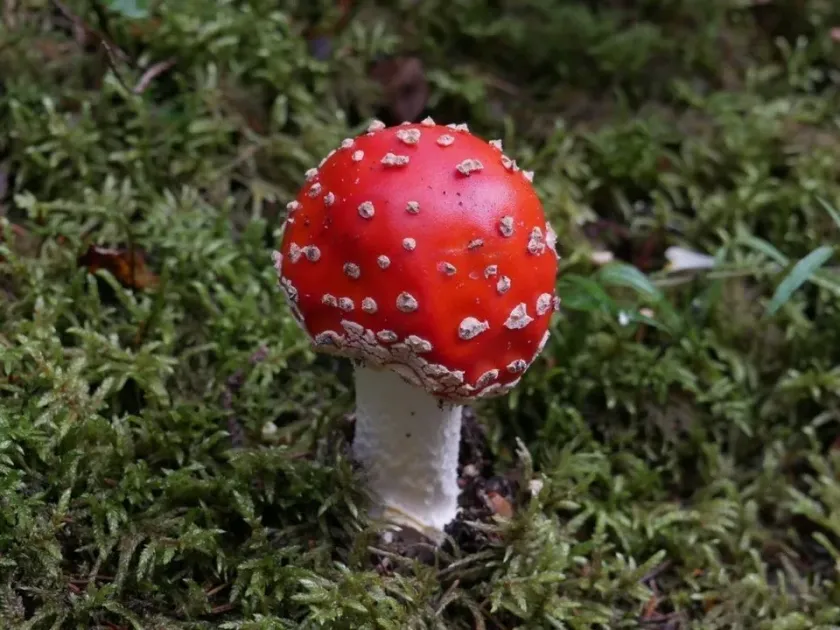
The primary sign of its presence is the development of iconic red caps with white warts emerging from the ground near tree trunks.
Roots colonized by Amanita muscaria may appear thicker than uncolonized ones due to the formation of the mycorrhizal mantle.
Plants associated with this fungus generally exhibit vigorous growth and high resilience to environmental stressors.
There are no symptoms of tissue death, necrosis, or chlorosis associated with this fungus, which distinguishes it from real plant diseases.
The fungus typically appears in late summer and autumn, which is the natural cycle for producing its fruiting bodies.
Pathogen
The Fly agaric (Amanita muscaria) is not a plant pathogen and does not cause diseases in agricultural or forest crops.
It is a well-known ectomycorrhizal fungus that forms a symbiotic relationship with the roots of various tree species, particularly birch, pine, and spruce.
The fungus provides essential nutrients and water to the host tree, while receiving carbohydrates in return, making it a beneficial organism for forest health.
Scientific studies confirm that this fungus is a symbiont, not a parasite; therefore, it does not induce wilting, decay, or other pathological conditions in plants.
In the context of forest pathology, it is classified as a non-pathogenic soil organism that supports the development of young forest stands.
Conditions for development
The development of Amanita muscaria requires the presence of a compatible woody host, typically species belonging to the Pinaceae or Betulaceae families.
It thrives in acidic soils rich in organic humus, which provides the necessary conditions for the vegetative growth of its underground mycelium.
A moderate climate with significant rainfall is essential for the transition from the subterranean mycelial network to the formation of visible mushrooms.
The fungus is highly sensitive to soil chemistry and usually disappears if the soil is significantly altered by artificial fertilizers or liming.
Optimal moisture levels in the root zone are crucial for maintaining the symbiotic exchange of minerals and sugars.
Why it matters
There is no economic damage associated with the Fly agaric, as it enhances the growth and survival of forest tree species.
The potential harm is entirely restricted to the toxicity of the fungus to humans and animals if ingested, necessitating awareness in public areas.
It does not affect crop yield, wood quality, or plant development negatively, so it poses no threat to industrial forest management.
No agricultural losses are documented in connection with this fungus, making it a harmless component of forest ecosystems.
Management practices do not target this fungus, as it is viewed as an ecologically important partner for forest development.
Protection
No protection or control measures are required because the Fly agaric is not a threat to plant health.
If mushroom caps must be removed for public safety, simple manual collection is the only effective and necessary method.
The prevention of fungal development in ornamental or forest nursery settings can be achieved by improving soil drainage and reducing organic litter.
Changes in soil acidity levels will naturally discourage the growth of Amanita muscaria if its presence is deemed undesirable in specific areas.
No chemical treatments, such as fungicides, should be applied, as they would disrupt the beneficial mycorrhizal network essential for tree growth.
Discussion
No discussions yet — be the first.