
Franchet's amanita
Amanita franchetii
Description
Symptoms
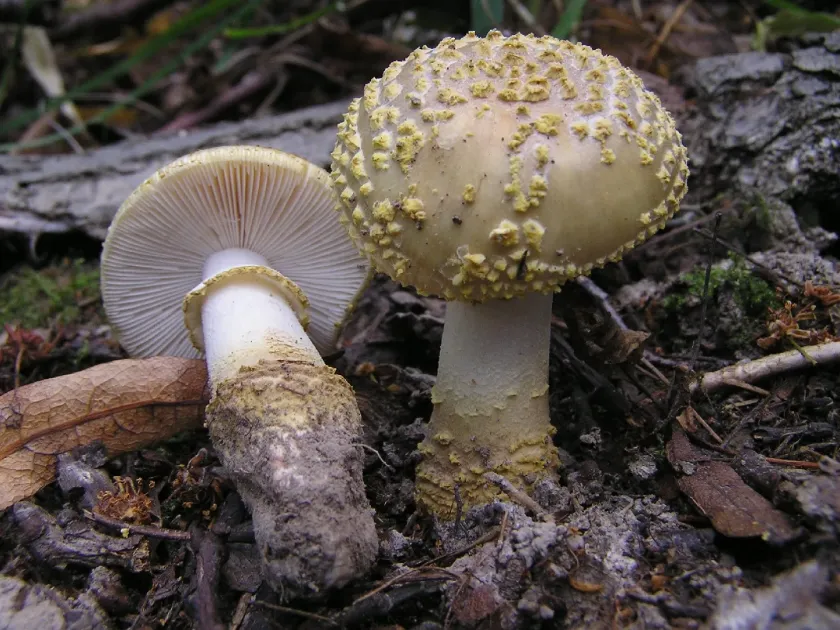
The main visual indicator of the fungus is the presence of its yellow-brown, wart-covered fruit bodies near the base of host trees during the growing season.
The underground indicator is the white, filamentous hyphal network that envelops the fine root tips of the host plant, forming the mycorrhizal interface.
Healthy host trees associated with this fungus typically show vigorous growth without any signs of leaf chlorosis, wilting, or vascular necrosis.
Microscopic examination of the root system reveals the classic Hartig net, confirming the establishment of a functional ectomycorrhizal symbiosis.
Absence of decay or pathogenic symptoms on the root system is a primary sign that Amanita franchetii behaves as a beneficial symbiont.
Pathogen
Franchet's amanita (Amanita franchetii) is a mushroom species belonging to the Amanitaceae family, primarily recognized as an ectomycorrhizal partner for trees.
In agronomic and forestry terms, it is not considered a plant disease pathogen, but rather an essential component of the forest soil ecosystem.
The fungus establishes a symbiotic relationship with tree roots, forming a fungal sheath known as mycorrhiza that aids in nutrient and water absorption.
It spreads via spores produced by fruit bodies, which colonize suitable habitats characterized by specific host tree species such as oaks or conifers.
This biological interaction is vital for the survival of many plant species, as the fungus provides minerals that the tree roots cannot easily acquire independently.
Conditions for development
Successful development of the fungus requires the presence of specific host trees and a forest soil environment rich in organic matter and leaf litter.
Optimal conditions include moderate soil pH levels and sufficient moisture levels, which are critical for both mycelial growth and fruit body emergence.
Temperature fluctuations in forest regions play a major role in the timing of the fungal life cycle, generally preferring stable, cool to temperate conditions.
Lack of heavy soil contamination or aggressive chemical fertilizers is necessary for the delicate mycorrhizal network to thrive and persist over time.
Competition from other soil microflora can influence the dominance of this species in a specific location, favoring stable and mature ecosystem stages.
Why it matters
Amanita franchetii poses no threat to mature trees or agricultural crops, as it does not possess the mechanisms to act as a plant parasite.
In forestry nurseries, its presence is rarely problematic, although high colonization density could theoretically compete with desired beneficial fungal strains.
There are no recorded instances of this species causing root rot, wood decay, or any other physiological damage to host tree species.
The potential harm is primarily toxicological, as the consumption of the fruit bodies is dangerous to humans and livestock due to the presence of toxins.
Therefore, it is treated as an ecological asset rather than a biological hazard in the context of forest management and plant health.
Protection
Control measures are generally unnecessary because the species is not a plant pathogen and does not cause economic damage to forest resources.
Should removal be required, manual collection and disposal of the fruit bodies before spore release is the most effective and eco-friendly method.
Chemical control via fungicides is strictly discouraged, as such practices often eliminate beneficial mycorrhizal fungi, damaging the tree's health.
Management focuses on maintaining site biodiversity rather than eradication, as removing symbiotic fungi can negatively impact long-term tree resilience.
Preventive strategies involve ensuring proper nursery hygiene and avoiding the introduction of non-native soil to keep local fungal populations balanced.
Discussion
No discussions yet — be the first.